



When you travel to Nepal, you collect memories, experiences… and sometimes, a piece of its soul to take home. One of the most meaningful souvenirs you can bring back is a Rudraksha bead. Grown in the misty Himalayan foothills, from the serene Arun Valley to the villages of Dingla and the remote Solu Khumbu, these seeds come from the sacred Elaeocarpus ganitrus tree, treasured for centuries by spiritual seekers across Asia.
Rudraksha is more than a bead; it’s a story, a legend, and a symbol of peace. Its name; Rudra (a fierce form of Lord Shiva) + Aksha (teardrop), hints at its divine origin. Ancient texts say that when Lord Shiva opened his eyes after years of meditation, his tears fell to earth and sprouted into these sacred trees, giving the world a gift of calm and devotion.
But today, finding a genuine Rudraksha requires care. Fakes, chemically treated beads, and mislabelled mukhis are common. Whether you’re wandering the bustling streets of Kathmandu or visiting a farm high in the Himalayas, this guide will help you choose an authentic Rudraksha; so you can bring home not just a souvenir, but a piece of Nepal’s heart.


What Is Rudraksha? The Science and the Sacred
The Botanical Reality
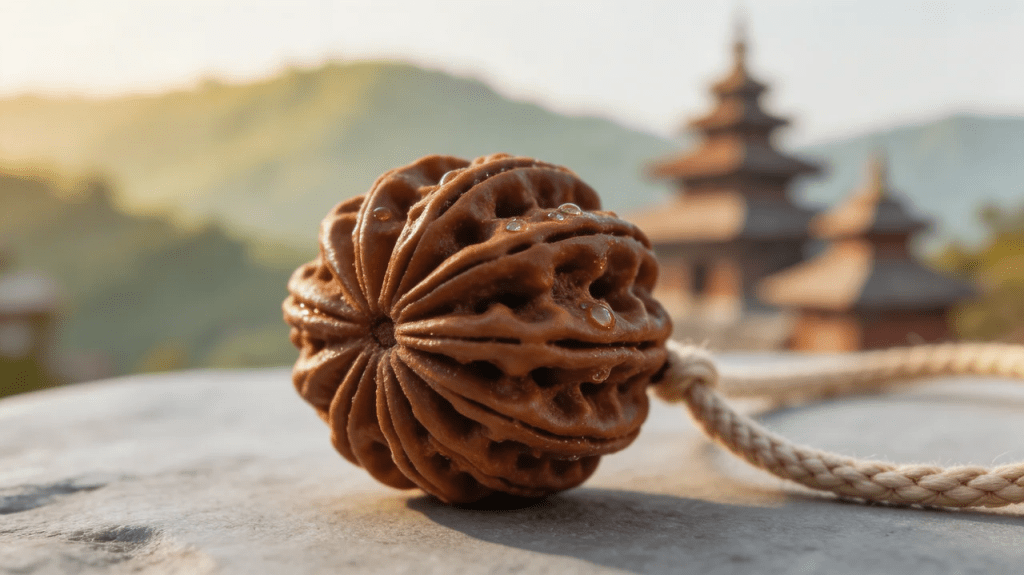
Rudraksha is the seed of Elaeocarpus ganitrus, a large evergreen tree that grows between 1,000 and 2,000 metres altitude across Nepal, India, and parts of Southeast Asia. The tree produces small, blue-purple drupes containing a hard, deeply ridged seed; the bead.
The ‘mukhis’ (faces) are the natural clefts or ridges running longitudinally around the seed. These ridges form organically as the seed develops, and their number; from one to twenty-one: is what gives each bead its classification.
Why Nepal’s Rudraksha is Superior
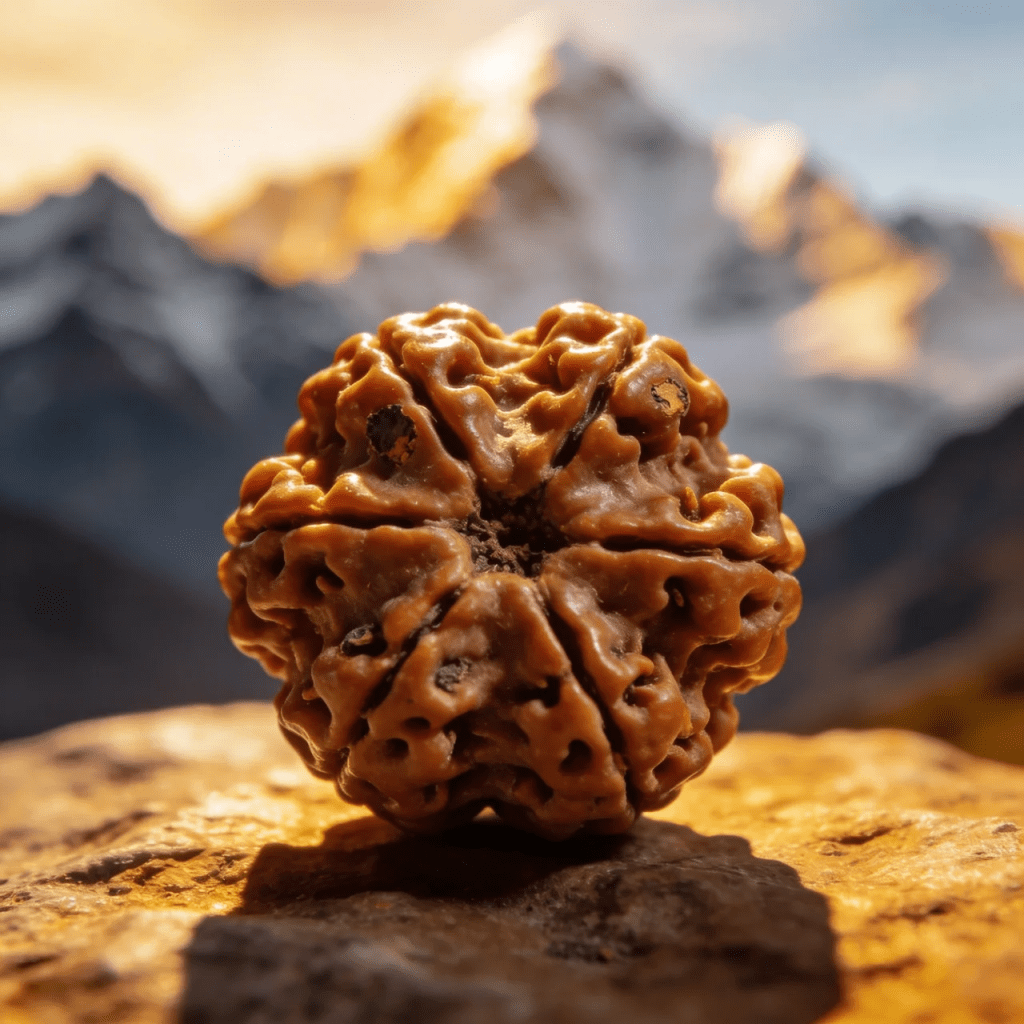
High-altitude growth enhances Rudraksha quality – Produces denser, more clearly defined mukhi ridges, prized by collectors and spiritual practitioners.
- Cooler Himalayan temperatures boost seed strength – Slower development increases the Rudraksha’s traditional electromagnetic properties, as referenced in ancient texts.
- Nepali Rudraksha beads are smaller and purer – Naturally rounder and more uniform than Indian varieties, highly valued for spiritual rituals.
- Historic production in Arun Valley and Dingla – These Nepali regions have been producing authentic Rudraksha for centuries.
- Consecration at Pashupatinath Temple – One of the world’s premier Shiva shrines offers certified blessings for Nepali Rudraksha beads.
Complete Mukhi Guide: All Types from 1 to 21
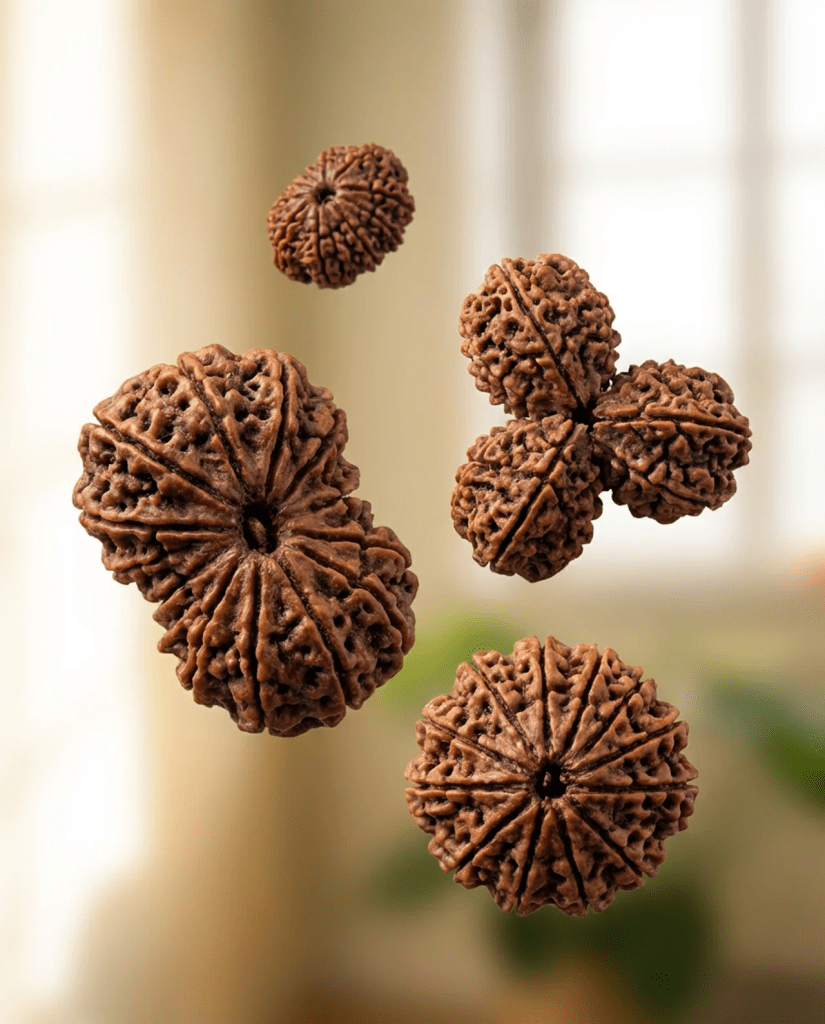
The number of mukhis is the single most important factor in Rudraksha selection. Each type carries different sacred associations, ruling deities, planetary influences, and benefits. Use the table below as your primary reference.
| Mukhi | Ruling Deity | Ruling Planet | Primary Benefit | Best For |
| 1 Mukhi | Lord Shiva | Sun | Supreme consciousness, moksha | Spiritually advanced seekers |
| 2 Mukhi | Ardhanarishvara | Moon | Unity, relationships, emotional calm | Couples, those seeking balance |
| 3 Mukhi | Agni (Fire God) | Mars | Freedom from past karma | Overcoming guilt and depression |
| 4 Mukhi | Lord Brahma | Mercury | Knowledge, creativity, memory | Students, writers, educators |
| 5 Mukhi | Kalagni Rudra | Jupiter | Peace, health, self-awareness | General well-being (most common) |
| 6 Mukhi | Lord Kartikeya | Venus | Willpower, focus, earthly success | Professionals and leaders |
| 7 Mukhi | Goddess Mahalaxmi | Saturn | Prosperity, health, fortune | Those facing financial hardship |
| 8 Mukhi | Lord Ganesha | Rahu | Removes obstacles, sharp intellect | Entrepreneurs, problem-solvers |
| 9 Mukhi | Goddess Durga | Ketu | Energy, fearlessness, Shakti power | Those seeking courage & vitality |
| 10 Mukhi | Lord Vishnu | All planets | Protection, peace, cosmic balance | Seeking overall planetary harmony |
| 11 Mukhi | Eleven Rudras | All planets | Wisdom, right judgment, adventure | Decision-makers, spiritual seekers |
| 12 Mukhi | Lord Surya | Sun | Radiance, authority, leadership | Leaders, administrators |
| 14 Mukhi | Lord Hanuman | Saturn | Intuition, protection, divine guidance | Highly spiritual practitioners |
| 21 Mukhi (rare) | Kubera | All planets | Supreme wealth and fortune | Extremely rare, for collectors |
Travel Tip: Nepal’s most abundant Rudraksha, the 5-Mukhi, offers universal benefits. If this is your first purchase, start here — it is affordable, authentic, and spiritually potent.
How to Identify Authentic Rudraksha in Nepal: 7 Tests You Can Do Right Now
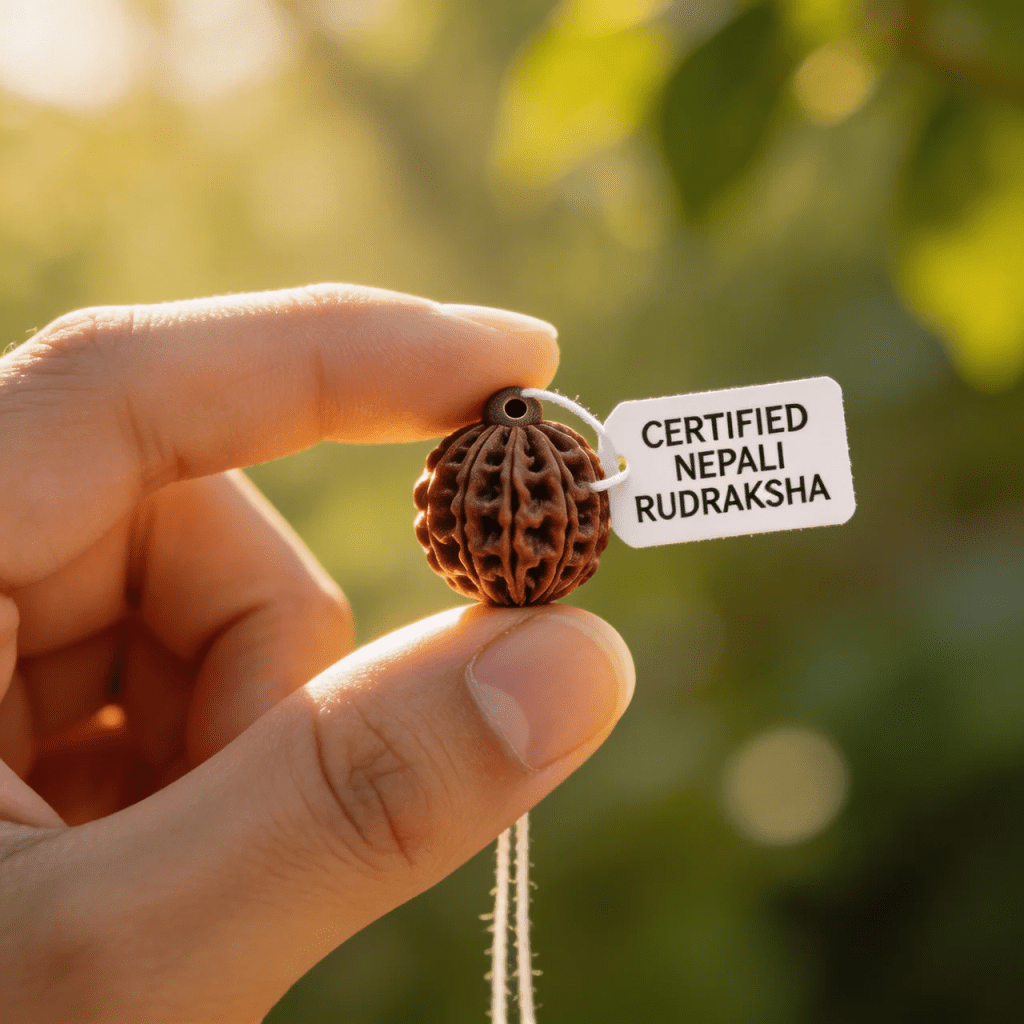
The most critical skill for any buyer is distinguishing real Rudraksha from imitations. Nepal’s markets contain everything from genuine farm-harvested beads to plastic mouldings and chemically enhanced fakes. You can perform these seven tests in any shop.
Test 1: The Water Test
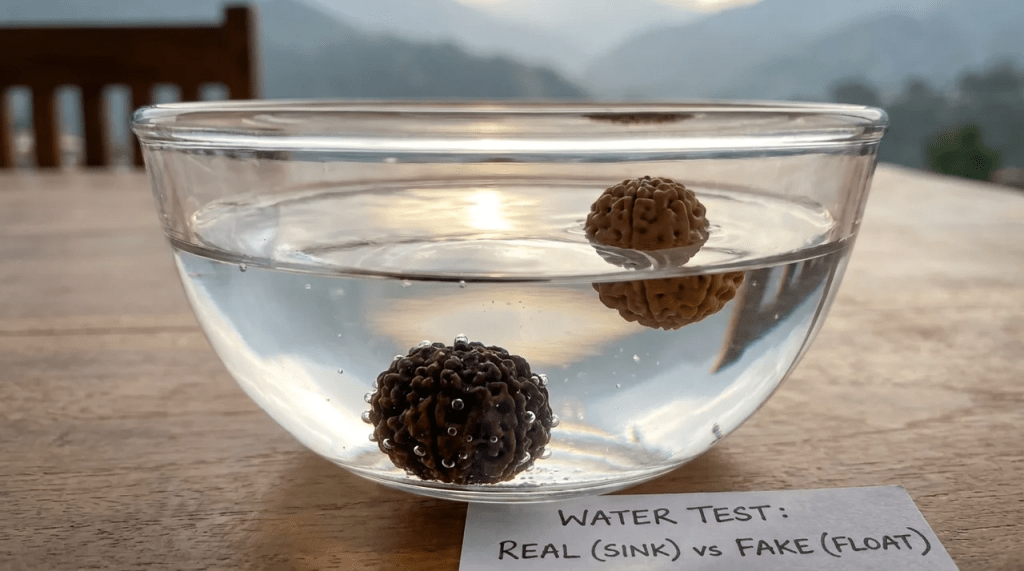
Drop the bead in a glass of clean water. A genuine Rudraksha sinks to the bottom. Fakes; hollow beads, plastic, or balsa wood coated in resin; float. Note: this test works reliably for fresh, uncoated beads. Some sellers coat beads in wax or lacquer, which may affect the result.
Test 2: The Copper Coin Test
Place the bead between two copper coins and roll it gently. A genuine Rudraksha should rotate slowly in a stable direction. This test is traditional and widely referenced, though it requires some practice to interpret consistently.
Test 3: Visual Mukhi Inspection
Using a magnifying glass or your phone camera zoomed in close, carefully examine the natural lines (mukhis) running from the top hole to the bottom of the bead. Typically, genuine mukhis form naturally, appearing irregular under close inspection. In contrast, fakes are machine-carved with unnaturally symmetrical, equal-width grooves.
Test 4: The Surface Texture Test
Run your thumbnail gently along a mukhi line. Genuine Rudraksha has natural irregularities; small bumps, variations in ridge depth, and organic surface texture. A fake bead feels uniformly smooth or too regular.
Test 5: Check the Holes
Examine the holes drilled through the bead (for stringing). Genuine Rudraksha has holes drilled through natural seed material; you can often see the internal seed structure or fibrous material inside. Fakes have clean, plastic-smooth interiors.
Test 6: The Certificate of Origin Test
Ideally, any reputable Nepali seller of higher-value beads (6-Mukhi and above) should not only provide a written certification but also offer direct knowledge of the bead’s origin, ensuring that buyers can confidently verify authenticity before making a purchase. Furthermore, for very high-value pieces (1-Mukhi, 14-Mukhi, Gauri Shankar), insist on a certificate from a recognised laboratory or Rudraksha testing institution.
Test 7: The Price Reality Test
If a price seems too good to be true for a rare mukhi, it is a fake. A genuine 1-Mukhi round Rudraksha starts at NPR 50,000 and can exceed NPR 5,00,000. Anyone selling one for NPR 500 is selling you a fantasy. Use the price guide in this article to anchor your expectations.
Warning Beware of sellers near Pashupatinath Temple who approach tourists proactively with ‘rare’ beads. Genuine dealers operate established shops and do not chase customers.
Rudraksha Price Guide: What to Pay in Nepal (2026–2027)
Prices vary significantly by mukhi count, size, origin, quality, and whether consecration has been performed. The table below gives current market ranges in Nepali Rupees (NPR) and approximate USD equivalents.
| Mukhi Type | Market Range (NPR) | Approx. USD | Rarity Level |
| 1 Mukhi (Round) | NPR 50,000 – 5,00,000+ | $375 – $3,750+ | Extremely Rare |
| 1 Mukhi (Half Moon) | NPR 5,000 – 50,000 | $37 – $375 | Rare |
| 2–4 Mukhi | NPR 100 – 2,000 | $0.75 – $15 | Common |
| 5 Mukhi | NPR 10 – 200 | $0.10 – $1.50 | Very Common |
| 6–8 Mukhi | NPR 200 – 5,000 | $1.50 – $37 | Moderate |
| 9–12 Mukhi | NPR 2,000 – 30,000 | $15 – $225 | Uncommon |
| 13–14 Mukhi | NPR 5,000 – 80,000 | $37 – $600 | Rare |
| Gauri Shankar | NPR 3,000 – 50,000 | $22 – $375 | Rare |
| 21 Mukhi | NPR 1,00,000+ | $750+ | Extremely Rare |
Note: Prices listed are for individual beads of good to excellent quality. Mala strings (108 beads) of 5-Mukhi are typically priced between NPR 500–3,000 depending on bead size. Prices from farm-direct sources in Arun Valley and Dingla are 20–40% lower than Kathmandu retail.
Where to Buy Rudraksha in Nepal: Trusted Locations
Location matters enormously. The same bead can sell for five times more in a tourist-facing Thamel shop than from a farm cooperative in eastern Nepal. Here is a tiered guide to sourcing.
| Location | Area | Best For | Avg. Price Range |
| Pashupatinath Temple Market | Kathmandu | Energised, priest-certified beads | Mid to High |
| Thamel Certified Bead Shops | Kathmandu | Tourist-friendly, variety of mukhis | Mid |
| Indrachowk Market | Kathmandu | Local bulk buying, malas | Budget to Mid |
| Asan Bazaar | Kathmandu | Traditional wholesale suppliers | Budget |
| Dingla Village Cooperatives | Bhojpur District | Farm-fresh, source-direct beads | Budget to Mid |
| Arun Valley Trek Farms | Eastern Nepal | Organic farm-harvested Rudraksha | Budget |
| Online via certified Nepal exporters | Nepal-wide | Convenience with certificate | Mid to High |
Best Places for Rudraksha in Nepal, Kathmandu:
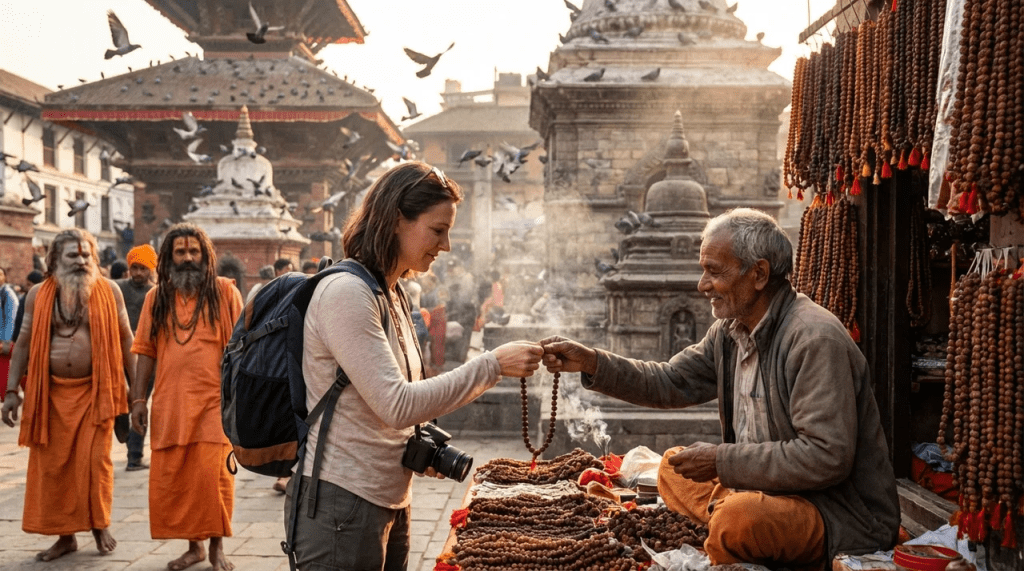
Pashupatinath Temple Market
The market surrounding Pashupatinath is Nepal’s most sacred Rudraksha trading ground. Vendors here have operated for generations and many can arrange on-site consecration by temple priests — a significant benefit for those seeking energised beads. However, proximity to tourists also means premium pricing. Negotiate respectfully and verify every bead using the tests above.
Indrachowk Bazaar
This ancient market in central Kathmandu is where Kathmandu’s own jewellers and mala makers source their Rudraksha. Prices are lower, variety is wide, and vendors are used to trade buyers rather than tourists. English is less common here, so bring a Nepali-speaking companion if possible.
Thamel Certified Shops
For first-time buyers seeking authentic Rudraksha in Nepal, Thamel’s long-established spiritual goods shops are the ideal starting point. These reputable stores not only provide English-speaking staff but also offer clear return policies and documented certificates, giving you complete confidence in your purchase.
Naturally, this convenience comes at a premium, so expect to pay 20–35% above the usual market rate. To ensure reliability, always choose shops that have been in business for at least five years and can produce verifiable supplier certificates.
Insider Tip: When speaking with a Kathmandu seller, ask: “Where does this bead come from: Arun Valley, Dingla, or India?” A genuine Nepali dealer will answer confidently, reflecting their knowledge of authentic sources. If they hesitate, it’s a strong indication that the bead may not be genuine. By following these steps, first-time buyers can confidently acquire high-quality Nepali Rudraksha without risk.
Farm-to-Wrist: Buying Rudraksha at Source in Eastern Nepal
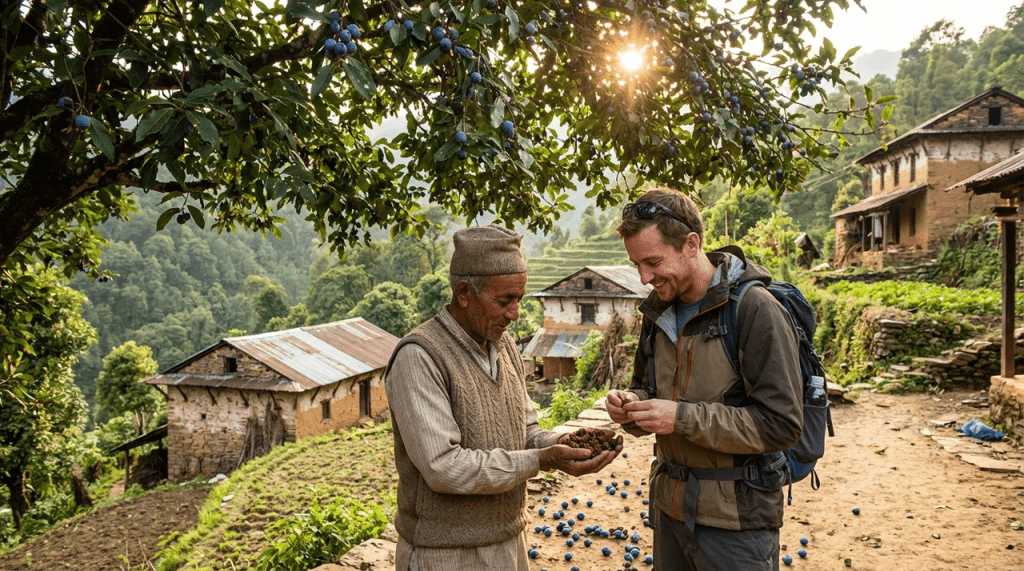
The Arun Valley Experience
For the most authentic journey imaginable, travel to the Arun Valley in eastern Nepal. This remote region hosts some of the world’s oldest groves, where farm-stay trekking operators offer guided experiences. During your visit, you can:
- You will receive authentic provenance—feel free to photograph the exact tree your bead came from.
- Explore active Rudraksha orchards to see the trees in full fruiting season (August–October).
- By participating in the harvest, you can hand-pick and peel fresh fruit to reveal the raw seed.
- The tour includes a chance to observe traditional sun-drying and meticulous sorting processes.
- Buying direct from farming families ensures you get genuine beads at farm-gate prices.
Dingla Village: Nepal’s Hidden Rudraksha Heartland
Perched on a hilltop in Bhojpur district, the village of Dingla is a hidden gem for anyone seeking authentic Rudraksha in Nepal. Home to the Rai people, Dingla’s community forests are dotted with mature Rudraksha trees that locals have carefully and sustainably tended for generations.
Visiting Dingla is more than just seeing trees; it’s stepping into a living tradition. The village pulses with culture during the Udhauli and Ubhauli festivals of the Rai and Kirant communities, which coincide with the Rudraksha harvest. Here, you can witness the beads as part of rituals, songs, and celebrations, connecting deeply with Nepal’s spiritual heritage rather than treating Rudraksha as just a souvenir.
The best time to visit is between September and November, when the harvest is in full swing. The trees bloom in March–April, and by the late monsoon, the fruits are ready to be gathered, each bead carrying the story of the land and its people.
Getting Your Rudraksha Energised at Pashupatinath
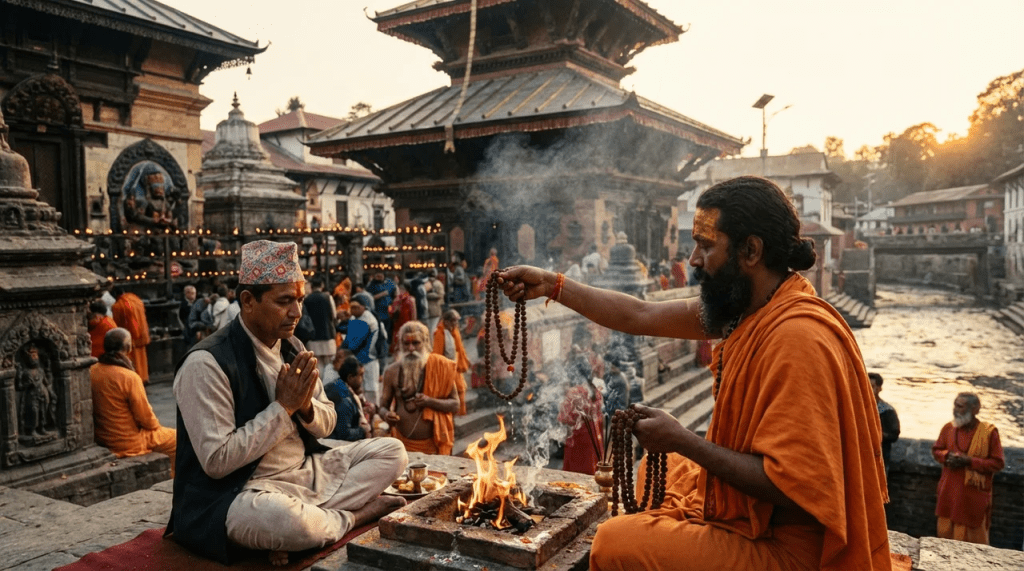
In Hindu tradition, devotees fully activate a Rudraksha bead’s spiritual power by performing a consecration ritual (pranpratishtha), using prayer, mantras, and focused intention to awaken its sacred energy.
The Consecration Process
At Pashupatinath Temple, official priests (known as Bhattas) perform consecration rituals for devotees throughout the day. The standard process includes:
1. Cleansing the bead with Panchagavya (five sacred substances)
2. Bathing with Gangajal (holy water) or sacred river water
3. Application of sandalwood paste and kumkum
4. Chanting of specific mantras (Om Namah Shivaya for Shiva-associated mukhis)
5. Offering of incense and lamp (deepa)
6. Placing the bead before the deity’s idol for blessing
Fees for consecration services vary; expect to pay NPR 500–3,000 depending on the ritual’s length and the priest’s seniority. Some established Rudraksha shops in the temple market include basic consecration in the purchase price.
How to Wear and Care for Your Rudraksha
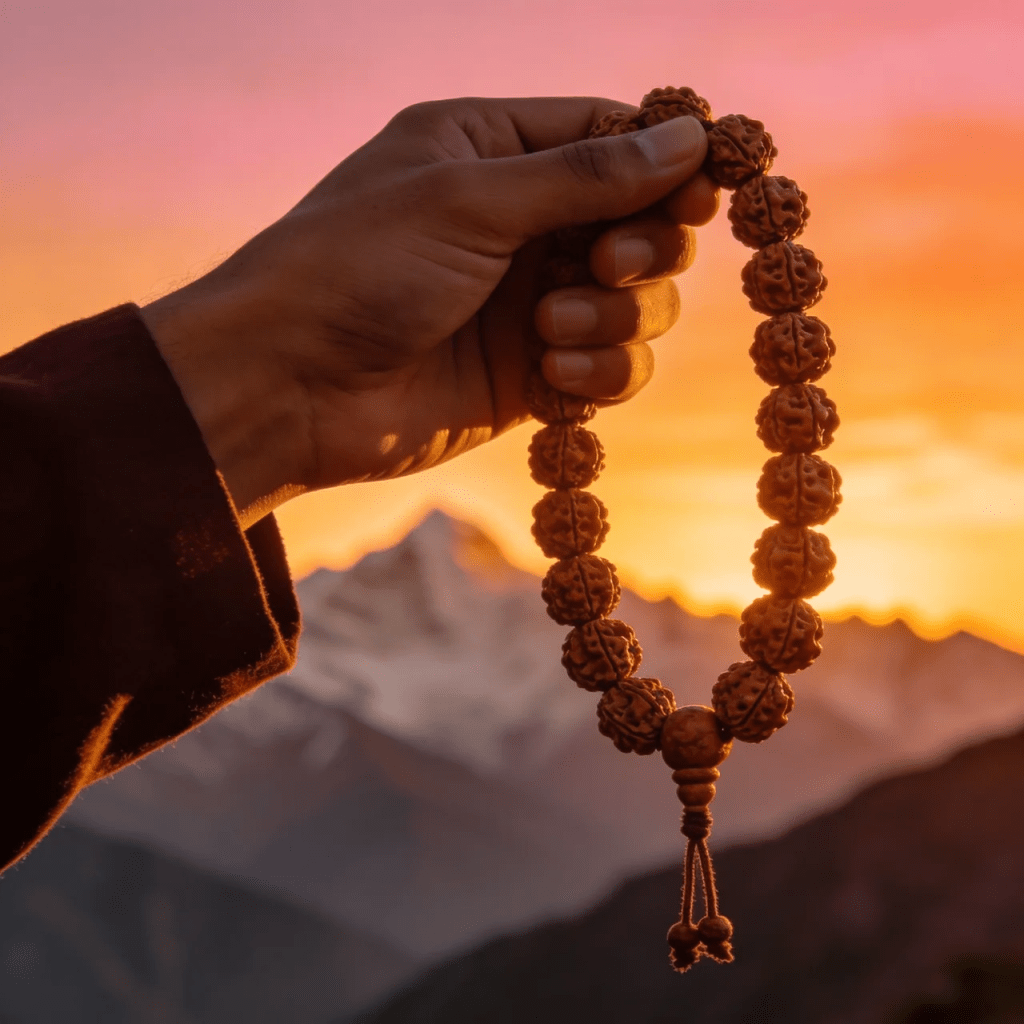
Wearing Guidelines
⦁ Rudraksha can be worn 24 hours a day, including during sleep,
⦁ Remove during sexual activity, funerals, and while consuming meat or alcohol, per traditional guidance,
⦁ Wear next to the skin where possible; the bead works through electromagnetic contact,
⦁ A 5-Mukhi mala of 108 beads for meditation is the most traditional form,
⦁ Single beads are often worn as pendants on black thread or silver wire
Care and Maintenance
- Clean monthly with sesame oil or coconut oil, soak for 20 minutes then wipe dry,
- Keep away from harsh chemicals, synthetic perfumes, and chlorinated water,
- Store in a clean cloth pouch when not wearing,
- The natural oils from your skin keep the bead nourished with daily wear,
- If the bead cracks or a mukhi line splits significantly, consult a priest before continuing to wear
Red Flags: 10 Signs You Are About to Buy a Fake
- Symmetry and Roundness: Natural beads are organic and vary in shape. If a bead is perfectly round or suspiciously symmetrical, it is likely a plastic or wooden imitation.
- Machine-perfect Mukhi lines are a major warning sign. On a genuine Rudraksha, these ridges should have natural irregularities, varying widths, and non-uniform spacing.
- Price Reality Check: If the cost of a “rare” Mukhi seems too good to be true, it probably is. Genuine rare beads command high market rates; a bargain-bin price is a clear indicator of a fraud.
- Ask the seller for the specific origin of the bead (e.g., Arun Valley vs. Dingla). A reputable dealer will know exactly where their stock was harvested; vague answers suggest they are hiding the source.
- The Water Test: While not 100% foolproof, a bead that floats usually indicates a hollow plastic shell or a light-wood core coated in resin.
- Aggressive Claims: Be wary of sellers who insist a bead is “already energized” but refuse to let you perform basic authenticity tests. This is often a high-pressure tactic to close a sale quickly.
- Missing Documentation: Always insist on a written receipt. For any purchase over NPR 1,000, a legitimate shop should provide an invoice and, for higher Mukhis, a lab certificate.
- Examine the surface finish closely. Beads that have been lacquered, painted, or heavily polished are often treated to hide cracks or glue lines where faces have been artificially added.
- Invalid Certificates: A “certificate” is useless if it lacks a verifiable issuing authority, a date, or contact details for a recognized testing laboratory like IBGTL.
- 1-Mukhi Round Fraud: Because round 1-Mukhi Nepali beads are the rarest items in the world, any seller offering one for under NPR 10,000 (roughly $75) is almost certainly selling a fake.
Customs and Export: Taking Rudraksha Home

Nepal generally permits the export of Rudraksha beads for personal use. To ensure a smooth journey through Tribhuvan International Airport or land borders, follow these essential guidelines:
- Legal Classification: Unlike ancient statues or religious artifacts, Rudraksha is not classified as a “restricted cultural heritage item” under Nepal law. However, if your beads are mounted in heavy gold or silver, they may be subject to different precious metal export regulations.
- Personal Use Allowances: Travelers are typically allowed to carry personal quantities, such as a single mala or a handful of individual beads, without an export permit.
- For Commercial Quantities, the rules change significantly. If you are carrying bulk amounts for resale, you must obtain an export permit from the Nepal Department of Customs and a recommendation from the relevant trade association.
- Declare High-Value Items: If your beads are worth a significant amount (exceeding your home country’s duty-free allowance), ensure you declare them at customs. This is especially important for rare 1-Mukhi or 21-Mukhi beads which can be valued in the thousands of dollars.
- Keep Your Documents: A reputable seller will always provide a detailed invoice noting the item description, Mukhi count, and value. Keep this original receipt in your hand luggage to show customs officials if requested.
Note If travelling to India with Rudraksha, be aware that Indian customs may question very large quantities. Keep receipts from your Nepal purchases.
Quick-Reference Buyer’s Checklist
Before finalising any Rudraksha purchase in Nepal, run through this checklist:
Before finalizing any Rudraksha purchase in Nepal, run through this essential 2026 verification list:
- Consecration (Prana Pratistha): Decide if you want the bead energized at Pashupatinath Temple before you leave. Most reputable Kathmandu shops can facilitate a ritual with a priest to “activate” the bead’s energy.
- Sinking and Density: Check that the bead sinks in clean water. While some fakes can also sink, a floating bead is an immediate red flag for a plastic or hollow wooden core.
- Magnified Inspection: Use a 10x jeweler’s loupe or your phone’s macro lens to examine the Mukhi lines. Natural ridges should be deeply grooved and irregular, never machine-etched or perfectly parallel.
- Organic Texture: Run your fingers over the surface to ensure it feels naturally rough and porous. If the bead feels suspiciously smooth, waxy, or looks lacquered, it may be hiding artificial joins or chemical treatments.
- Market Price Comparison: Verify that the asking price aligns with current 2026 market rates. If a rare 14-Mukhi or Gauri Shankar is offered for a “bargain” price, it is highly likely a counterfeit.
- Geographical Origin: Ask the seller specifically where the bead was grown. Genuine Nepali beads usually hail from the Arun Valley or Dingla; knowing the source helps verify the bead’s density and potency.
- Professional Certification: For any bead above 6-Mukhi, insist on a certificate from an independent lab like IRL (Independent Rudraksha Lab) or IBGTL. In 2026, the gold standard is an X-ray report showing internal seed chambers.
- Spiritual Alignment: Confirm that you understand the specific ruling deity and planetary benefits of your chosen Mukhi to ensure it matches your personal or astrological goals.
Conclusion: Buy Slowly, Buy Once
Nepal’s Rudraksha market truly rewards the patient and informed buyer. To the untrained eye, the difference between a NPR 50 plastic fake and a NPR 5,000 genuine 6-Mukhi bead may be invisible—but for the person who will wear it for years or even decades, that difference is everything.
Take your time: visit multiple shops, apply the recommended tests, and ask detailed questions about the bead’s origin. A genuine seller will welcome your diligence, while anyone who resists should be politely avoided.
For those with the time and spirit, consider making the journey to Dingla or the Arun Valley. There is nothing quite like holding a Rudraksha bead and knowing exactly which hillside tree it came from, on which day it was harvested, and whose hands dried it under the mountain sun.
This is not just a bead. This is Nepal in your palm, a living connection to centuries of Himalayan tradition.


