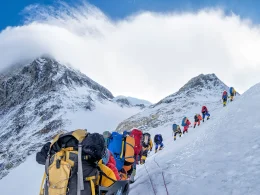



Imagine standing in the shadow of the world’s highest mountains, wandering through ancient temple squares that have outlasted empires, or watching the sunrise turn the Himalayas pink and gold while monks chant somewhere nearby. That’s Nepal on an ordinary morning. This Nepal travel guide for beginners covers everything you need to know before your first trip: when to go, how to get in, where to sleep, what to eat, and which experiences you absolutely cannot skip. Seven days or three weeks, Nepal finds a way to give every traveller exactly what they were looking for.
Squeezed between India and China, this small landlocked nation packs in eight of the world’s ten tallest mountains, dozens of distinct ethnic groups with their own languages and traditions, subtropical jungles full of wildlife, and a population that genuinely seems happy you showed up. It’s also one of the most affordable places to travel in all of Asia, which doesn’t hurt.
Whether you’re a backpacker on a shoestring, a culture lover with two weeks to spare, or someone who’s always wanted to do a real Himalayan trek, this Nepal travel guide for beginners will get you ready.


Why Nepal Should Be Your Next Trip
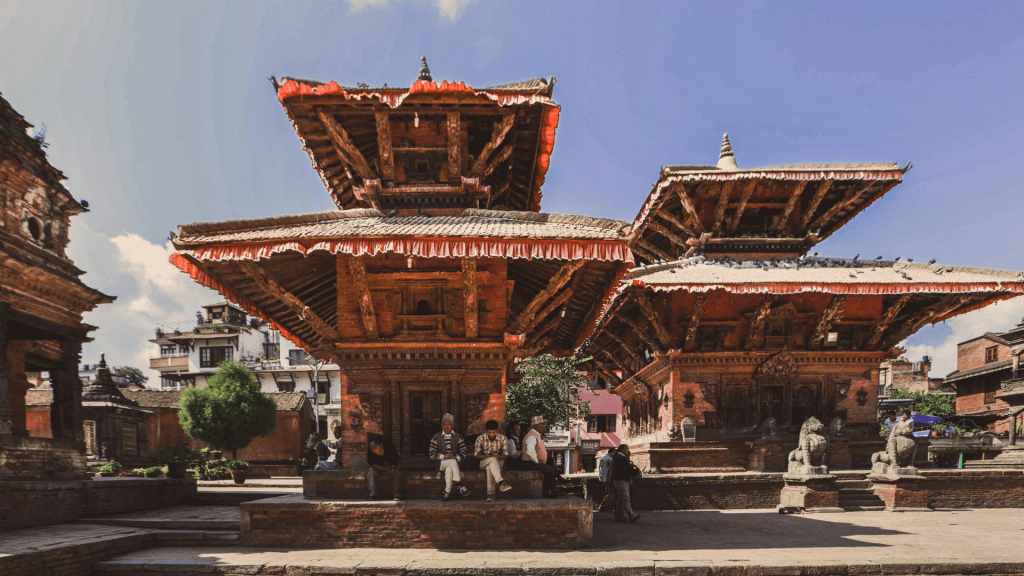
Nepal is the kind of place that’s hard to explain until you’ve been there. In a single trip you can explore UNESCO World Heritage sites in the Kathmandu Valley, hike through rhododendron forests to jaw-dropping mountain viewpoints, spot one-horned rhinos in the subtropical jungle, and watch Buddhist monks conduct ceremonies at clifftop monasteries. Not many countries can offer all of that in one go.
Budget travellers do very well here. You can live comfortably on USD $25 to $40 per day, covering a bed, three meals, and getting around. Mid-range travellers spending $50 to $90 per day get private guesthouses, good restaurants, and tourist buses. And if you want proper mountain lodges or heritage boutique hotels, those exist too, starting around $150 to $200+ per night.
The people are a big part of what makes Nepal special. Nepalis are genuinely hospitable in a way that doesn’t feel like a performance. Strangers invite you for tea. Shopkeepers give you directions without being asked. It’s a rare thing, and it stays with you long after you leave.
Best Time to Visit Nepal: A Season-by-Season Breakdown
Getting your timing right makes a real difference in Nepal. The country has four distinct seasons and two of them are significantly better than the others for travel. For a full month-by-month breakdown, see our guide on the best time to visit Nepal.
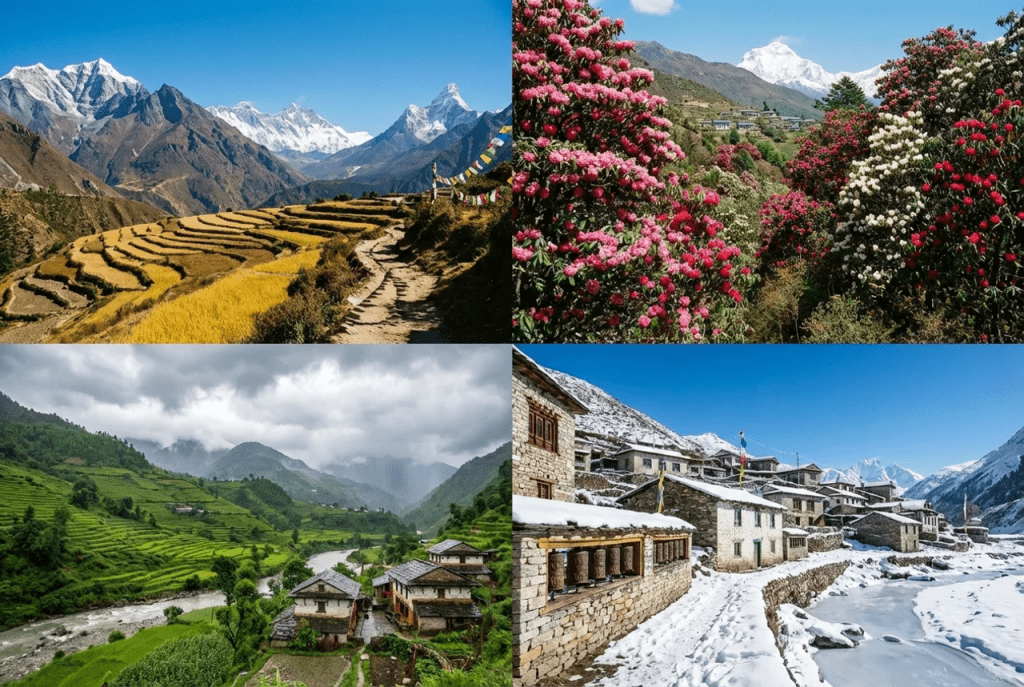
October to December: Peak Season for Good Reason
This is when Nepal is at its finest. The monsoon has just cleared out, leaving skies that are startlingly blue and mountain views that stretch forever. Daytime temperatures in Kathmandu hover around 20 to 25 degrees Celsius (68 to 77°F), cooling off at altitude. October and November are the sweet spot: dry trails, full teahouses on the trekking routes, and the Himalayas fully visible. Book accommodation on popular routes like the Annapurna Circuit and Everest Base Camp trail well in advance.
March to May: Spring and Rhododendrons
Spring is the second-best time to visit. Temperatures warm up, the hillsides explode in rhododendron blooms (Nepal’s national flower), and mountain visibility is generally good through April. May gets hazy and warm at lower elevations, but spring is also the main climbing season for Everest and the high peaks, so there’s an energy to it that’s hard to match.
June to September: Monsoon Season
The monsoon brings heavy rain, leeches on trekking trails, and frequent flight cancellations. On the upside, the landscape turns a vivid green, prices drop, and crowds thin out considerably. Rain-shadow regions like Upper Mustang and Dolpo stay relatively dry and are worth considering if you’re determined to travel during these months.
December to February: Cold but Peaceful
Kathmandu and Pokhara stay mild enough for city sightseeing and cultural exploration, but high-altitude passes and many trekking routes close under snow. Visitor numbers are low, guesthouses are quiet, and you can often negotiate good rates. For lower-altitude travel, winter works fine.
Nepal Visa Requirements: What First-Time Visitors Need to Know
Getting into Nepal is refreshingly simple for most nationalities. Almost every international visitor can pick up a Tourist Visa on Arrival at Tribhuvan International Airport in Kathmandu or at land border crossings from India and China. No need to visit an embassy beforehand. For full details on fees, required documents, and how to extend your stay, check our Nepal visa and entry guide.
- 15-day visa: USD $30
- 30-day visa: USD $50
- 90-day visa: USD $125
You’ll need a passport with at least six months of validity remaining from your entry date, one passport-sized photo, and the visa fee in cash. US dollars are the safest bet, though euros, British pounds, and several other major currencies are accepted. Indian nationals don’t need a visa at all. Citizens of other SAARC countries including Bangladesh, Bhutan, Maldives, and Sri Lanka typically get a free 30-day visa.
Most visitors can stay for up to 150 cumulative days per calendar year. The Nepal Department of Immigration website has the latest official information on requirements and fees. You can also pre-fill the visa form online through the government’s e-visa portal to save time at the airport.
Getting to Nepal and Getting Around
Flying In
Almost every international traveller arrives through Tribhuvan International Airport (KTM) in Kathmandu. It’s well connected to major hubs including Delhi, Dubai, Doha, Bangkok, Singapore, and a handful of European cities. Qatar Airways, Emirates, Air India, IndiGo, Thai Airways, and several Nepali carriers all serve Kathmandu. Flights from India are short and cheap; from Europe or North America you’ll usually have one stopover.
Overland from India
If you’re already travelling in India, crossing overland is a popular option. The main border crossings used by tourists are Sunauli (near Varanasi), Kakarbhitta (near Darjeeling), and Raxaul (for Kathmandu). Buses and taxis connect the border towns to Nepal’s main cities, though the journeys can be long.
Getting Around Inside Nepal
Tourist buses are the go-to for intercity travel. Kathmandu to Pokhara or Chitwan typically runs about USD $16 and takes six to eight hours through mountain scenery. Domestic flights are faster if you’re short on time: Buddha Air and Yeti Airlines fly to Pokhara, Bharatpur, Lukla (the starting point for Everest treks), and other regional airports. Shared jeeps and local buses cost less but take longer. In cities, taxis are everywhere; just agree on a fare before getting in or insist on the meter in Kathmandu.
The Three Must-See Destinations for First Timers
The classic first-trip circuit in Nepal covers three very different but complementary places. Most travellers combine them into a 10 to 14 day itinerary.
Kathmandu: Culture, Chaos, Ancient Temples
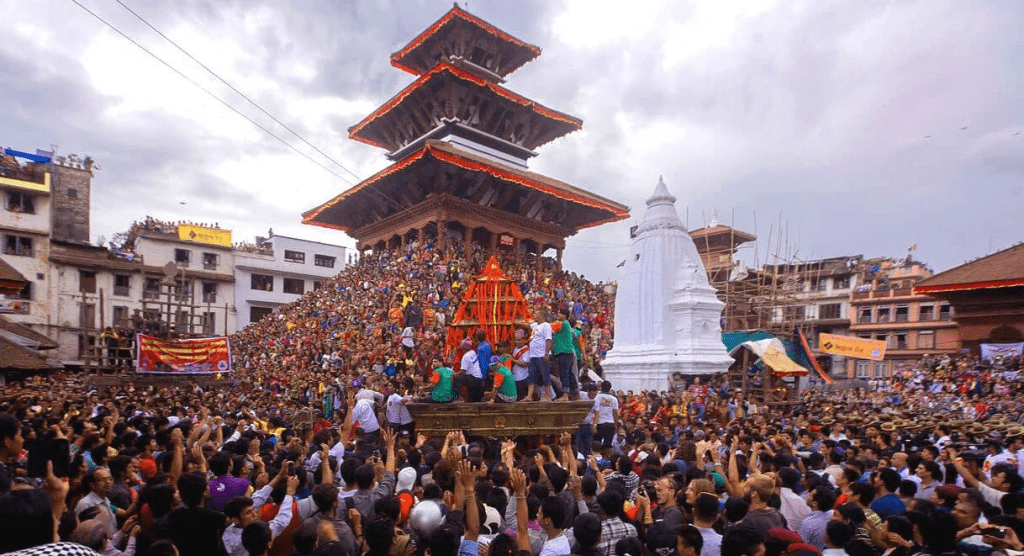
Nepal’s capital is a sensory overload, but in the best possible way. Start at Kathmandu Durbar Square, a UNESCO World Heritage Site packed with pagoda temples, carved wooden facades, and centuries of royal history. A short walk away, Boudhanath Stupa is one of the largest Buddhist stupas in the world, and watching pilgrims circle it in the early morning with prayer wheels spinning is one of those travel experiences that stays in your memory. Pashupatinath Temple on the banks of the Bagmati River gives you a window into Nepal’s deeply spiritual side. It’s not always easy to watch, but it’s unforgettable. For everything else to see, eat, and do in the city, our complete Kathmandu travel guide has you covered.
Pokhara: Lakes, Mountains, Adventure
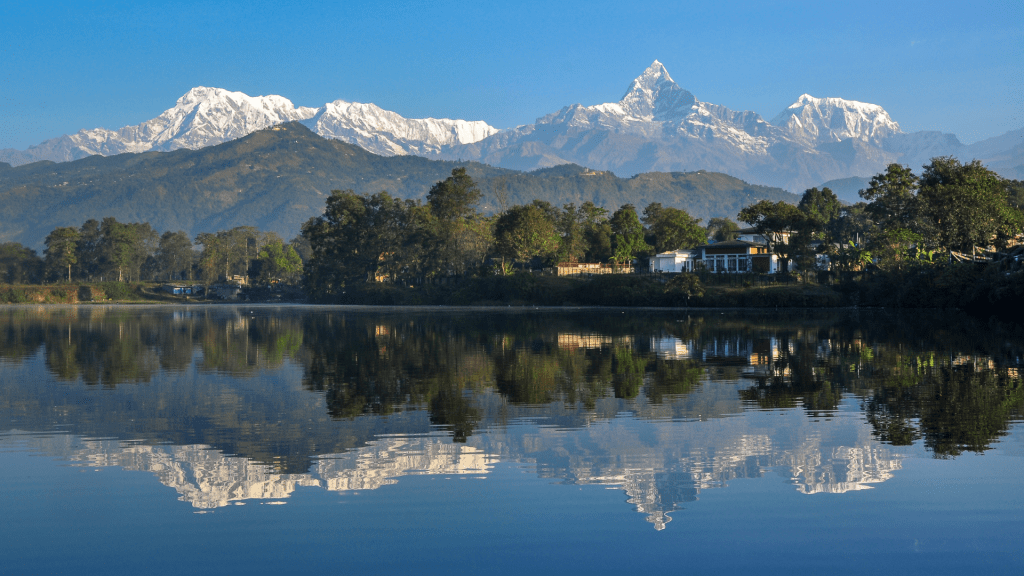
About 200 kilometres west of Kathmandu, Pokhara is Nepal’s second city and its adventure capital. The setting is genuinely stunning: Phewa Lake in the foreground, the jagged Annapurna range and the unmistakable shark-fin peak of Machhapuchhre (Fishtail) filling the horizon behind it. The Lakeside neighbourhood is relaxed and walkable, lined with cafes, restaurants, and trekking agencies. From here you can paraglide over the lake, take a short boat trip, visit the World Peace Pagoda, or set out on a multi-day trek into the Annapurna region. Our dedicated Pokhara travel guide goes into all the details.
Chitwan National Park: Jungle, Wildlife, Safari
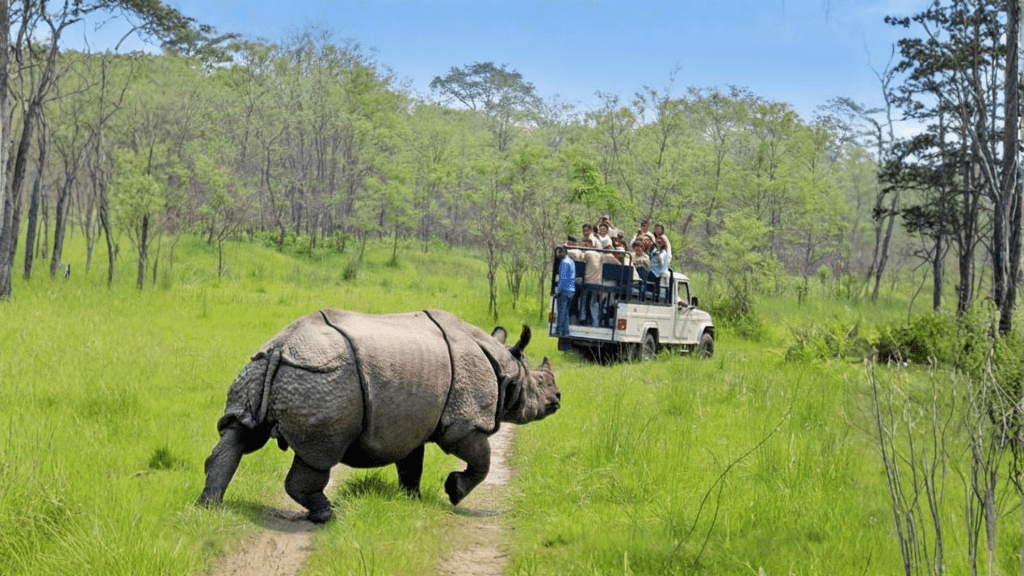
Most people don’t expect to go on safari in Nepal, which makes Chitwan all the more of a surprise. This UNESCO-listed national park in the subtropical lowlands is home to over 700 one-horned rhinoceroses, Bengal tigers, wild elephants, gharial crocodiles, and more than 500 bird species. Activities include guided jungle walks, canoe trips down the Rapti River, jeep safaris at dawn, and visits to Tharu villages. Even half-hearted wildlife fans usually leave absolutely hooked.
Trekking Options for First-Time Visitors
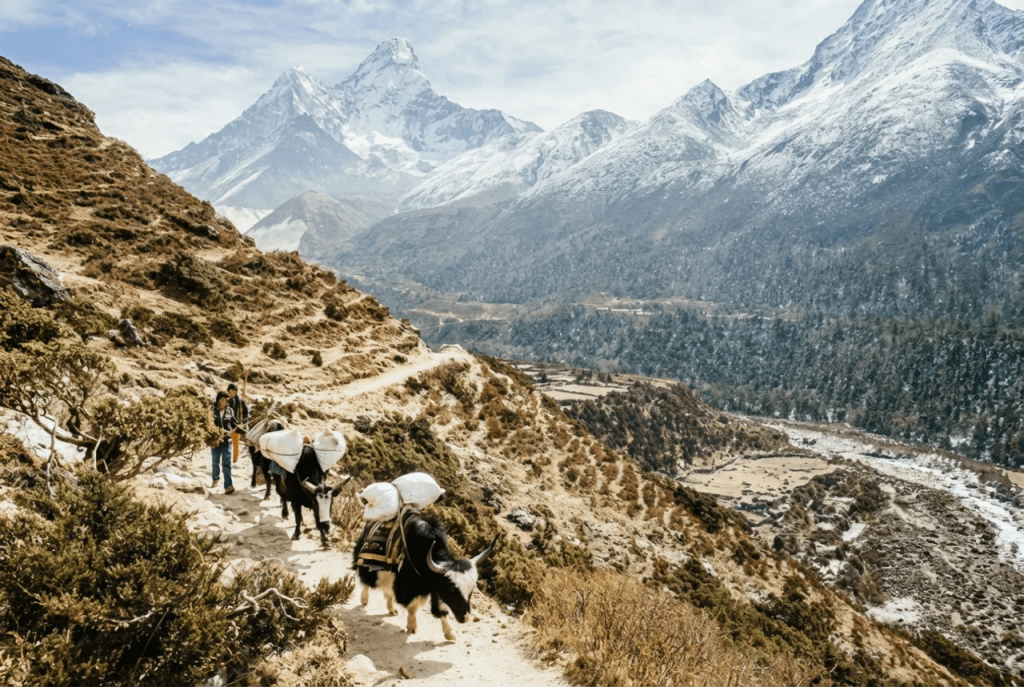
Nepal’s Himalayan trails are legendary, and you don’t need to be an experienced mountaineer to get on them. There are routes for every fitness level, from easy four-day loops to multi-week expeditions. Our full guide to trekking in Nepal for beginners walks you through everything from gear lists to permit requirements.
Ghorepani Poon Hill: Best First Trek
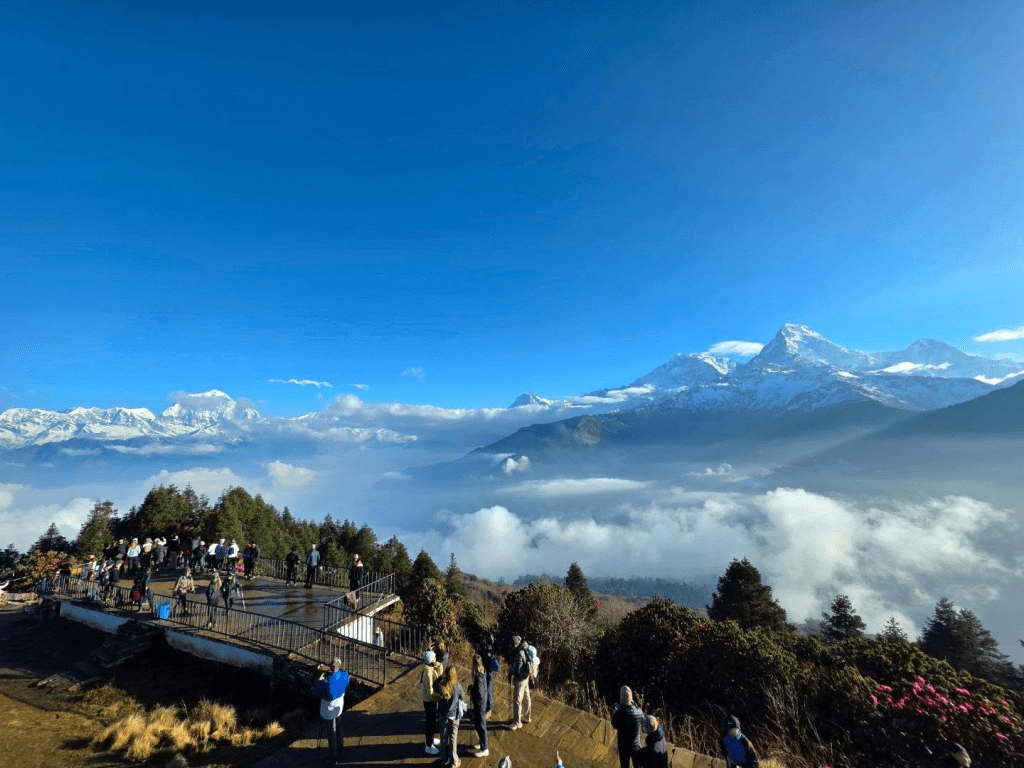
This four to five day loop in the Annapurna region is the most popular beginner trek in Nepal, and it’s popular for good reason. The trail winds through Gurung villages, dense rhododendron forests, and brings you to the sunrise viewpoint at Poon Hill (3,210m), where the full sweep of the Annapurna and Dhaulagiri ranges appears as the sky turns orange. No technical skill required, no special equipment beyond good walking boots and layers.
Langtang Valley: The Quieter Choice
Three to four hours north of Kathmandu, the Langtang Valley Trek is a seven to ten day route through traditional Tamang villages and high alpine meadows, with big views of Langtang Lirung (7,227m). It sees far fewer trekkers than the Annapurna region, which for many people is exactly the point.
Everest Base Camp: For the Committed
The classic bucket-list objective. Getting to Base Camp (5,364m) takes 12 to 14 days round trip and requires solid fitness, patience with altitude acclimatisation, and a proper budget. No climbing experience is needed. The trek through the Khumbu region, past Namche Bazaar and Tengboche Monastery, is its own reward before Base Camp even comes into view.
What to Eat: A Quick Food Guide for First Timers
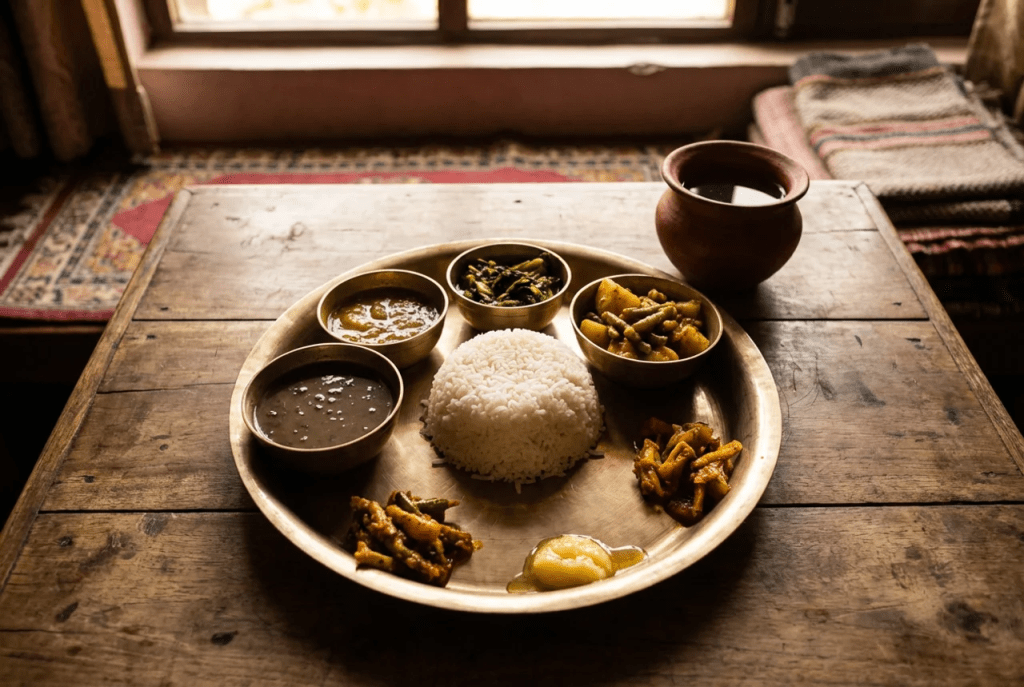
Nepali food is hearty, flavourful, and very easy on the wallet. The national dish is dal bhat, a thali of steamed rice, lentil soup, vegetable curry, and pickled sides, available absolutely everywhere for around USD $2.50 to $4. Many places offer unlimited refills, which makes it the fuel of choice for trekkers. Other dishes worth trying:
- Momos: Steamed or fried dumplings filled with meat or vegetables. Nepal’s most beloved street food and an instant favourite for most visitors.
- Sel roti: A crispy, slightly sweet ring of fried rice flour dough, often sold at festival stalls and roadside shops.
- Thukpa: A warming Tibetan-style noodle soup that shows up on almost every teahouse menu in the mountains.
- Gundruk: Fermented leafy greens with a tangy, slightly sour taste, commonly served as a side dish in local homes and restaurants.
- Chiya: Nepali milk tea, brewed strong with sugar and sometimes spices. The daily ritual of the entire country, from city offices to mountain teahouses.
Kathmandu and Pokhara both have strong international food scenes covering Italian, Indian, Mexican, and Western options alongside Nepali and Tibetan restaurants. Vegetarians and vegans will find plenty to eat throughout the country without any real difficulty.
Practical Tips Every First-Time Visitor Should Know
Money and ATMs
The local currency is the Nepali Rupee (NPR). As of 2026, USD $1 buys roughly NPR 133. ATMs are easy to find in Kathmandu and Pokhara but increasingly scarce once you head into remote areas, so carry enough cash before setting off on a trek. Credit cards are accepted at larger hotels and some restaurants in the cities, but most day-to-day transactions are cash only.
Health and Safety
Don’t drink the tap water. Stick to bottled water, a quality filter bottle, or purification tablets. Altitude sickness becomes a real risk above 3,000 metres, so ascend gradually, stay well hydrated, and don’t ignore the symptoms. Travel insurance that covers helicopter evacuation is strongly recommended for anyone trekking at altitude. Visit your doctor four to six weeks before departure to discuss recommended vaccinations, including hepatitis A, typhoid, and tetanus.
SIM Cards and Connectivity
Local SIM cards are cheap and easy to pick up at the airport or in any city (around NPR 100 to 200 for the SIM, plus data packs). Nepal Telecom and Ncell are the two main providers. WiFi is available in most hotels and cafes in the cities and along popular trekking routes, though speeds can be patchy.
Tipping
Tipping isn’t mandatory in restaurants but 10% is appreciated. Guides and porters depend heavily on tips as a significant part of their income: USD $10 to $15 per day for a guide and $5 to $8 per day for a porter is a widely accepted benchmark. Bargaining is normal at markets and souvenir stalls, but not at restaurants or shops with fixed prices.
Cultural Etiquette
Take your shoes off before entering temples and homes. Walk clockwise around stupas and mani walls (the stone walls carved with Buddhist prayers). Ask before photographing people, particularly at religious sites. Cover your shoulders and knees when visiting temples. A simple “Namaste” with palms pressed together and a slight bow goes a long way with locals and is almost always met with a warm smile.
How Much Does Nepal Cost? A Budget Breakdown
Nepal is one of the best-value travel destinations in Asia. Here’s what to expect across different travel styles:
- Budget/Backpacker: USD $20 to $40 per day covers dorm beds ($4 to $8), dal bhat meals ($2 to $5), local transport, and free sightseeing.
- Mid-range: USD $50 to $90 per day gets you private guesthouses ($15 to $40), proper restaurant meals ($5 to $15), tourist buses, and entrance fees.
- Comfort/Luxury: USD $150 to $300+ per day for boutique hotels, good restaurants, private transport, and guided tours.
Trekking adds to those costs. The Annapurna Conservation Area permit runs USD $30, a TIMS card costs another $10 to $20, and guide fees, porter fees, teahouse accommodation, and pricier mountain food all add up. Budget roughly USD $50 to $100 per day on a popular trekking route. The Nepal Tourism Board publishes current permit fees and official travel guidance.
Frequently Asked Questions
Is Nepal safe for solo travellers?
Yes, Nepal has a good safety reputation for solo travellers, including solo women. Violent crime against tourists is rare. The bigger risks are altitude sickness, road accidents on mountain highways (avoid night drives on mountain roads), and petty theft in crowded tourist areas like Thamel. Using reputable transport operators, staying aware of your surroundings, and carrying comprehensive travel insurance covers most scenarios.
Do I need a visa to visit Nepal?
Most nationalities do need a visa, but it’s straightforward to get on arrival at Kathmandu airport or at land borders. A 30-day tourist visa costs USD $50. Indian nationals are exempt. See our Nepal visa and entry guide for the full picture.
How many days should I plan for a first trip?
Ten to fourteen days is the sweet spot for covering Kathmandu, Pokhara, and Chitwan National Park without feeling rushed. Add a short trek like Poon Hill and you’re looking at fourteen to eighteen days minimum. Three weeks gives you room to breathe and follow interesting detours when they come up.
Do people speak English in Nepal?
Nepali is the official language, but English is widely spoken in tourist areas, hotels, restaurants, and trekking agencies, and by most younger Nepalis in the cities. You’ll have no trouble getting around in English throughout your trip.
Can beginners do treks in Nepal?
Absolutely. Treks like Ghorepani Poon Hill and the Langtang Valley are built for people with no trekking experience. All you need is a reasonable fitness level and the right gear. Read our trekking in Nepal for beginners guide for advice on preparation, what permits you’ll need, and what to pack.
What currency should I bring?
US Dollars are the most useful foreign currency to carry, since visa fees are paid in USD on arrival. Euros and British Pounds exchange easily too. Once you’re in Nepal, you’ll use Nepali Rupees for everything. Exchange money at official bank counters or hotel exchange desks rather than on the street.
Is the tap water safe to drink in Nepal?
No. Always use bottled water, a purification tablet, or a filter bottle. Boiled water is also safe and usually available at teahouses for free or for a small charge. A reusable filter bottle is worth buying before you go: it’s better for the environment and saves money on multi-day treks.
What vaccinations do I need for Nepal?
See a doctor or travel health clinic at least four to six weeks before your trip. Standard recommendations include hepatitis A, typhoid, and tetanus. Hepatitis B is worth considering for longer stays. Japanese encephalitis may be relevant if you’re spending time in rural lowland areas. Rabies vaccination is sometimes recommended for adventure travellers, and malaria prophylaxis may be advised for the Terai lowland region. Your doctor will give you a personalised plan based on your itinerary.
Start Planning: Nepal Is Ready for You
Nepal has a way of exceeding expectations no matter how high you’ve set them. From the incense-clouded streets of Kathmandu’s old city to the mirror-still surface of Phewa Lake at first light, from the thundering rivers cutting through the Annapurna foothills to the eerie quiet of a high mountain pass, this country delivers. This Nepal travel guide for beginners gives you the foundation. The rest is up to you. Namaste, and travel well.
Looking for off-the-beaten-path inspiration? Read our guides to Nepal’s remote Rara Lake trek and the sacred Tsum Valley, two of the country’s most spectacular hidden destinations.