


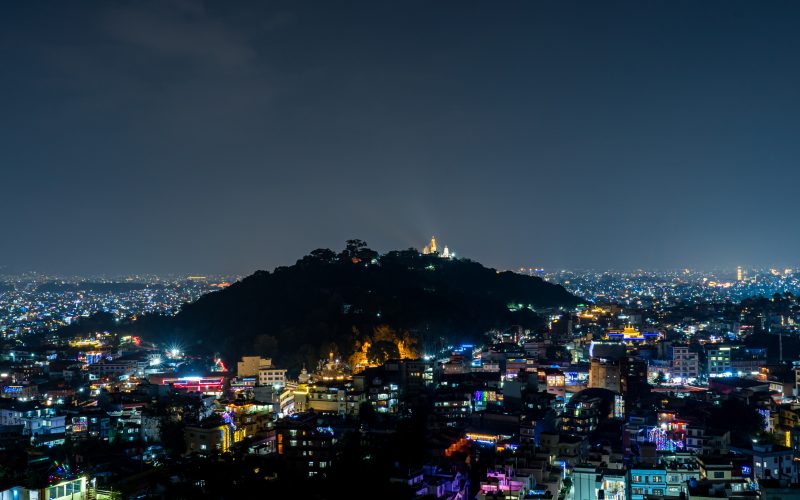
At dusk on the second evening of Tihar, the old streets of Kathmandu go quiet for a few strange minutes. Shops close early. Families disappear inside. Then, starting at the windows and spreading outward, hundreds of tiny oil lamps flicker to life, one by one, until every rooftop, doorstep, and courtyard is glowing. The city does not turn on. It ignites. This is Tihar festival Nepal, and nothing quite prepares you for it the first time.
Tihar is Nepal’s second-biggest festival after Dashain, but calling it second-biggest undersells it badly. For five consecutive days in late October or November, the entire country celebrates light, life, animals, and the bonds between siblings. It pulls together Hindu mythology, Newari tradition, folk music, and some of the most extraordinary street scenes you will find anywhere in Asia. If you are planning a trip to Nepal and Tihar lands during your window, rearrange your schedule. It is worth it.
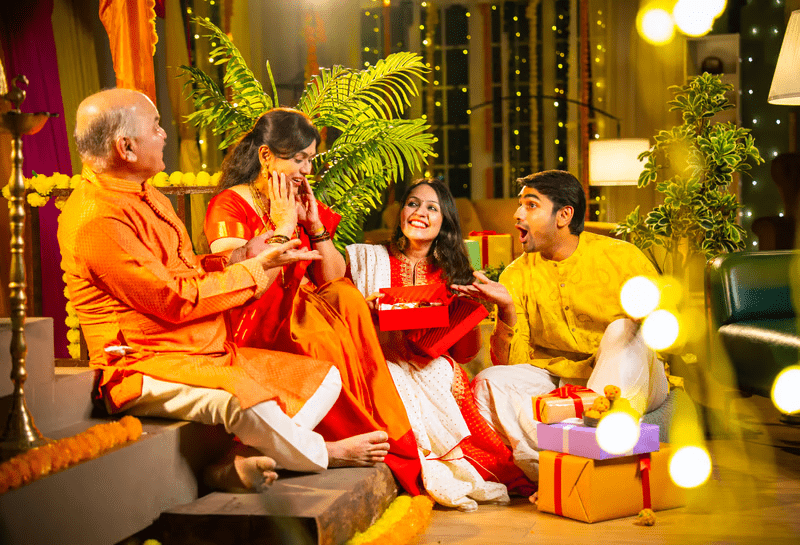
What Is Tihar? Understanding Nepal’s Festival of Lights
Tihar is a five-day Hindu festival honoring a series of animals, deities, and human relationships. It is also called Deepawali (the Sanskrit root of India’s Diwali), and sometimes Yama Panchak, which translates loosely as “five days of Yama,” referring to the Hindu god of death whose messengers and companions are central to the festival’s mythology.
The core theme is gratitude: gratitude toward animals that serve and protect humans, gratitude toward Lakshmi for wealth and prosperity, and gratitude between brothers and sisters. Each day has its own ritual focus, its own foods, and its own particular energy. No two days feel the same. That variety is part of what makes Tihar so memorable.
For Nepal’s Newari community, the festival carries an additional layer of meaning. The fourth day marks Nepal Sambat, the Newari New Year, making Tihar a doubly significant occasion in the Kathmandu Valley.
Tihar 2026 Dates: When Does the Festival Take Place?
Tihar falls on different dates each year because it follows the lunar Nepali calendar. In 2026, the festival runs from Saturday, November 7 through Wednesday, November 11. The dates correspond to Kartik 21 through Kartik 25 in the Bikram Sambat calendar (2083 BS).
The most important single evening is Day 2 (Lakshmi Puja), which falls on November 8, the new moon night. That is the darkest night of the lunar month, which is precisely why the light of thousands of oil lamps looks so dramatic. Plan to be somewhere with a good street view that night.
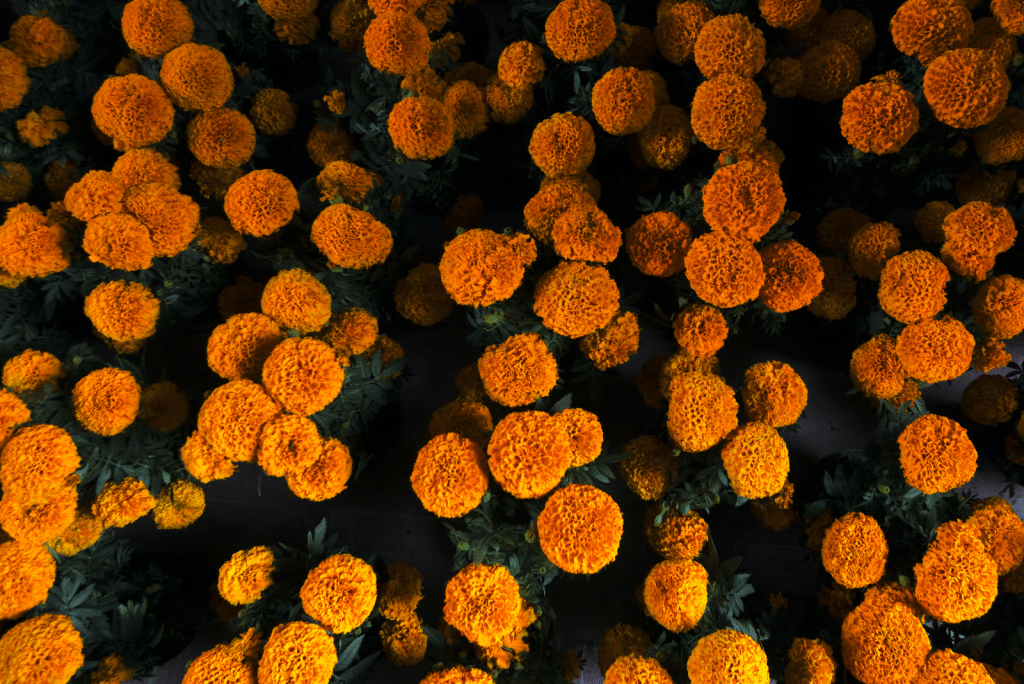
The Five Days of Tihar: What Happens Each Day
Day 1: Kaag Tihar – The Day of the Crow
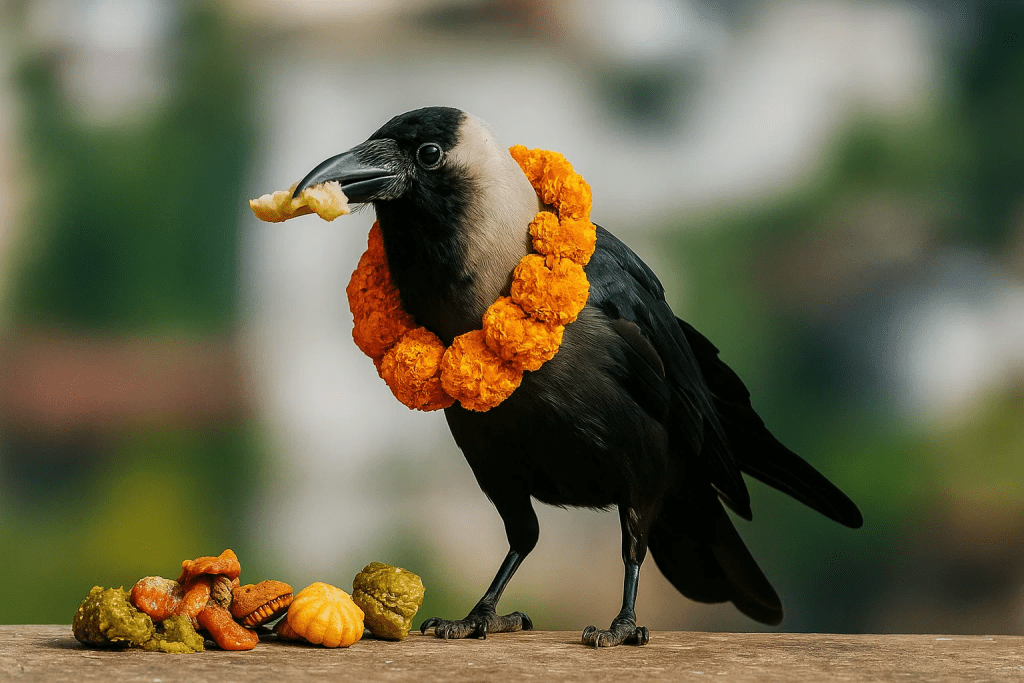
Crows are not the most glamorous way to begin a festival, but they serve a real purpose here. In Hindu tradition, crows are the messengers of Yama, the god of death. By feeding and honoring them on the first day, Nepali families send a message outward: we acknowledge your power, and we ask for your mercy. Offerings of rice, sweets, water, and sel roti are placed on rooftops and open spaces early in the morning before the crows appear.
The mood on Day 1 is quieter than what follows. It is more ritual than celebration, more a thoughtful beginning than a party opener. But it sets the tone for everything that comes after.
Day 2: Kukur Tihar – The Day of the Dog
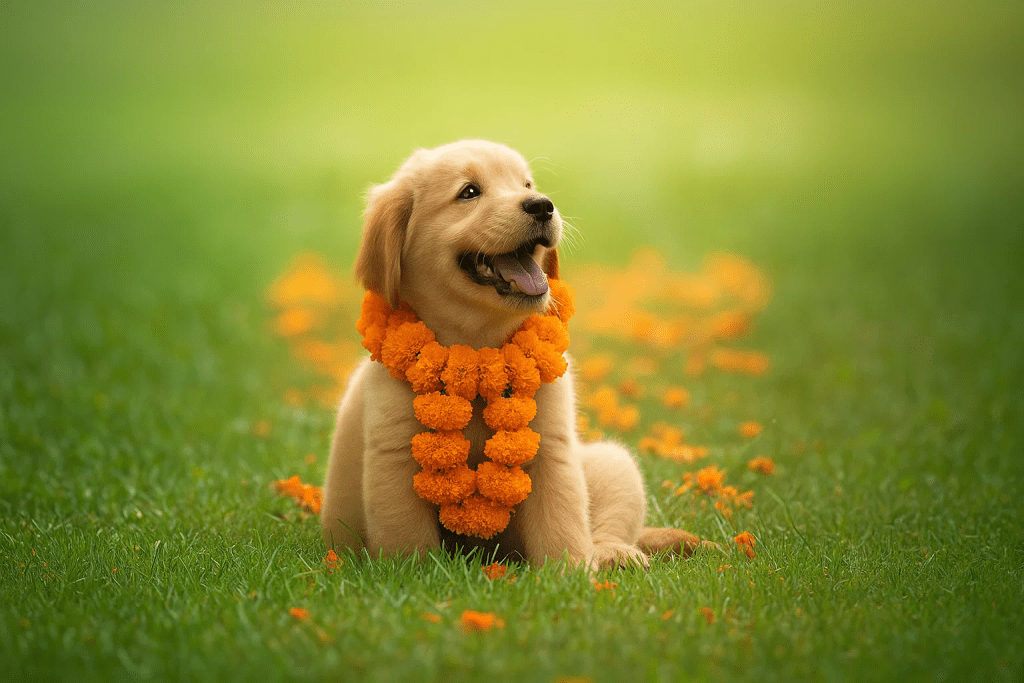
Here is where Tihar goes viral every year. On the second day, every dog in Nepal gets a tika on the forehead, a garland of marigolds around the neck, and a proper meal. Every dog. Pets, strays, police dogs, temple dogs. None are excluded.
The mythology runs deep. Dogs are linked to Yama as guardians of the afterlife, and there is a famous story from the Mahabharata in which the hero Yudhishthira refused to enter heaven without his loyal dog. The dog turned out to be Yama himself, testing Yudhishthira’s loyalty and compassion. Kukur Tihar honors that bond between humans and dogs, and it does so in one of the most photogenic ways imaginable. Streets fill with garlanded dogs wearing red tika, blinking in mild confusion, surrounded by people offering them meat and rice.
Animal welfare organizations across Nepal now use Kukur Tihar to highlight the importance of treating stray dogs humanely all year round. The contrast between one adorned day and the rest of the calendar is not lost on anyone.
Day 3: Gai Tihar and Lakshmi Puja – The Most Important Evening
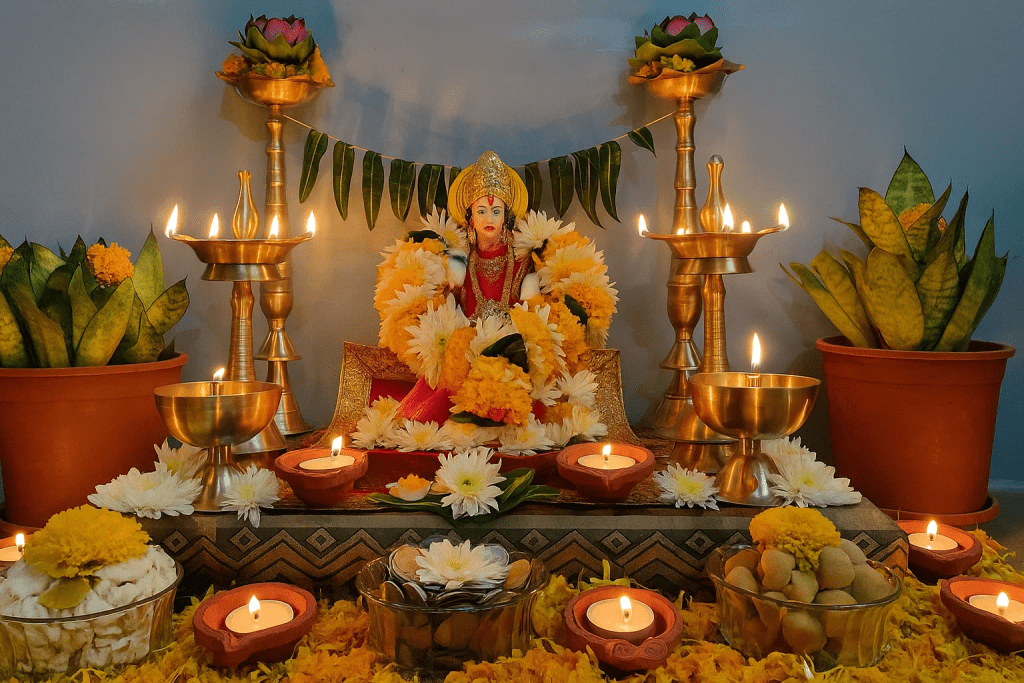
The third day is the emotional and visual centerpiece of Tihar. The morning belongs to the cow: Gai Tihar honors cows as sacred animals associated with wealth and nourishment in Hindu tradition. Families feed cows, garland them, and apply tika to their foreheads the same way they did for dogs the day before.
The evening is a different matter entirely. As darkness falls on the new moon night, households light their oil lamps, arrange them along every window sill and doorstep, and perform Lakshmi Puja to welcome the goddess of wealth and prosperity into their home. The belief is that Lakshmi moves from house to house on this night, entering through clean and well-lit doorways. A dirty, dark house is a house she will pass by.
This is the night when the rangoli appears. Families spend the afternoon creating intricate patterns on their floors and courtyards using colored rice, dry flour, flower petals, and pigment. The designs are meant to welcome and honor the goddess. Combined with the sea of diyo flames and electric string lights stretching across every building, the visual effect after dark is something you simply have to see.
Day 4: Govardhan Puja and Mha Puja
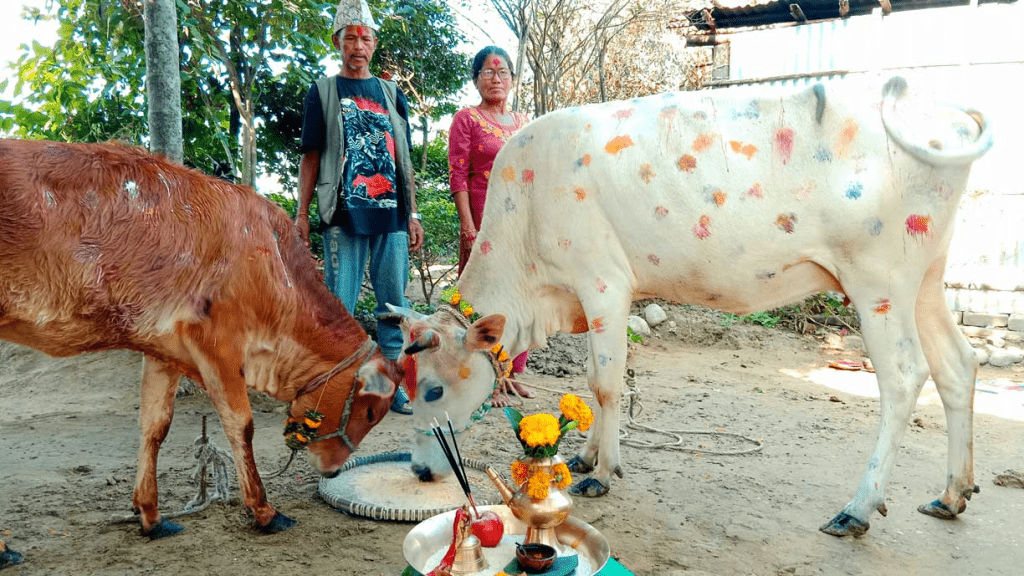
The fourth day honors the ox, or Goru, the working animal of Nepali agriculture. Oxen are fed, garlanded, and given rest from labor as a mark of respect for their contribution to farming life.
For the Newari community of Kathmandu Valley, Day 4 carries an entirely different significance. This is Mha Puja, literally “worship of the self.” It marks the Newari New Year and involves a deeply philosophical ritual in which participants worship their own bodies and spirits, recognizing that self-respect and self-care are prerequisites for honoring others. Far from being a celebration of vanity, the tradition serves as a structured reminder that one’s own life force deserves reverence.
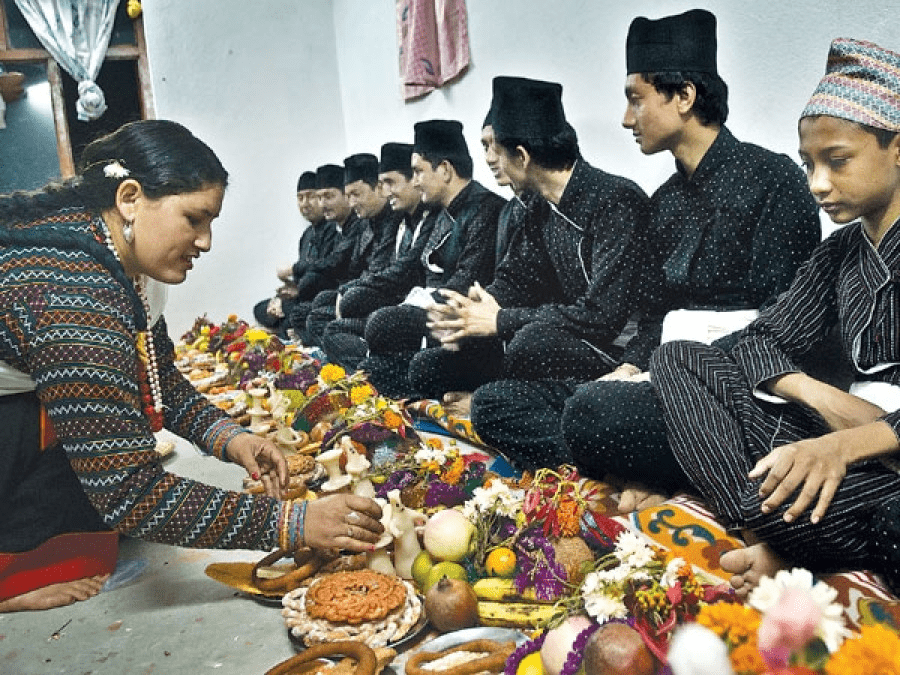
Mha Puja ceremonies are particularly concentrated in neighborhoods like Bhaktapur, Patan, and the old lanes of Kathmandu. If you have the chance to witness one, it is worth the effort of finding it.
Day 5: Bhai Tika – The Bond Between Siblings
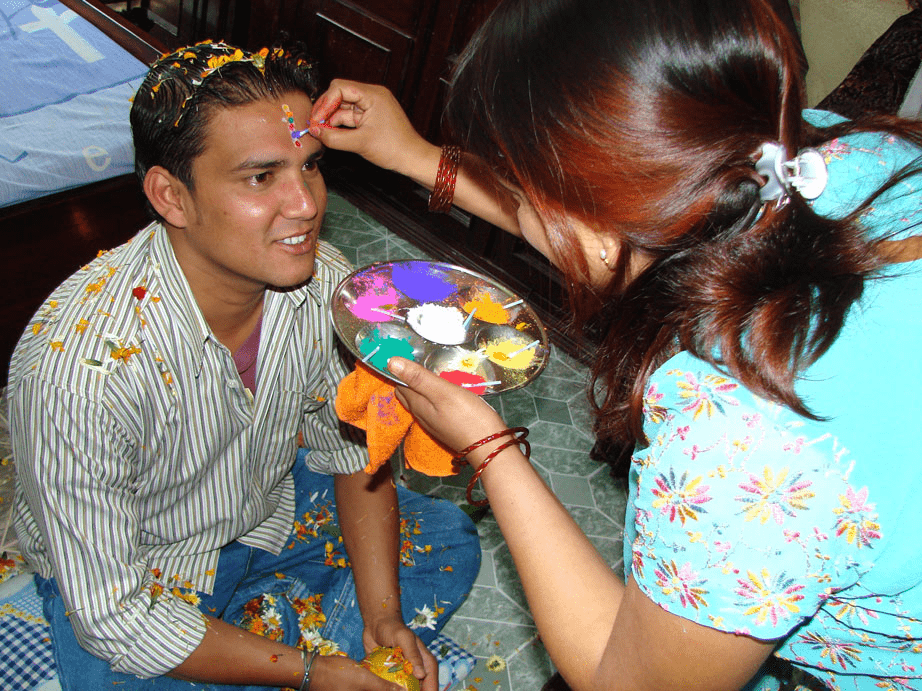
The final day of Tihar is Bhai Tika, and it belongs to brothers and sisters. Sisters apply a seven-colored tika to their brothers’ foreheads, garland them with Makhamali flowers (globe amaranth, chosen because it does not wilt, symbolizing lasting life for the brother), and offer oil lamps and sweets, all while performing a ritual that asks for their brother’s long life and protection. Brothers give gifts in return.
The mythology behind Bhai Tika involves the goddess Yamuna, whose brother was gravely ill. When Yama came to take his soul, Yamuna pleaded for more time and began an elaborate puja that grew longer and longer, eventually including Yama himself in the ceremony. She asked him to swear that her brother’s life would last as long as the tika remained on his forehead. Bhai Tika reenacts that bargain: the tika is a prayer, and a promise.
For many Nepali families, Bhai Tika is the most emotionally significant day of the year. Brothers travel home from wherever they have been working. Families who were apart come back together. It is one of those occasions where the whole country seems to breathe in unison.
Deusi and Bhailo: The Folk Music Tradition of Tihar
On the nights of Lakshmi Puja and the day after, groups of singers go door to door through neighborhoods performing Deusi and Bhailo, traditional folk songs that are one of the most joyful parts of the whole festival. Girls and women perform Bhailo on the night of Lakshmi Puja. Boys and men perform Deusi the following evening. The songs are call-and-response, led by a vocalist while a chorus responds with the refrain. Madal drums, khaijadi tambourines, and jhyali cymbals keep the beat.
Households open their doors and invite the performers in, offering money, sel roti, and sweets. The funds collected are traditionally pooled for community projects. In recent years, Deusi Bhailo groups have become increasingly organized, with neighborhood clubs raising money for local causes. The tradition is very much alive. On Lakshmi Puja evening in Kathmandu, you will hear the songs starting around 7pm and continuing late into the night from every direction.
The Food of Tihar: What to Eat During the Festival
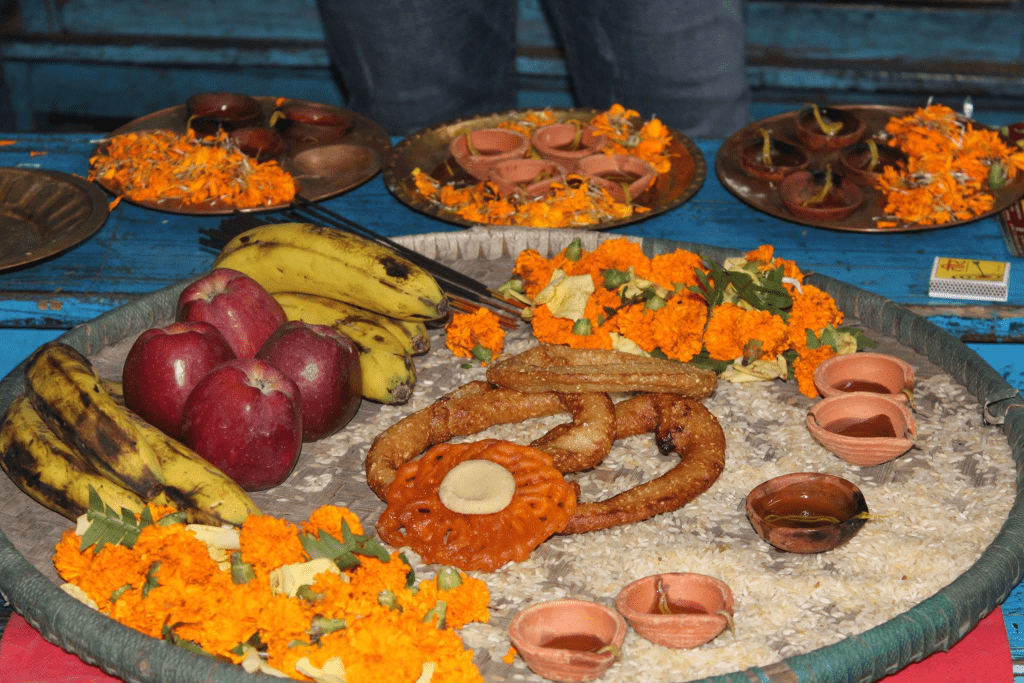
Sel roti is the undisputed centerpiece of Tihar food. A ring-shaped, deep-fried bread made from rice flour, ghee, cardamom, and cloves, it appears as an offering during Lakshmi Puja, a gift during Bhai Tika, and a snack at virtually every table across the five days. Its circular shape is said to represent the cycle of life. It is crispy on the outside, slightly chewy inside, and sweet without being cloying. Eat at least three. You will not regret it.
Beyond sel roti, expect laddus (dense sweet balls made with flour, sugar, and ghee), puri with vegetables, kheer (rice pudding), and a range of dried fruits and nuts offered as prasad. If you are invited into a Nepali home during Tihar, accept the food. Refusing is awkward and unnecessary. The hospitality during this festival is genuine and generous.
Best Places to Experience Tihar in Nepal
Kathmandu is the obvious answer, but it is the right one. The density of celebrations in Thamel, Patan, and particularly Asan and Indra Chowk makes the old city feel completely transformed. Lakshmi Puja night in the alleys around Asan Bazaar, where every lamp is oil-lit and the rangoli covers the ancient stone courtyard, is one of those rare travel experiences that actually exceeds the photos.
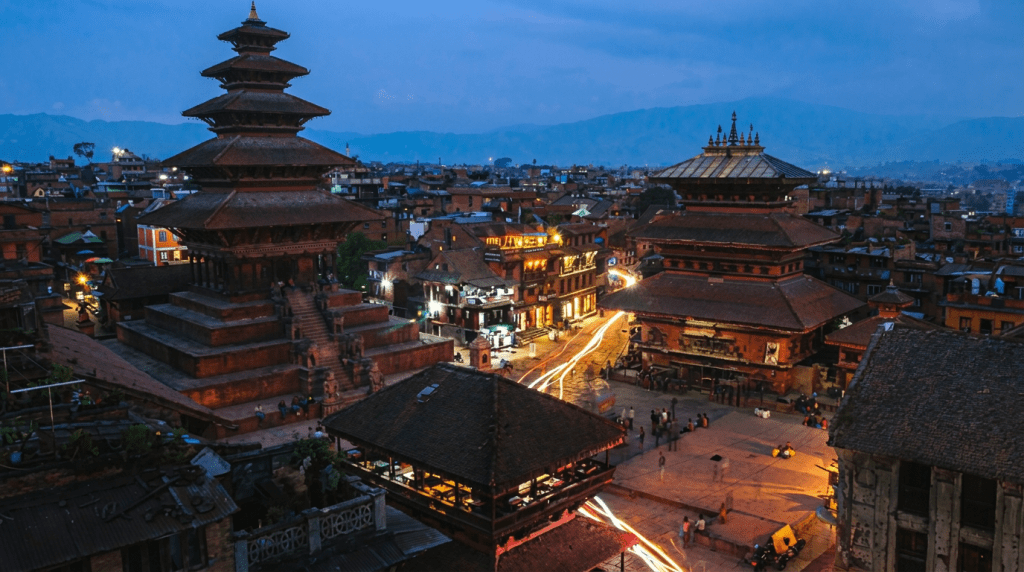
Bhaktapur deserves a special mention. The Newari cultural roots run deeper here than anywhere else in the Valley, and Mha Puja on Day 4 is performed with particular ceremony and seriousness. Newari culture is on full display across all five days.
Pokhara offers something unique: the festival lights reflected across Phewa Lake. On Lakshmi Puja evening, the lakeside promenade is lit up, and the doubling effect on the water makes the whole scene feel slightly unreal. It is a quieter experience than Kathmandu, which some visitors actually prefer.
For religious ceremonies and traditional observance, Janakpur in the southern Terai region has significant celebrations rooted in its Maithili Hindu traditions. It is a longer journey from Kathmandu, around 225 km southeast, but worthwhile if you want to see Tihar in a context that feels very different from the Valley.
Practical Tips for Visitors During Tihar
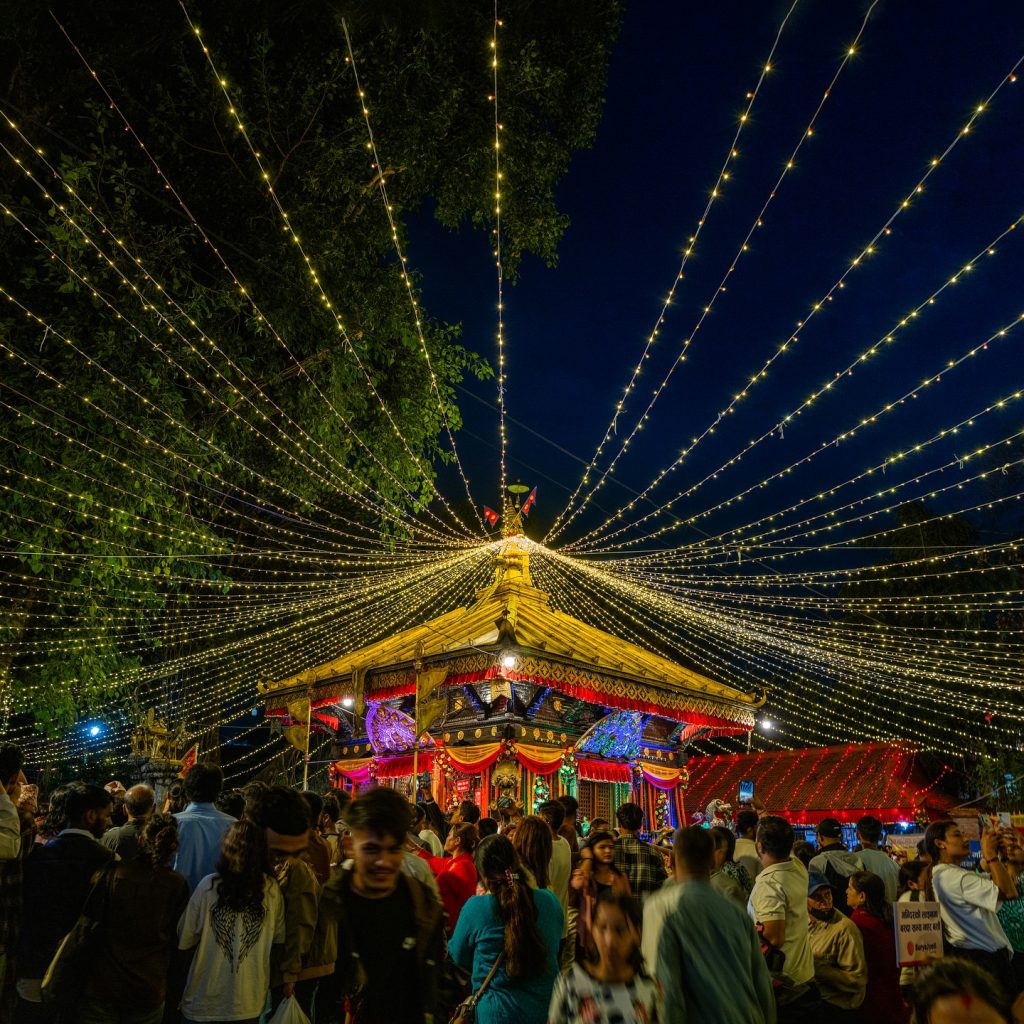
Plan for noise and crowds, especially on Lakshmi Puja evening. Central Kathmandu will be packed. Book accommodation in advance if you are visiting during the festival window.
Carry small denomination notes. Deusi Bhailo groups will come to your guesthouse door, and it is both polite and fun to participate. A small cash contribution is appropriate and expected.
Ask before you photograph. The tika ceremonies and family rituals on Bhai Tika are genuinely private moments. People are usually generous about sharing access, but asking first goes a long way.
Expect some shops to be closed during the first few days. Stock up on snacks and water beforehand. The flip side is that the city feels less commercial and more alive during Tihar than at almost any other time of year.
If you are visiting Nepal more broadly and want context on where Tihar fits into the calendar, the Nepal festivals calendar guide covers all the major dates and what to expect at each one. The Nepal first-time visitor guide is also worth reading if this is your first trip.
For more detail on Tihar’s dates, the Nepal Tourism Board’s official Tihar page is the most reliable source.
Frequently Asked Questions About Tihar Festival Nepal
When is Tihar in 2026?
Tihar 2026 runs from Saturday, November 7 through Wednesday, November 11. The most celebrated night, Lakshmi Puja, falls on November 8 — the new moon night. Exact dates shift each year based on the lunar Nepali calendar, so check the current year’s dates if you are planning ahead.
Is Tihar the same as Diwali?
They share roots, but they are not the same festival. Both Tihar and Diwali (celebrated widely across India) involve lights, Lakshmi worship, and a five-day structure. But Nepal’s Tihar has its own distinct days dedicated to crows, dogs, and cows that Diwali does not include, plus the Bhai Tika sibling ceremony and the Newari Mha Puja tradition. The cultural expression is distinctly Nepali.
What makes Kukur Tihar so well-known internationally?
The images of garlanded, tika-adorned dogs spread across international media every year because they are genuinely unusual and deeply moving. In a world where stray dogs are often mistreated, seeing an entire country formally worship them for a day creates an impression. Both pets and street dogs receive garlands, food, and red tika on Kukur Tihar, with no exceptions.
Can tourists participate in Tihar celebrations?
Yes, and most Nepali families are genuinely welcoming. If you are staying in a guesthouse or hotel, the staff will likely include you in small celebrations. Accepting sel roti and sweets when offered, contributing to Deusi Bhailo groups, and watching the Lakshmi Puja lighting from a respectful distance are all appropriate ways to engage. Asking permission before photographing private rituals is the main thing to keep in mind.
What is the significance of the seven colors in Bhai Tika?
The seven-colored tika applied by sisters on Bhai Tika is made by mixing different natural materials, including oil, yogurt, dried dung, soil, and various flowers and powders. Each component carries its own symbolic meaning related to prosperity, health, and protection. The ritual itself reenacts the mythological bargain between the goddess Yamuna and Yama, in which the tika was used to extend a brother’s life.
What should I eat during Tihar?
Start with sel roti, the ring-shaped fried rice bread that is practically the official food of the festival. Follow that with laddus, kheer (sweet rice pudding), and puri served with vegetable curries. If you are lucky enough to be invited to a family meal on Bhai Tika, that is when the spread is at its most generous.
How does Tihar differ from Dashain?
Dashain, which falls about two weeks before Tihar, is longer (15 days), more specifically focused on goddess worship and animal sacrifice, and more family-centered in a homecoming sense. Tihar is shorter, more visually spectacular, more community-oriented (through the Deusi Bhailo tradition), and distinctive for its focus on animals and light. Many Nepalis say Dashain is the more religiously serious festival, while Tihar is the more joyful one. The two festivals together define Nepal’s festive calendar in a way nothing else does.
Is it a good time to trek during Tihar?
Tihar falls in November, which is peak trekking season in Nepal. The skies are clear, the temperatures are crisp, and the trails are busy with other hikers. The festival adds an extra reason to be in the country at this time. Just be aware that some teahouses and support staff take a few days off during Bhai Tika, so plan your trekking schedule with a small buffer around November 10 and 11. Read more about timing your trek in the best time to visit Nepal guide.