


Most visitors expect Dashain to be a colorful street party, something like a South Asian version of Mardi Gras. What they find is something entirely different: a deeply personal family reunion that also happens to shut down the entire country for two weeks. Dashain festival Nepal is not a spectacle you watch from the outside. It is something you experience from inside a home, surrounded by three generations of one family, with a smear of red tika drying on your forehead and a plate of slow-cooked goat curry in front of you.
If you are traveling through Nepal in October, understanding Dashain is not optional. It shapes everything: what is open, who is around, how people feel, and what the country looks and sounds like. Here is what you actually need to know.
What Is Dashain and Why Does It Matter So Much?
Dashain is a 15-day Hindu festival rooted in the worship of the goddess Durga. At its core, it celebrates the triumph of good over evil: specifically, Durga’s victory over the buffalo demon Mahishasura. The mythology runs deep, but the lived experience of the festival is less about religious doctrine and more about family obligation, gratitude, and renewal.


Here is what most guides won’t tell you: Dashain functions as Nepal’s version of a national reset button. Offices close. Buses are packed with people heading back to ancestral villages. Kathmandu, normally a city of relentless energy, empties out significantly in the days before Vijaya Dashami. If you are trying to do business, get paperwork done, or visit a lot of tourist sites, this is genuinely the wrong time. If you want to understand how Nepali society actually works, it is the perfect time.
Around 80 percent of Nepal’s population is Hindu, and the festival cuts across ethnic and economic lines in a way few events do. Even many Nepali Buddhists and members of other faiths participate in some form of the celebration.
2026 Dashain Dates: Day by Day
Dashain follows the lunar calendar, so the dates shift each year. In 2026, the festival runs from Sunday, October 11 to Sunday, October 25. Not all 15 days carry equal weight. These are the ones that actually matter:
Ghatasthapana (Day 1): October 11
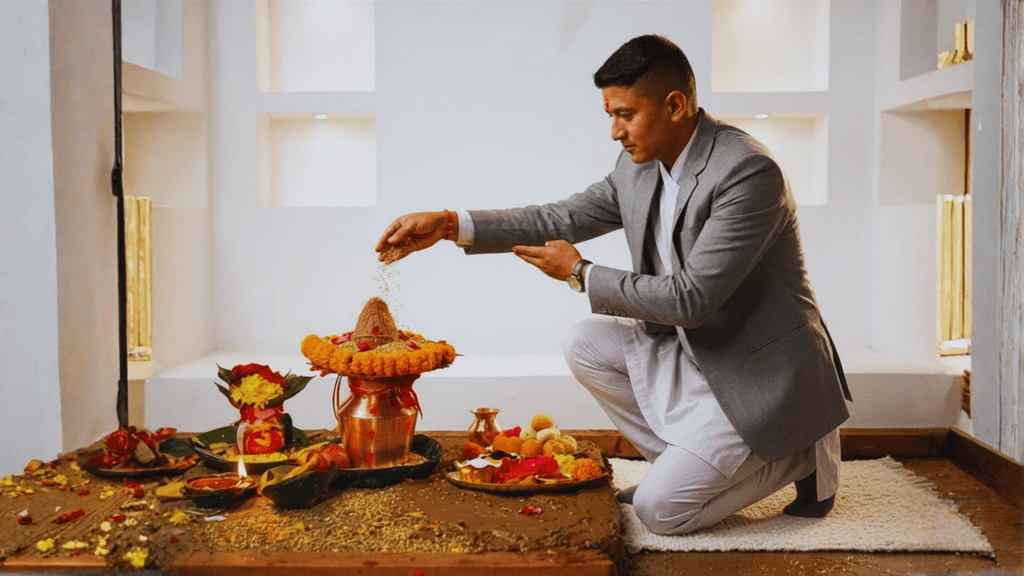
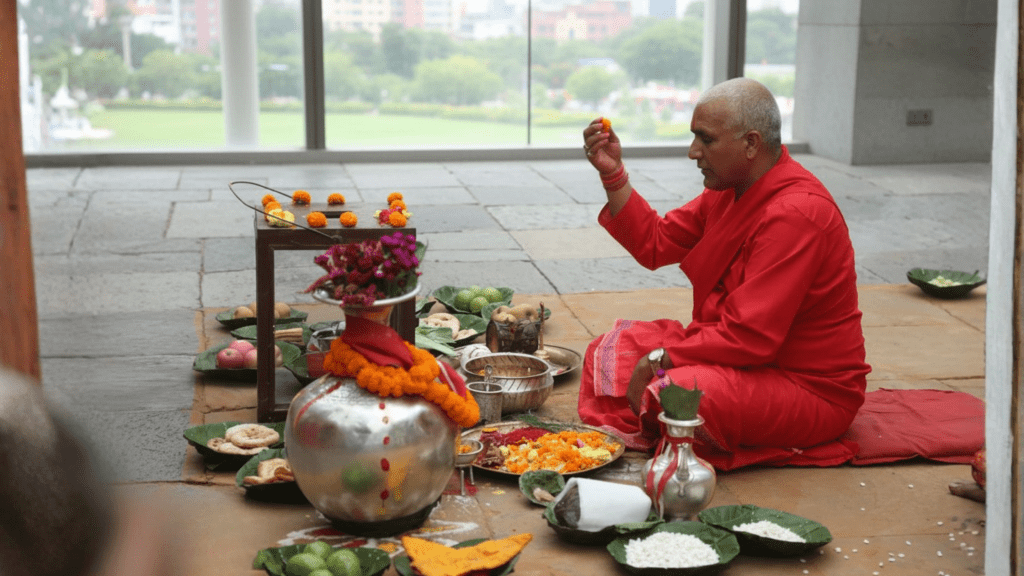
The festival opens with Ghatasthapana, which translates roughly as “establishment of the holy vessel.” Families clean a dedicated puja room, set up a clay pot filled with sanctified sand, and plant barley seeds. These seeds will germinate into jamara, the pale yellow shoots that play a central role on Tika Day. The pot represents Durga herself. For the next nine days, an oil lamp burns continuously in the room, and the seeds are watered with care. It is a quiet, domestic ritual. Modest and important.
Phulpati (Day 7): October 17
By Phulpati, the country is visibly in motion. This is when most workers and students who live away from their families begin the journey home. Roads between Kathmandu and the Terai become genuinely chaotic. Buses are overloaded. If you are traveling by road on or around October 17, give yourself extra time. Phulpati itself involves the formal arrival of sacred flowers, leaves, and plants at the royal palace compound, brought in procession from Gorkha.
Maha Ashtami (Day 8): October 18
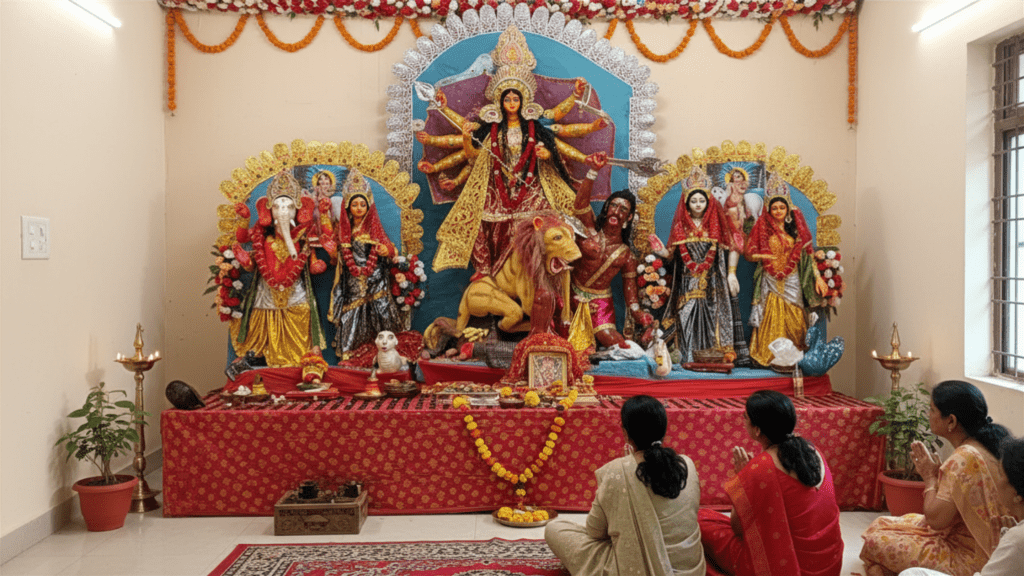
The eighth day marks the beginning of the most spiritually intense period. Temples across Nepal, particularly those dedicated to Durga, Kali, and Kumari, become centers of intense activity. Devotees fast, pray, and make offerings. Animal sacrifices begin at larger temples. For travelers, Ashtami is a good day to visit a major Durga temple in the early morning, before crowds peak. Pashupatinath and Dakshinkali in Kathmandu are both significant during this period.
Maha Navami (Day 9): October 19-20
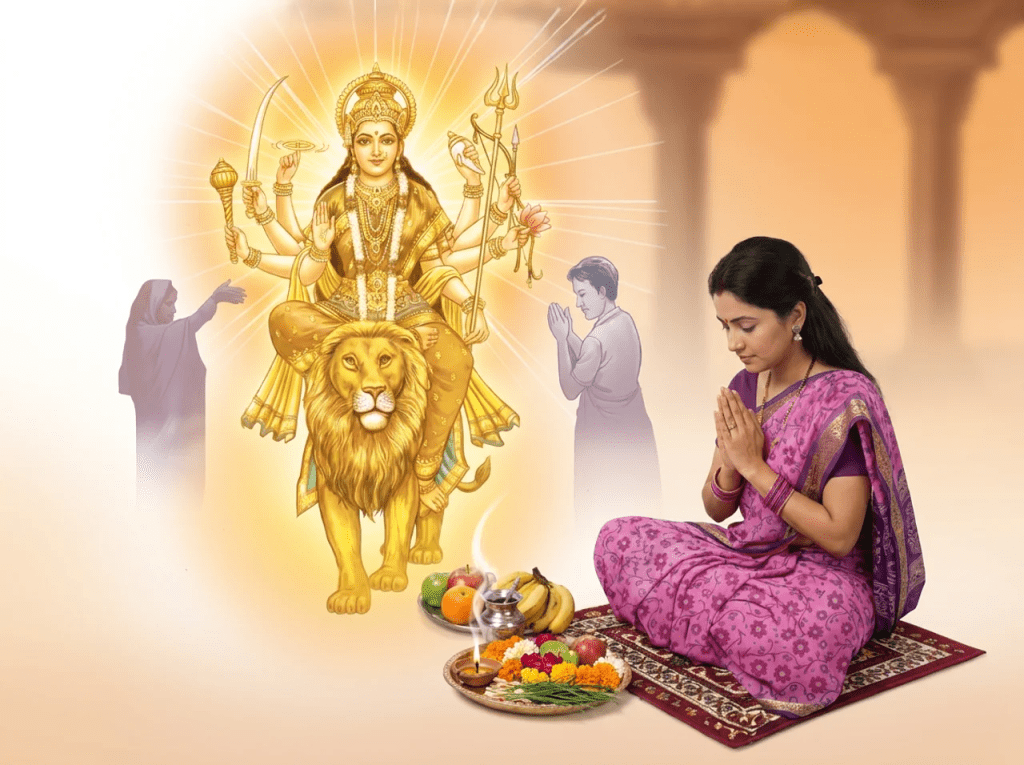
Navami is the most visceral day of Dashain. Thousands of animals, mainly goats and buffaloes, are sacrificed in honor of Durga across temples and family courtyards throughout Nepal. At Hanuman Dhoka in Kathmandu’s Durbar Square, soldiers and government officials gather for official ceremonies. Taleju Temple, which is closed to the public for most of the year, opens its gates on Navami, drawing massive queues of Nepali Hindu devotees. Non-Hindus are generally not permitted inside.
This is also the day when vehicles, tools, and instruments of work receive ritual blessings. Mechanics garland their wrenches. Pilots and drivers decorate their vehicles with marigolds and receive tika. It is a genuinely unusual thing to see, and uniquely Nepali.
Travelers should know that Navami is not a comfortable day for anyone who is sensitive to the sight or smell of ritual slaughter. The reality of the day is not softened in practice. Go in with clear eyes or plan your itinerary around it.
Vijaya Dashami (Day 10): October 21
This is the emotional center of the entire festival. Tika Day.
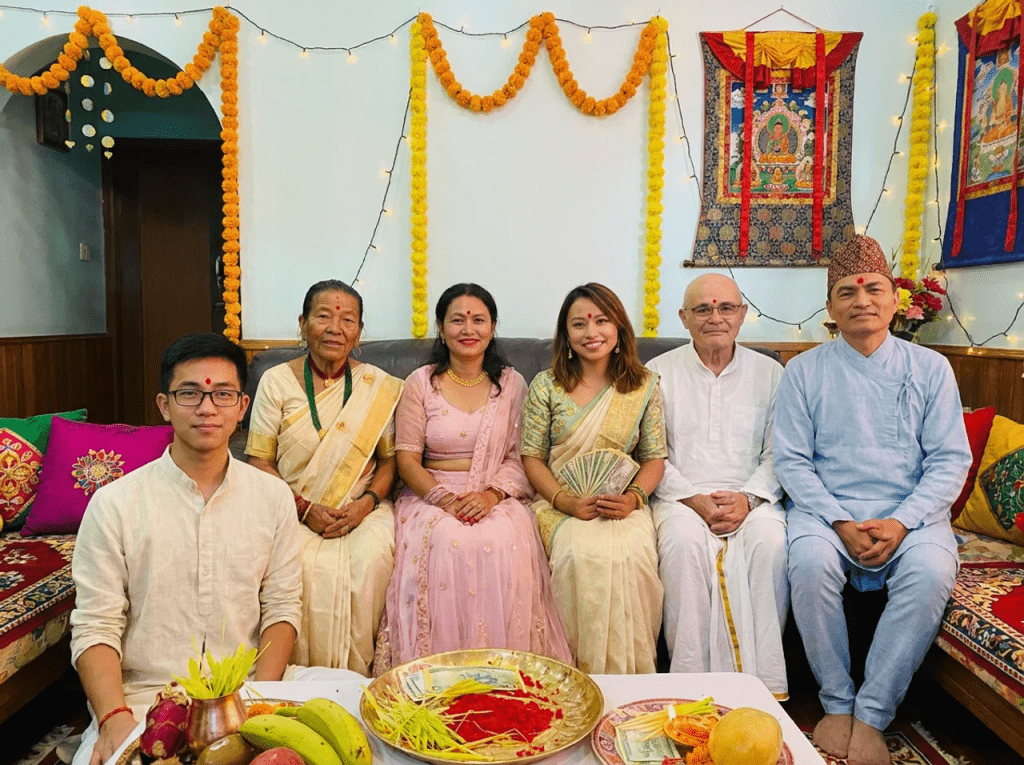
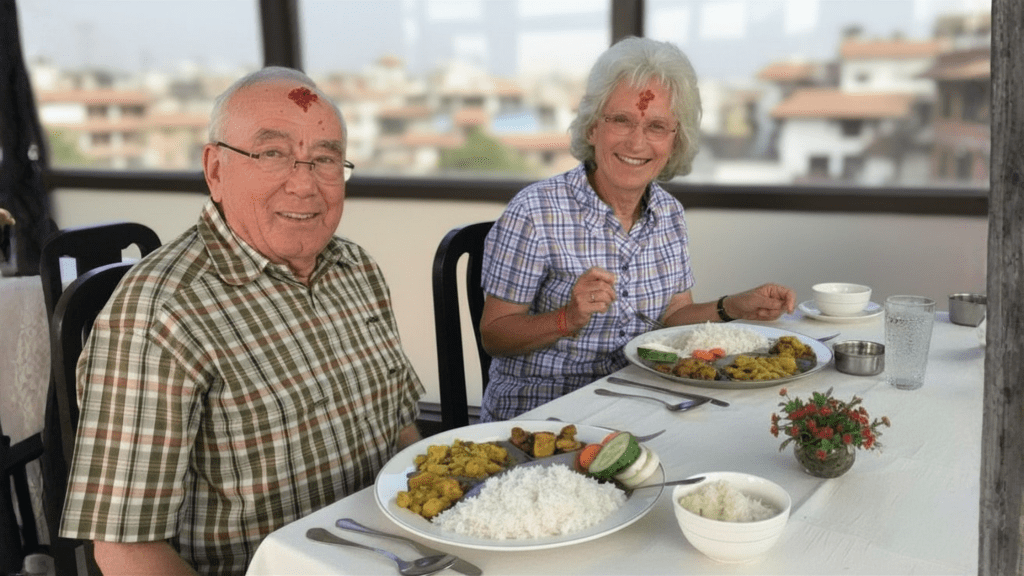
From early morning, family gatherings begin across the country. Younger family members visit their elders in order of seniority, beginning with grandparents and parents. Elders prepare a paste of red vermilion, yogurt, and rice, mix it together, and press a tika onto the forehead of each younger relative. Together with the tika comes jamara, the yellow barley shoots grown since Ghatasthapana, which are tucked behind the ear. Blessings are spoken. Money and gifts are often exchanged. The ceremony is repeated across generations, sometimes taking most of the day.
The tika is not cosmetic. It carries genuine spiritual weight for most Nepalis. Being invited to receive tika from a Nepali family is one of the more meaningful things that can happen to a traveler in this country. If you are offered it, accept it.
Kojagrat Purnima (Day 15): October 25
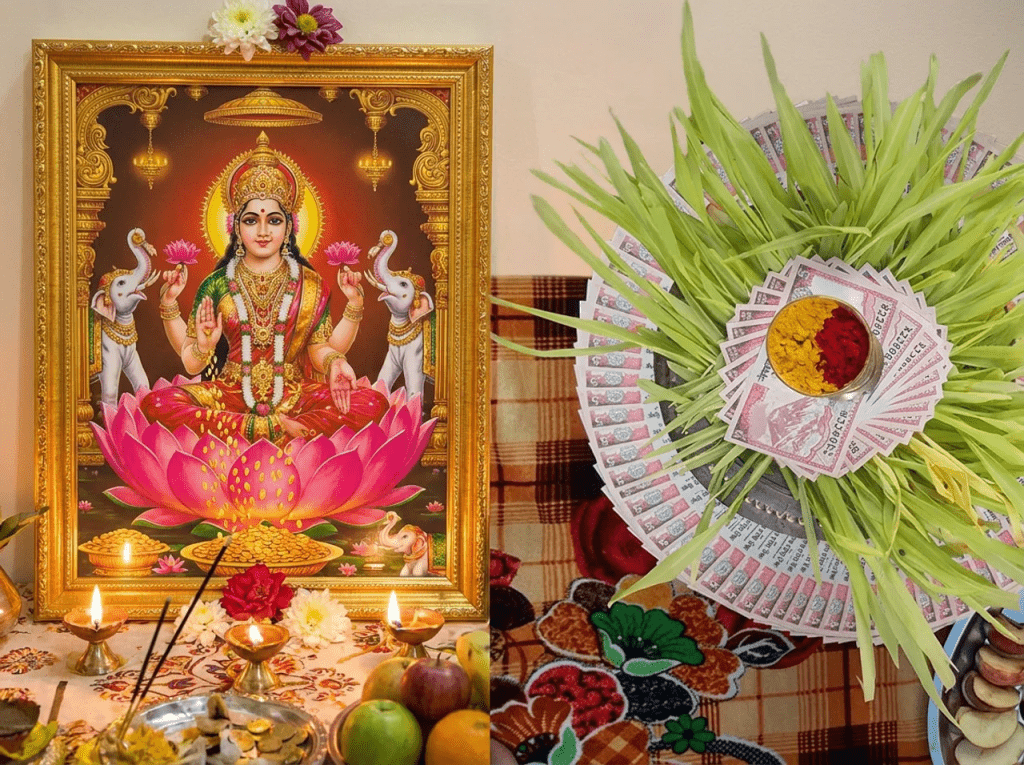
The festival closes with the full moon night of Kojagrat Purnima. Families stay up late, worship Lakshmi, the goddess of wealth, and share rice pudding called kheer. It is a quiet conclusion after ten days of sustained intensity. By this point, most travelers back to Kathmandu from the countryside are already flowing in, and the city starts to resume normal operations.
What to Eat During Dashain
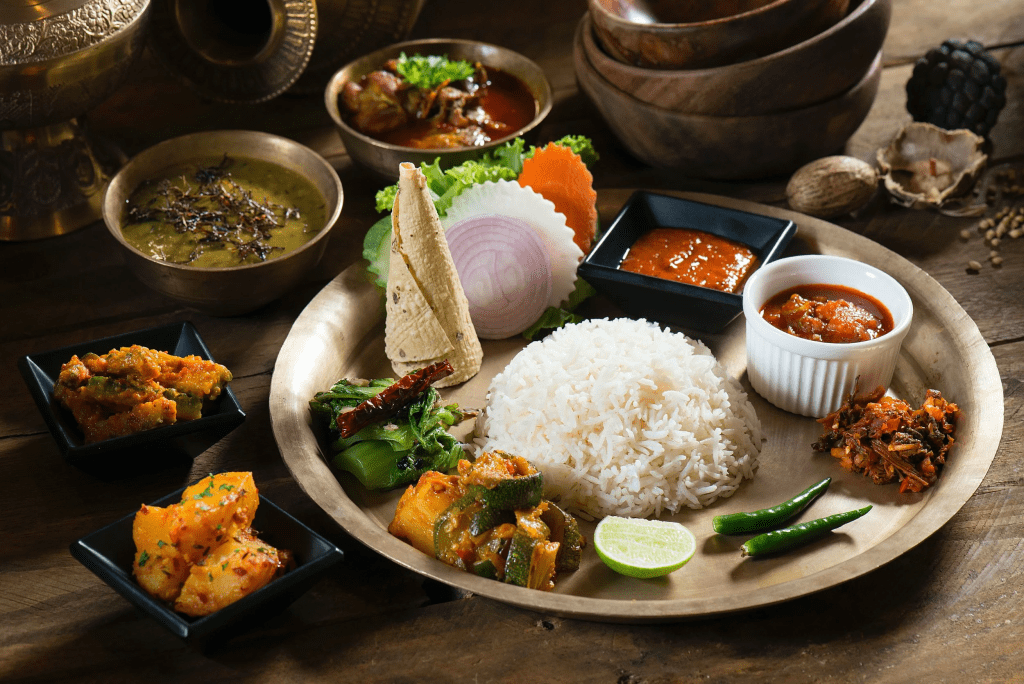
Food is inseparable from Dashain. Families that eat simply most of the year make an exception during the festival. Goat and buffalo meat feature prominently. Sel roti, a sweet deep-fried rice flour ring, shows up in nearly every household. Kheer is made in large batches. Homemade alcohol, including raksi and tongba, flows freely at family gatherings.
Restaurants in Kathmandu are largely closed around the main days of the festival, particularly on Dashami. If you are in the city during this period, stock up on supplies the day before. Thamel, catering to international travelers, keeps more businesses open than other neighborhoods, but availability is still limited.
The Kites and the Swings: Dashain’s Lighter Side
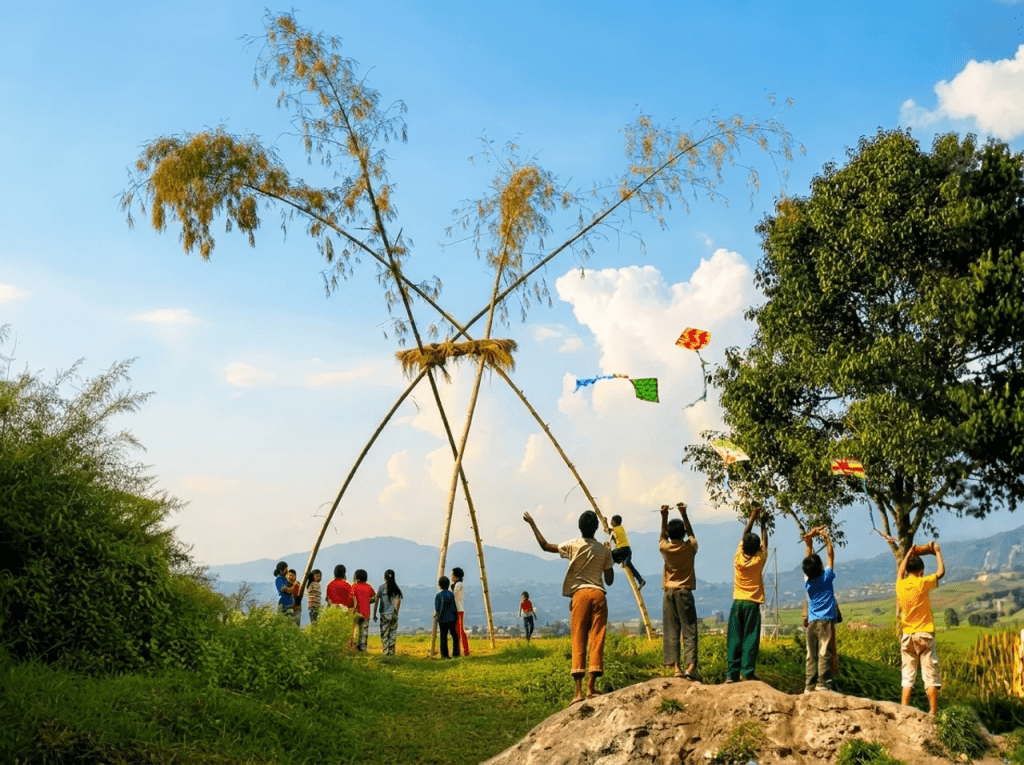
Two customs define the outdoor energy of Dashain. Kite flying fills the sky across Nepal for most of the festival period. The tradition is tied to the end of monsoon season: kites are said to send a message to the rain gods that their work is done for the year. Rooftops in cities become competitive arenas. The shout of “changa chet,” called out when one kite cuts another’s string, is as characteristic of October in Nepal as the smell of incense and marigold.
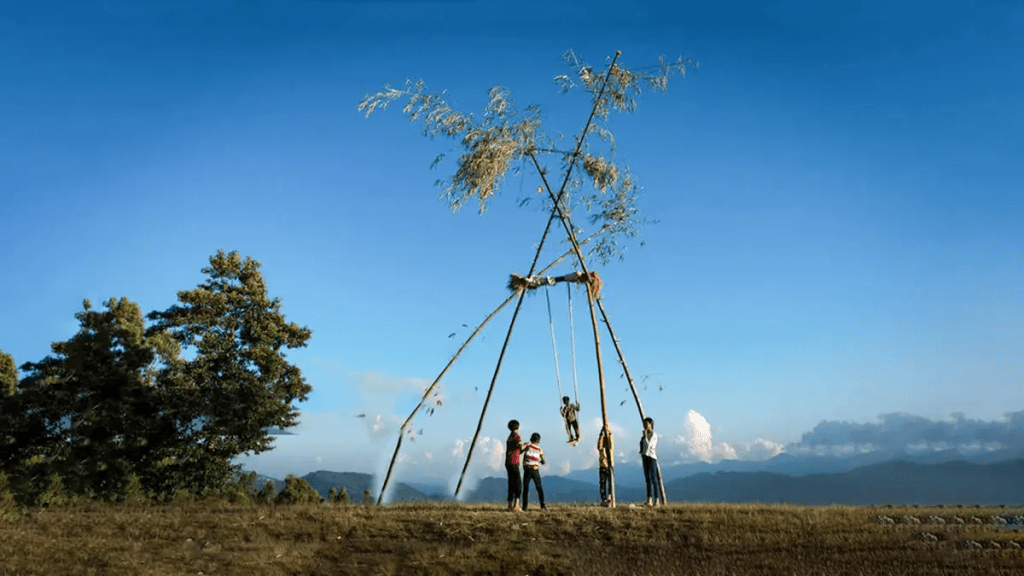
Linge Ping, traditional bamboo swings, go up in public spaces and village courtyards. They are tall and surprisingly fast. The swings represent the reunion of people who have traveled from different places to be together for the festival. Watching a grandmother and a seven-year-old take turns on a 10-foot bamboo swing is the kind of thing that stays with you.
Dashain for Travelers: Practical Realities
A few things that will save you frustration. Government offices, banks, and most businesses close for at least five days around the main festival, sometimes longer. Museums and tourist sites in Kathmandu operate on reduced schedules. Book accommodation well in advance if you plan to be in Nepal in October, especially in popular trekking areas, as pre- and post-festival traffic is heavy.
Transport is the biggest challenge. Buses to any destination outside Kathmandu fill up days in advance around Phulpati. Taxis become scarce and more expensive during peak days. Domestic flights continue, but airport congestion increases.
On the positive side, trekking trails in the days immediately after Vijaya Dashami are some of the best in the year. Weather is stable, skies are clear, and lodges have reopened fully after the festival closure period. Most guides and porters have returned from their villages. The post-Dashain October window is arguably the finest time of year to trek in Nepal.
Experiencing Dashain as a Visitor
The honest truth is that Dashain is not a festival you watch. The public ceremonies at Hanuman Dhoka and major temples are worth seeing, but the soul of Dashain happens inside family homes. If you have a local connection, this is the time to activate it. Accept any invitation you receive. Bring a small gift of fruit or sweets if you are visiting someone’s home. Remove your shoes. Dress modestly, especially at temples.
Thamel in Kathmandu hosts some commercial Dashain events in recent years, with restaurants offering festive menus and some cultural performances aimed at tourists. These are fine, but they are not the real thing.
Organizations like Nepal Tourism Board provide updated guidance each year on cultural events and visitor etiquette during major festivals. Worth checking before you go.
For a broader sense of how Dashain fits into the full Nepali cultural calendar, take a look at our Nepal festivals calendar guide, which covers major celebrations across all twelve months.
FAQ About Dashain Festival Nepal
When is Dashain 2026?
Dashain 2026 begins on October 11 with Ghatasthapana and runs through October 25. The main Tika Day, Vijaya Dashami, falls on October 21, 2026.
How long does Dashain last?
Dashain is a 15-day festival. However, the most significant days are clustered around days 7 through 10 of the festival: Phulpati, Ashtami, Navami, and Vijaya Dashami.
What is tika in Dashain?
Tika is a red paste made from vermilion powder, yogurt, and rice that elders apply to the foreheads of younger family members on Vijaya Dashami. It represents blessings of long life, prosperity, and good fortune. The yellow barley shoots called jamara are typically given alongside the tika.
Is it a good idea to travel in Nepal during Dashain?
It depends on what you are looking for. If you want to observe Nepali culture at its most authentic, yes, absolutely. If you need transport, services, and open businesses to run smoothly, the main festival days can be frustrating. Trekking is excellent in the days immediately after the festival ends.
Is animal sacrifice part of Dashain?
Yes. Animal sacrifice, particularly of goats and buffaloes, is a traditional part of the festival on Navami (Day 9) and Ashtami (Day 8). It happens at temples and in private homes. Some urban families and younger Nepalis have moved toward symbolic alternatives in recent years, but the practice remains widespread.
Can foreigners receive tika during Dashain?
Yes, and it is considered a meaningful gesture of hospitality. If a Nepali family invites you to receive tika, accepting is the right move. Dress respectfully and bring a small gift if you are visiting a home.
What should I pack if I am in Nepal during Dashain?
Stock up on food and cash before the main festival days, as ATMs and shops may be busy or closed. Bring clothing appropriate for temple visits (covered shoulders and knees). If you are trekking before Dashami, confirm that your lodge is open during the festival period, as some close temporarily to allow staff to go home.
What is the connection between Dashain and the goddess Durga?
Dashain commemorates Durga’s ten-day battle against the buffalo demon Mahishasura, culminating in her victory on the tenth day. The worship of Durga throughout the festival, the growing of jamara as an offering, and the tika ceremony on Dashami all trace back to this central myth. Durga’s nine manifestations, known as Navadurga, are honored across the nine nights of Navaratri that precede Vijaya Dashami.