



Table of Contents
- Read Also
- Spring in Nepal: The Ultimate Guide to Trekking, Culture, and Himalayan Bloom (2026)
- Pokhara Travel Guide: The Ultimate Guide to Nepal’s Lakeside City
- The 7 Best Accessible Snow Destinations in Nepal: A Detailed Breakdown
- Essential Winter Travel Tips for Your Nepal Snow Adventure
- Conclusion: Your Winter Himalayan Dream Awaits
- Questions Answered
- Next Up
The very name “Nepal” conjures images of the mighty, snow-draped Himalayas, a siren call for adventurers and peace-seekers alike. While many assume that witnessing this pristine, frozen beauty requires arduous, multi-day treks, a delightful secret awaits. Nepal is home to numerous easily accessible destinations where you can experience the magic of snow, from playful flurries to breathtaking panoramic views of the world’s highest peaks, all without ever lacing up a serious pair of hiking boots.
This definitive guide is meticulously crafted for travelers of all ages and abilities—families with young children, couples seeking a romantic getaway, or solo travelers on a quest for serenity. We will unveil the seven most popular snow-viewing spots, detailing the optimal times to visit, how to get there, and what unique experiences each location offers. Ultimately, if your dream is to witness Nepal’s winter splendor in all its glory, the perfect window is during the crisp, clear months from late December to February, with January standing as the undisputed peak for snow-covered landscapes.
Why Winter is the Unrivaled Champion for Snow Viewing
Before we delve into the specific destinations, it’s crucial to understand why the winter months are so uniquely suited for this pursuit.


- Crystal-Clear Skies: Following the departure of the monsoon season, winter ushers in an era of remarkably clear air. Consequently, the visibility of the Himalayan range, from the giants like Everest to the sprawling Langtang and Annapurna ranges, is at its most sharp and dramatic.
- Peak Snowfall Probability: The coldest temperatures of the year, particularly in January, increase the likelihood of snowfall at higher elevations (typically above 2,500 meters). Furthermore, any snow that does fall is more likely to stick around, creating those picture-perfect winter wonderlands.
- Fewer Crowds: Unlike the bustling trekking seasons of spring and autumn, winter sees fewer tourists at these hill stations. This translates to a more peaceful, intimate experience with nature’s grandeur.
It is important to note, however, that snow is a dynamic and unpredictable force of nature. While these months offer the highest probability, actual conditions can vary annually. Therefore, checking local weather forecasts shortly before your trip is always a prudent step.
Read Also: Early Snowfall in Nepal 2025: Everest, Annapurna, Mustang & Muktinath Travel Guide
The 7 Best Accessible Snow Destinations in Nepal: A Detailed Breakdown
Here is your essential guide to the seven most popular and accessible spots for experiencing Nepal’s winter magic.
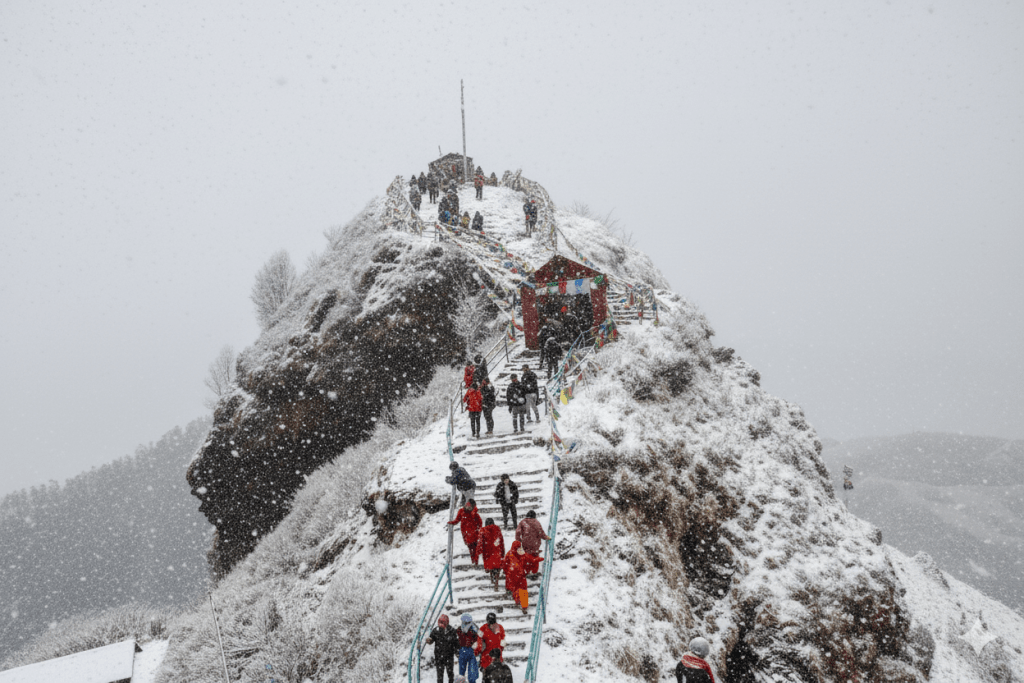
1. Kalinchowk Bhagawati Temple: The Premier Snow Play Destination
- Google Rating: 4.6 (1,931)
- Best Visiting Period: December to February; Peak Snow: January
- Accessibility: Easily reached by road and cable car.
Nestled at an altitude of approximately 3,842 meters, Kalinchowk is arguably the most reliable and celebrated destination for snow enthusiasts near Kathmandu. It has earned its reputation as the go-to spot for those dreaming of a genuine winter experience.
The Winter Experience: During the heart of winter, particularly in January, Kalinchowk is frequently transformed into a pristine alpine landscape. The ground is often blanketed in thick, powdery snow, making it ideal for snow play, building snowmen, and even casual sledding. The air is invigoratingly crisp, and the silence of the snow-covered rhododendron and pine forests is profoundly peaceful.
What to Do:
- Cable Car Ride: The recently installed cable car not only makes the ascent effortless but also provides stunning aerial views of the snow-dusted valleys below.
- Visit the Temple: The ancient Kalinchowk Bhagawati Temple, dedicated to a Hindu goddess, is a significant pilgrimage site. Visiting it in winter, surrounded by snow, is a uniquely spiritual experience.
- Himalayan Panorama: On a clear day, the viewpoint offers an unobstructed, 180-degree vista of the Himalayan range, including peaks like Gaurishankar, Melungtse, and even Mt. Everest on a very clear day.
Travel Tip: The road journey followed by the cable car ride is straightforward. However, due to the high altitude and potential for icy paths, wearing sturdy, non-slip shoes and multiple layers of warm clothing is absolutely essential.
2. Chandragiri Hills: Panoramic Luxury Over Kathmandu
- Google Rating: 4.6 (28)
- Best Visiting Period: December to February
- Accessibility: Easily accessed via a scenic cable car from the outskirts of Kathmandu.
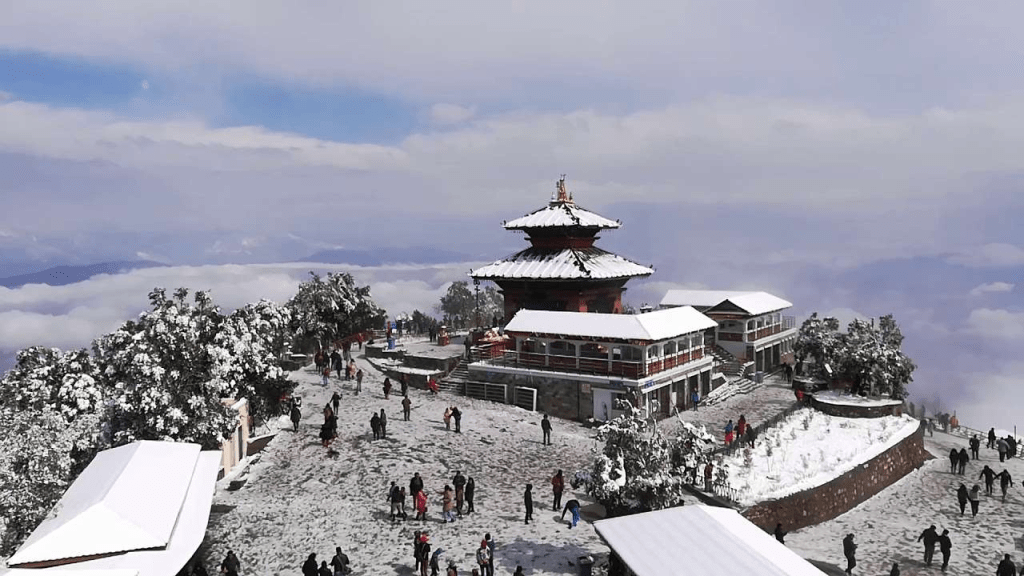
Chandragiri Hills offers a blend of convenience, luxury, and spectacular views, making it a favorite for those with limited time. Situated to the southwest of the Kathmandu Valley, its summit sits at about 2,551 meters.
The Winter Experience: While heavy snow on the ground at the summit is less consistent than at Kalinchowk, Chandragiri is a prime location for stunning snow views of the Himalayas. Following a heavy winter storm, the hills can receive a dusting of snow, but its primary draw is the unparalleled panoramic view of the snow-capped peaks from the comfort of its well-developed viewpoint.
What to Do:
- Cable Car Journey: The cable car itself is a major attraction, offering a breathtaking transition from the city’s haze to the crisp mountain air.
- View Tower: The purpose-built view tower at the summit provides a 360-degree panorama, encompassing the Kathmandu Valley on one side and a majestic stretch of the Himalayas from Annapurna to Everest on the other.
- Relax and Dine: The summit features restaurants and cafes where you can enjoy a warm meal or a hot beverage while soaking in the magnificent views.
Travel Tip: The best views are invariably in the early morning. Plan to take one of the first cable cars to avoid potential afternoon clouds that can roll in and obscure the mountains.
3. Nagarkot: The Classic Mountain Vista
- Best Visiting Period: December to February
- Accessibility: A well-paved two-hour drive from Kathmandu.
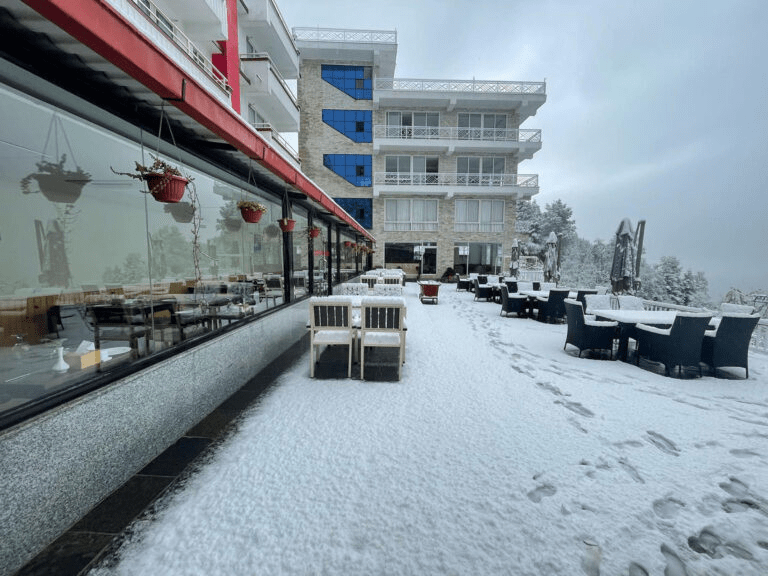
Nagarkot has long been the most famous viewpoint destination near Kathmandu, perched on the edge of the valley at an altitude of 2,195 meters. It is renowned for its sunrise and sunset views over the Himalayas.
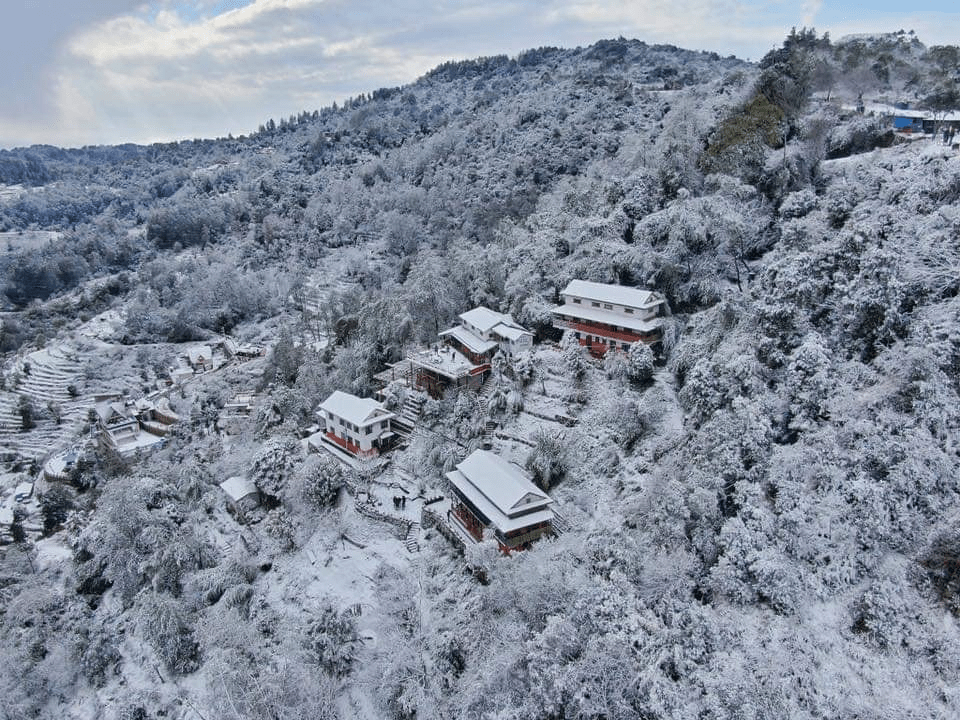
The Winter Experience: Nagarkot itself rarely sees significant snowfall. However, its magic in winter lies in the crystal-clear, long-range views of the mountains. After a strong winter cold front, there is a chance of a light dusting, but the real spectacle is the sight of the sun rising over a seemingly endless range of white, snow-capped peaks. The winter air is so clear that the mountains appear deceptively close.
What to Do:
- Sunrise Viewing: This is the quintessential Nagarkot experience. Book a hotel with a view and wake up early to witness the sun illuminate the Himalayas, including Everest, Lhotse, and Manaslu.
- Scenic Walks: The ridge boasts several easy, scenic walking paths that connect various hotels and viewpoints, perfect for a gentle stroll with incredible scenery.
- Relax in a Resort: Nagarkot is home to numerous resorts and guesthouses designed specifically to maximize the mountain views, making it an ideal place for a relaxing winter retreat.
Travel Tip: The key to the best experience is to go early morning. Not only is the sunrise spectacular, but the morning hours typically offer the clearest skies before any haze develops.
4. Phulchowki: The Highest Point Near Kathmandu
- Best Visiting Period: December to February; Peak Snow: January
- Accessibility: Accessed by vehicle to the base, then a short walk.
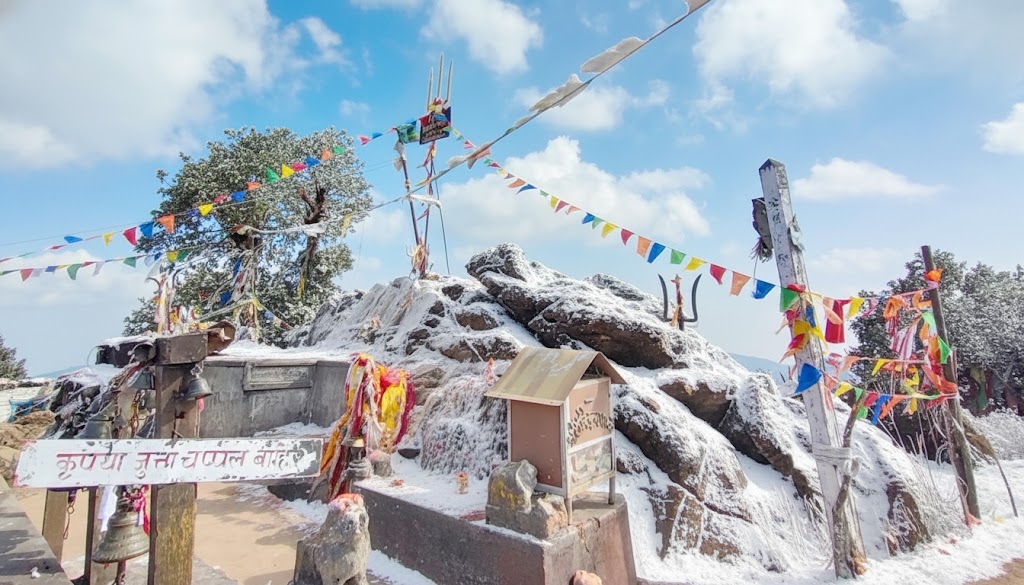
Rising to 2,782 meters, Phulchowki Hill is the highest point in the Kathmandu Valley. Its name translates to “Hill of Flowers,” and while it’s a botanical paradise in spring, it transforms into a snowy haven in winter.
The Winter Experience: Due to its higher altitude, Phulchowki has the highest chance of experiencing snow among the locations immediately surrounding Kathmandu. In January, it is common for the road to the summit to be lined with snow, and the surrounding forests are often beautifully frosted.
What to Do:
- Scenic Walk: The vehicle road goes most of the way up, after which a short, scenic walk along the ridge leads to the summit and a small temple. This walk in the snow is manageable for most people and offers a wonderful sense of adventure.
- Bird Watching: Phulchowki is a renowned birding area, and winter brings different species, offering a unique contrast against the snowy backdrop.
- Panoramic Views: The summit provides a different perspective of the Kathmandu Valley and views of the Himalayan range to the north.
Travel Tip: Since the final stretch involves a walk, ensure you have appropriate footwear. The road can be narrow and occasionally slippery after snow, so a 4WD vehicle is recommended for the journey.
5. Daman: The Unrivaled Panoramic Plateau
- Best Visiting Period: January to February
- Accessibility: Road-accessible, located along the Prithvi Highway.
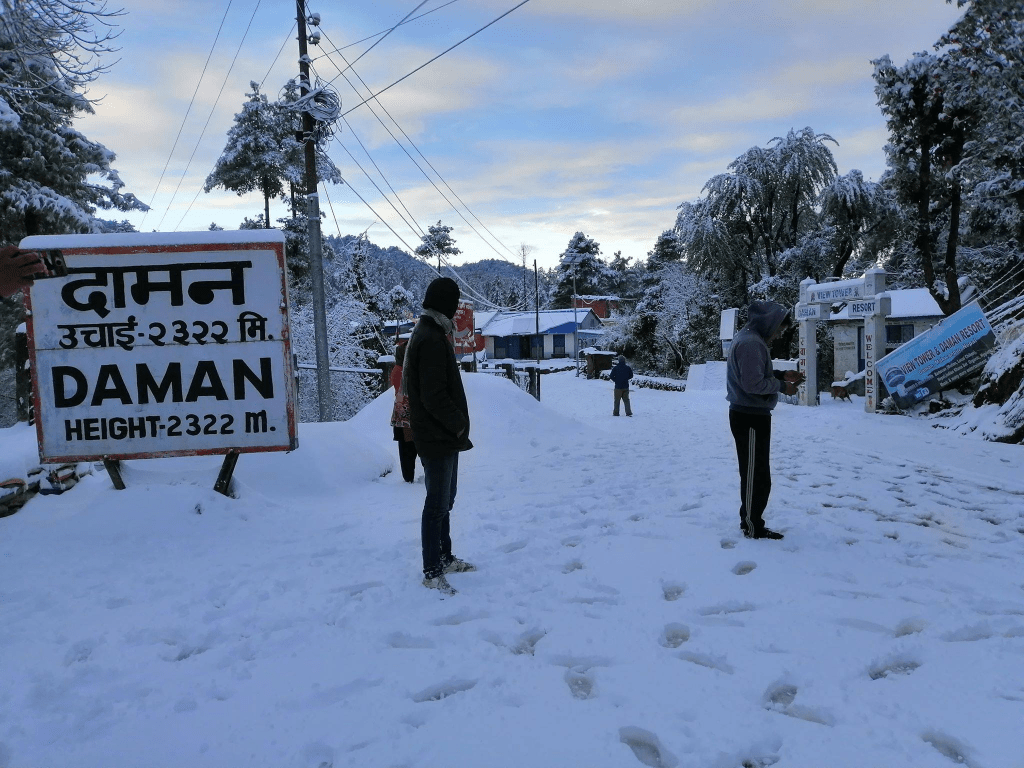
Situated between Kathmandu and Pokhara at an altitude of 2,322 meters, Daman is often overlooked but offers one of the most extensive Himalayan panoramas in the entire country.
The Winter Experience: Daman’s open plateau location makes it particularly susceptible to winter snowstorms. After a storm, the landscape can be stunningly blanketed in white. Moreover, because it is purpose-built for viewing, the clarity and breadth of the mountain vista are simply unmatched. It’s a favorite for families from Kathmandu looking to escape the city’s chill for a day or two of genuine winter scenery.
What to Do:
- Visit the View Tower: The Daman View Tower features a long, elevated viewing platform that is perfectly positioned to gaze at the Himalayan arc.
- Photography: For photographers, Daman is a dream. The unobstructed views provide endless opportunities for capturing the perfect shot of the snow-capped peaks.
- Peace and Quiet: Being slightly off the main tourist trail, Daman offers a more tranquil and relaxed atmosphere compared to Nagarkot.
Travel Tip: The best time is especially after a winter snowstorm has passed, as this clears the air and deposits fresh snow. The journey is a scenic part of the experience, winding through the Mahabharat Range.
6. Pumdikot Shiva Statue: Spiritual Majesty with a View
- Google Rating: 4.6 (5,422)
- Best Visiting Period: December to February
- Accessibility: Easy drive from Pokhara.
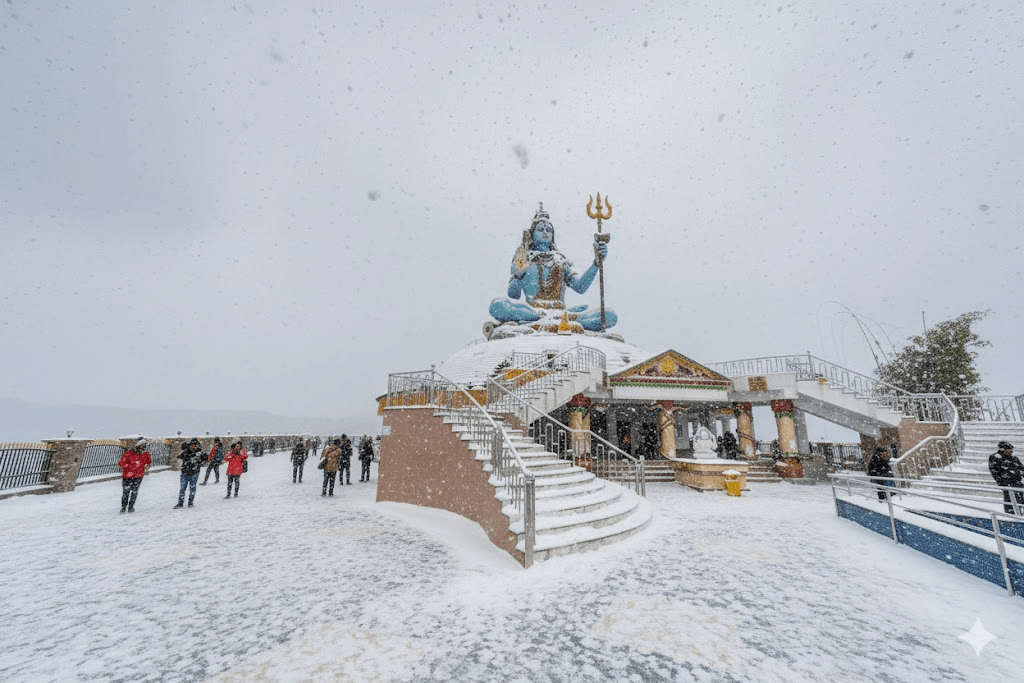
While the city of Pokhara itself is subtropical, the surrounding hills offer spectacular winter vistas. The Pumdikot Shiva Statue, a magnificent 52-foot tall white statue of Lord Shiva, is perched on a hilltop at about 1,600 meters near the famous World Peace Pagoda.
The Winter Experience: It is very rare for snow to fall directly at Pumdikot. However, the winter months from December to February provide the clearest and most dramatic views of the Annapurna and Machhapuchhre (Fishtail) ranges. The statue, set against the backdrop of these pristine, snow-capped giants, creates an incredibly powerful and photogenic scene.
What to Do:
- Photography: The combination of the majestic Shiva statue and the Himalayas is a photographer’s paradise, especially during the golden hours of sunrise and sunset.
- Spiritual Visit: The site is a peaceful place for reflection and prayer.
- Combine with a Visit to the Peace Pagoda: You can easily combine a trip to Pumdikot with a visit to the nearby World Peace Pagoda for a full day of stunning viewpoints.
Travel Tip: This destination is safe and accessible for visitors of all ages and is a perfect addition to any Pokhara itinerary during the winter for guaranteed mountain views.
7. International Mountain Museum: An Educational Mountain Encounter
- Google Rating: 4.4 (4,819)
- Best Visiting Period: December to February
- Accessibility: Located on the outskirts of Pokhara, easily reached by taxi.
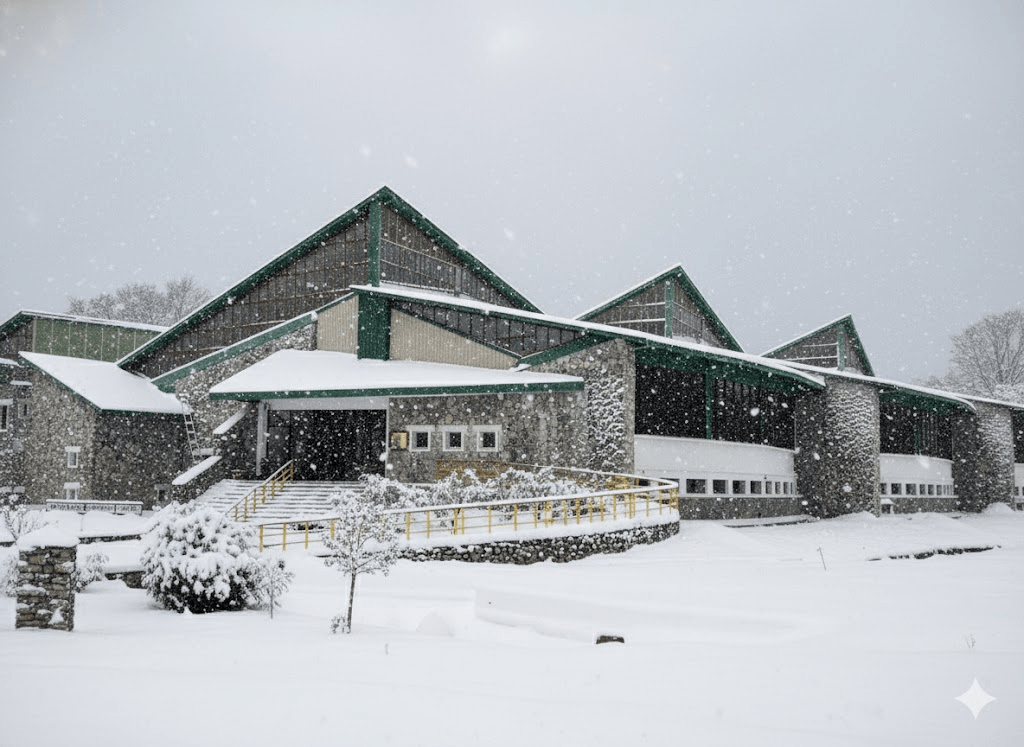
The International Mountain Museum (IMM) in Pokhara offers a unique blend of indoor education and outdoor splendor. While it’s a world-class museum dedicated to the mountains and people of the Himalayas, its location is strategically chosen for its views.
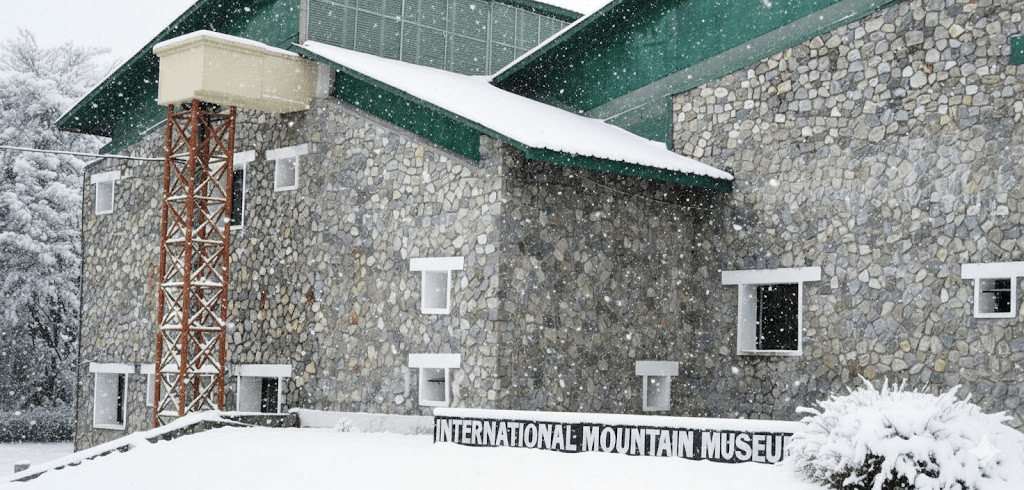
The Winter Experience: You won’t find snow on the ground at the museum. Instead, the value here is twofold. First, the winter air provides crystal-clear, sharp views of the Annapurna range right from the museum’s grounds. Second, the museum’s extensive exhibits on Himalayan geology, culture, and mountaineering history provide a deeper context and appreciation for the snowy peaks you are admiring outside.
What to Do:
- Explore the Exhibits: Learn about the history of mountaineering, the cultures of Himalayan people, and the flora and fauna of the region.
- Photography from the Grounds: The open grounds of the museum offer an excellent, unobstructed vantage point for photographing the mountains, especially in the clear winter light.
- Educational Family Trip: It’s a fantastic, engaging destination for families, combining fun learning with incredible natural beauty.
Travel Tip: Visit in the late afternoon when the light is soft for photography. After exploring the exhibits, step outside to see the setting sun paint the peaks in alpenglow.
Essential Winter Travel Tips for Your Nepal Snow Adventure
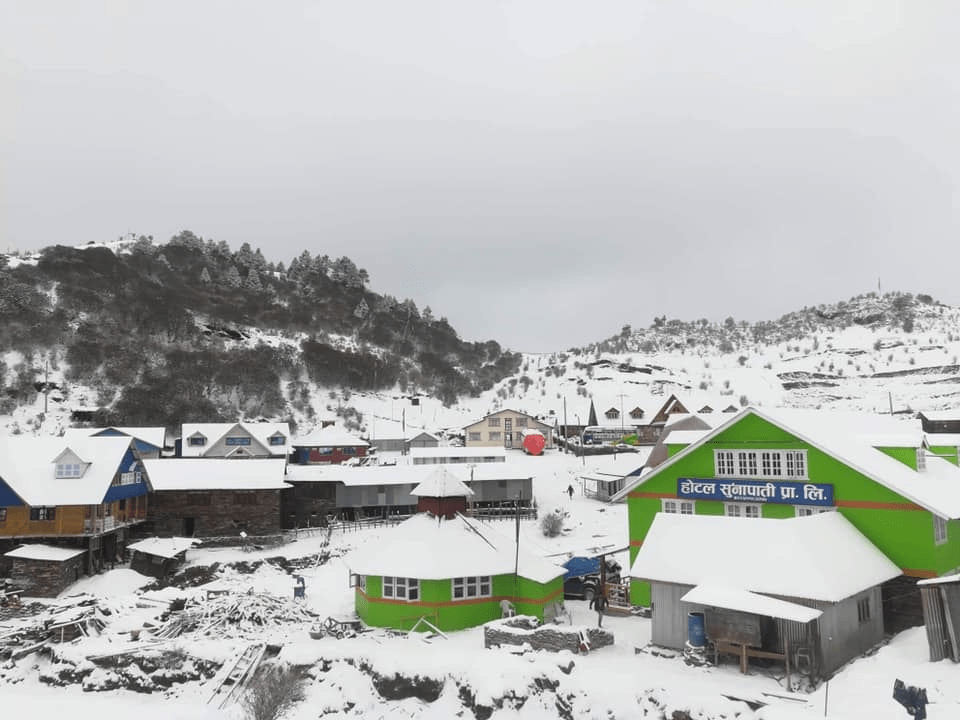
To ensure your winter journey is safe, comfortable, and memorable, careful preparation is key.
- Pack for Extreme Cold: Layering is crucial. Pack thermal innerwear, fleece or wool mid-layers, and a insulated, waterproof outer jacket. Don’t forget a warm hat, gloves, a thick scarf, and warm socks.
- Footwear is Paramount: Icy and slippery paths are common. Sturdy, waterproof boots with a strong grip are non-negotiable. Avoid sneakers or smooth-soled shoes.
- Stay Hydrated and Moisturized: The cold, dry air can be dehydrating. Drink plenty of water. Similarly, the sun at high altitudes is strong even in winter, so use high-SPF sunscreen and lip balm.
- Manage Your Expectations: Snow is a natural phenomenon. While this guide points you to the most likely places and times, nature is unpredictable. Embrace the journey and the stunning views, whether you find a deep blanket of snow or a crisp, clear panorama.
- Book in Advance: While winter is less crowded than other seasons, the best hotels in places like Nagarkot and Daman can fill up, especially around holidays. Booking your accommodation and transport in advance is recommended.
- Check Road Conditions: Before heading out, especially to Kalinchowk or Phulchowki, it’s wise to check with your hotel or a local tour operator about current road and weather conditions.
Conclusion: Your Winter Himalayan Dream Awaits
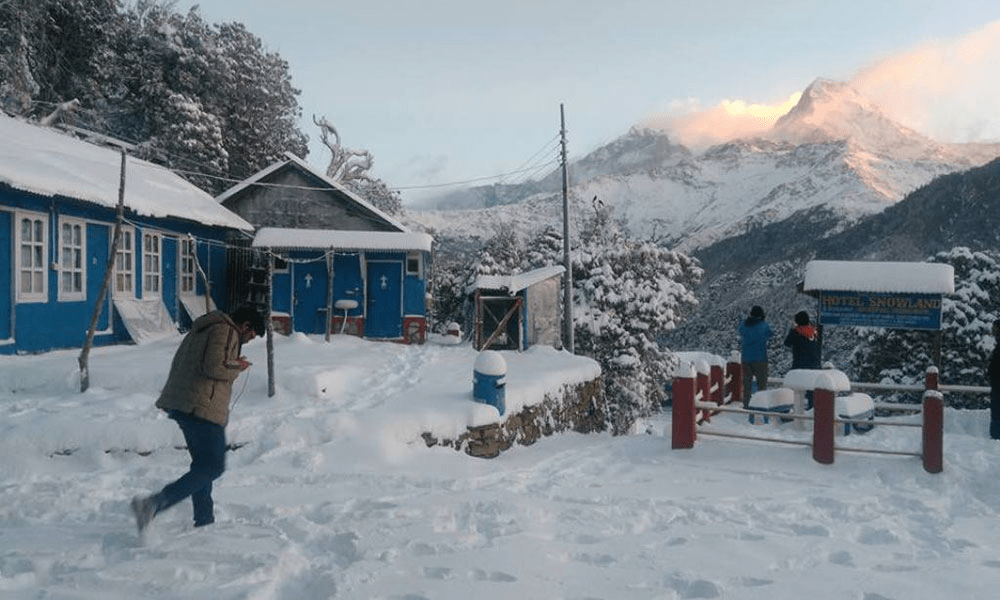
The myth that experiencing Nepal’s snowy grandeur requires superhuman effort has been definitively dispelled. From the snow-play paradise of Kalinchowk to the luxurious panoramas of Chandragiri, and from the classic sunrise at Nagarkot to the educational heights of the International Mountain Museum, a world of winter wonder is accessible to everyone.
By focusing your visit on the prime window of late December through February, with a special emphasis on January, you maximize every opportunity to witness the Himalayas in their most majestic winter attire. So, pack your warmest clothes, charge your camera, and prepare to be awestruck. An unforgettable encounter with the roof of the world, without the need for a trekking pole, is waiting for you in Nepal.
See Nepal in every scroll: Follow us on Facebook, Instagram, and TikTok for stories that bring the country to life.


