


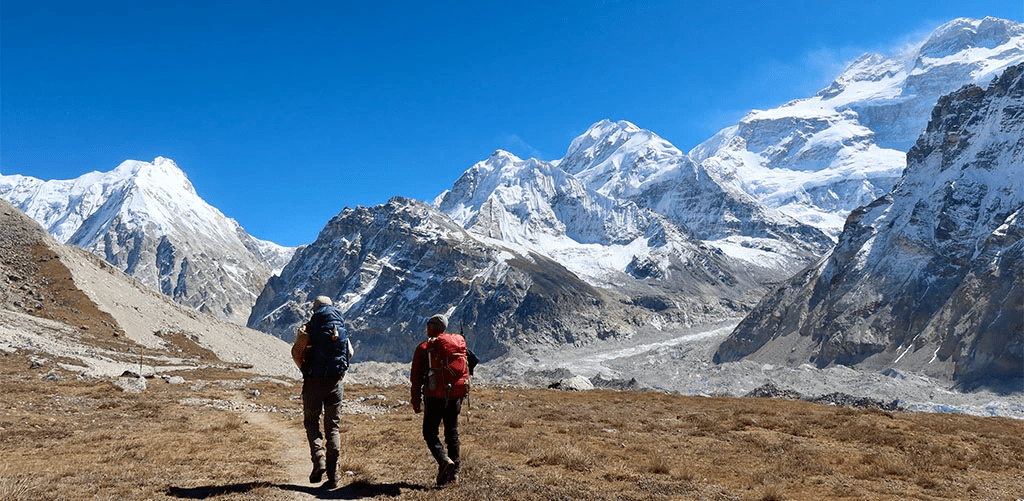
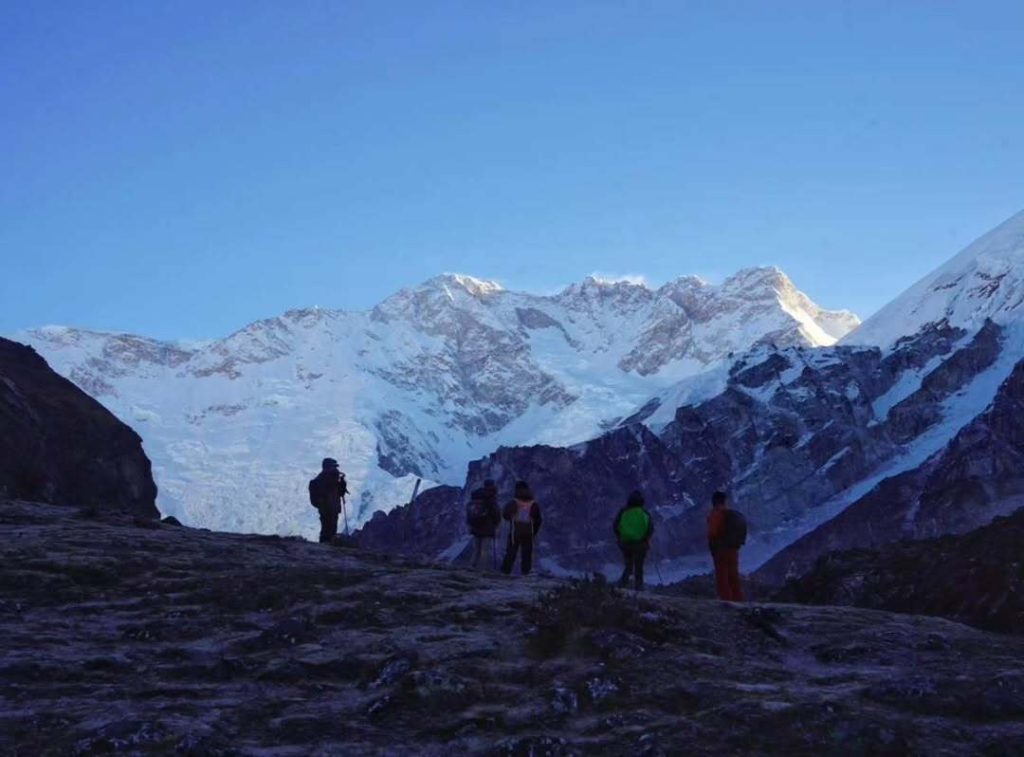
Picture this: you’re standing at 5,143 meters above sea level, lungs burning, legs aching from three weeks on the trail, and in front of you rises a wall of ice and rock so immense it blocks out the sky. No crowds. No queue of brightly-jacketed tourists jostling for the same photo. Just you, the wind, and the raw face of the world’s third-highest mountain. That is what the Kanchenjunga trek feels like at its peak. Fewer than a thousand trekkers a year ever get to experience it.
Here’s what most guides won’t tell you upfront: Kanchenjunga isn’t for people who want a comfortable adventure. It’s for people who want a real one.
What Makes Kanchenjunga Different
At 8,586 meters, Mount Kanchenjunga is the third-highest peak on Earth, sitting right on the border between Nepal and the Indian state of Sikkim. Yet somehow, it remains one of the least-visited high-altitude trekking destinations in all of Nepal. While thousands of trekkers flood the Everest and Annapurna circuits each season, the Kanchenjunga region receives a fraction of that traffic. The infrastructure is basic, the trails are wild, and the culture you encounter along the way feels untouched in the best possible sense.


Choosing this trek means choosing the harder path. Fewer teahouses, longer days between villages, and no rescue helicopter on speed dial if things go sideways. But it also means rhododendron forests that feel like they belong in a fairy tale, Limbu and Sherpa-Tibetan communities who still live the way their grandparents did, and views of glaciers that will stay with you for the rest of your life.
The Two Routes: North and South Base Camp
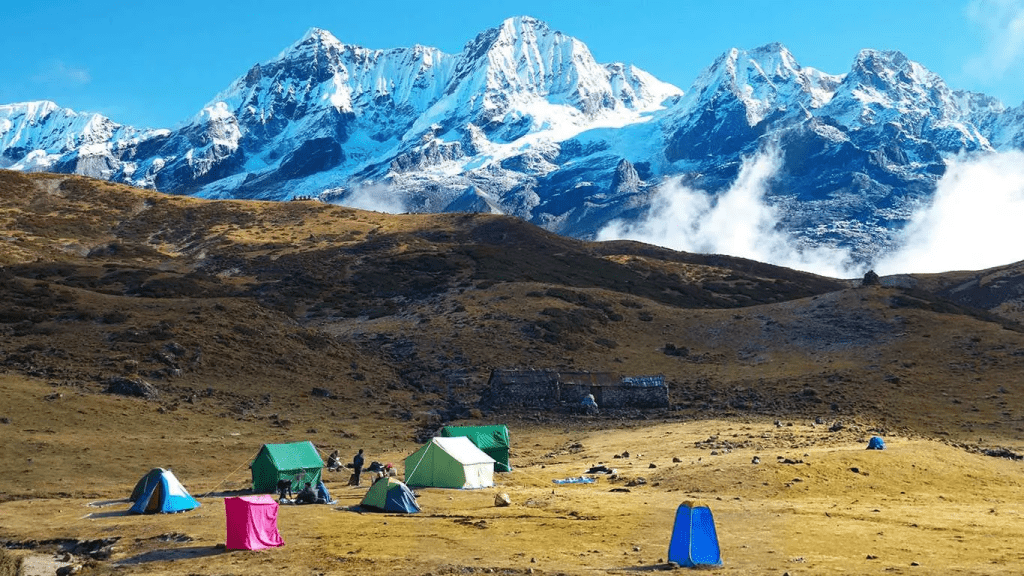
Most trekkers tackle the Kanchenjunga Circuit, which visits both the North and South base camps in a single loop. The circuit is usually done clockwise, meaning you head to the North Base Camp first, then cross over the high Selele Pass to reach the viewpoint near the South Base Camp at Oktang. There’s good reason for that order: it helps with acclimatization, giving your body time to adjust before you tackle the higher terrain.
Kanchenjunga North Base Camp (Pang Pema)
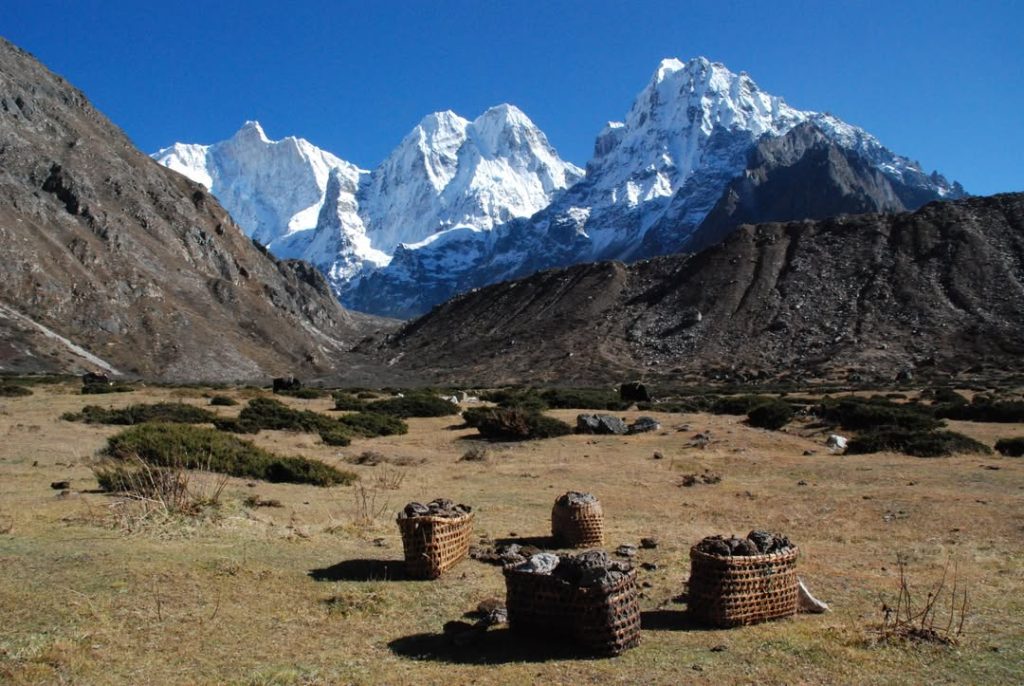
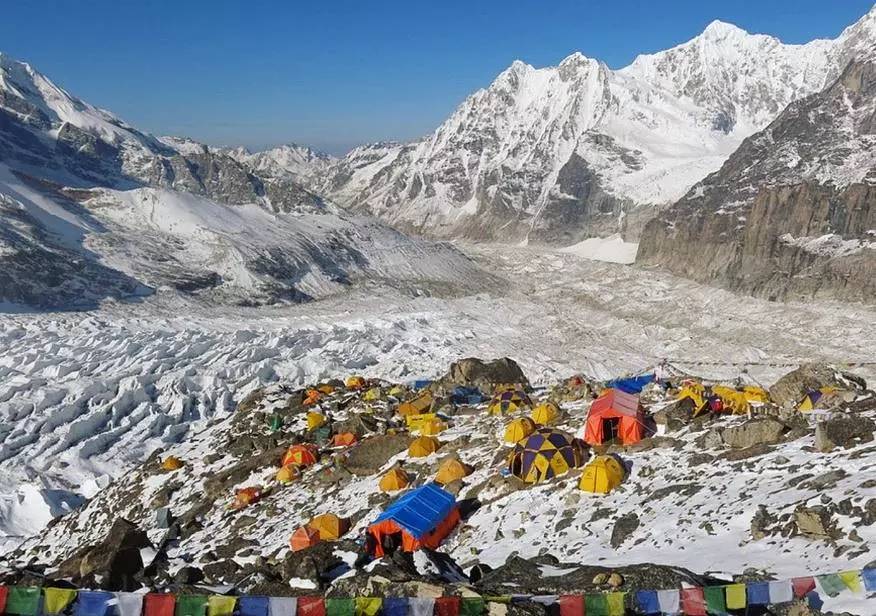
Pang Pema sits at 5,143 meters (16,873 feet) and is the highlight for most trekkers. You reach it after passing through Ghunsa, the main acclimatization village on the north side, where yaks graze on narrow meadows and ancient monasteries cling to hillsides. From Pang Pema, the north face of Kanchenjunga fills your entire field of vision. It is one of the most dramatic viewpoints in the Himalayas, full stop.
Kanchenjunga South Base Camp (Oktang)
Lower in altitude at 4,780 meters (15,682 feet), the South Base Camp route takes you through the Yalung Glacier and into the territory of the Limbu and Rai communities. Villages here are quieter, the trails more overgrown in places, and the feeling of genuine remoteness is even stronger. Expect thick bamboo and rhododendron forests on the lower sections, opening up into stark alpine terrain as you climb higher.
How Long Does the Kanchenjunga Trek Take?
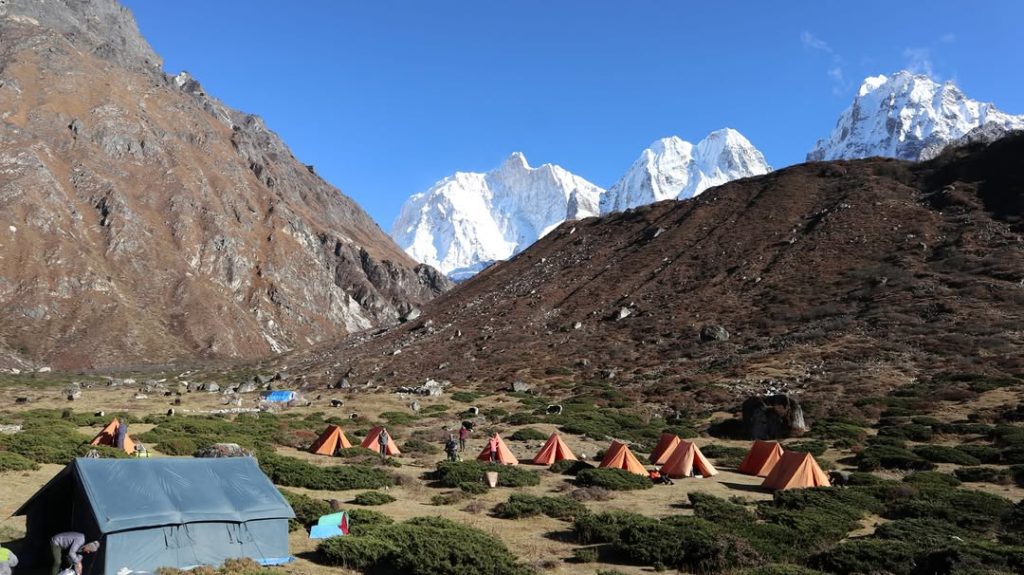
Plan for 18 to 24 days on the trail, depending on which route you choose and how your body handles the altitude. The full circuit, visiting both base camps, typically takes around 20 to 22 days. That doesn’t include the time needed to get to the trailhead and return to Kathmandu.
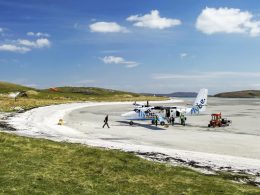
Getting there takes a full day in itself. You fly from Kathmandu to Bhadrapur, a 40 to 45-minute flight covering 621 kilometers. From Bhadrapur, it’s a bone-rattling 7 to 8-hour jeep ride along 241 kilometers of mountain road to reach Taplejung, the gateway town where most Kanchenjunga treks begin. Factor in the return journey and you’re looking at a 24 to 26-day trip from Kathmandu to Kathmandu.
Permits: What You Need Before You Go
Kanchenjunga is a restricted trekking area, which means you cannot do this trek alone. Solo trekking is flat-out not allowed. You need to travel with at least one other person and must be accompanied by a licensed guide hired through a government-registered trekking agency.
Two permits are required:
- Kanchenjunga Conservation Area Project (KCAP) Permit: NPR 2,000 per person (approximately USD 15). Valid without a time limit.
- Restricted Area Permit (RAP): USD 10 per person per week. This can only be issued through a registered agency and cannot be obtained independently at a permit office.
Both permits must be obtained before you head into the region. Your agency will handle the paperwork, but confirm this well in advance of your departure date. Permit regulations in Nepal can and do change, so check the latest requirements with your trekking agency or the Nepal Tourism Board before booking.
Cost: What to Budget
Let’s be straightforward about money. The Kanchenjunga trek is not cheap, especially compared to the Annapurna or Langtang circuits. The remoteness drives costs up: food and gear have to be carried further, logistics are more complex, and the guide requirement is non-negotiable.
For a fully organized trek with an agency, budget between USD 1,500 and USD 3,000 per person. Groups of 2 to 4 typically start at around USD 2,200 per person. That price usually covers domestic flights, ground transport, all permits, teahouse accommodation, meals during the trek, and the services of a guide and porter.
If you’re budgeting independently for food and lodging on the trail, expect to spend roughly USD 35 to 55 per person per day. Teahouse rooms in Ghunsa can be as cheap as NPR 200 (under USD 2) per night. Closer to the base camps, a triple room might run NPR 800 to 1,000. The food is simple and filling: dal bhat, thukpa, momo, noodles. Don’t expect the pizza and pasta menus you’ll find in Namche Bazaar.
Difficulty: This Trek Will Test You
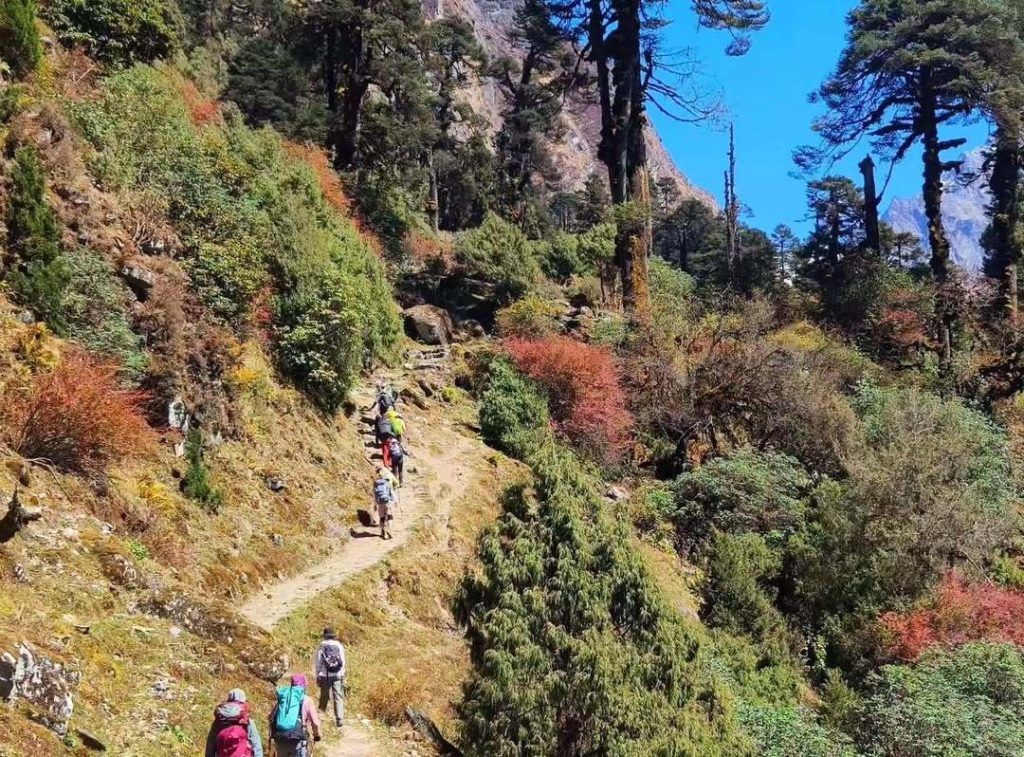
Be honest with yourself before you book. The Kanchenjunga Circuit is genuinely strenuous. It involves crossing high mountain passes, navigating rough and sometimes unmarked trails, sleeping in basic teahouses at altitude, and going days without cell service or any form of modern medical infrastructure. There is no hospital. There is no reliable evacuation network. If something goes seriously wrong up high, your options are limited.
You need previous multi-day trekking experience at altitude before attempting this route. Good cardiovascular fitness, strong legs, and a tolerance for discomfort are essential. Mental resilience matters just as much as physical condition. Bad weather, trail closures, and altitude symptoms are real possibilities. Come prepared for all of them.
That said, thousands of trekkers complete this route every year without incident. The key is proper preparation and pacing.
Best Time to Trek Kanchenjunga
Two windows work well for this trek, and the choice between them comes down to what kind of scenery you prioritize.
Spring (March to May)
Spring is magical on the lower sections of the trail. The rhododendron forests explode in red, pink, and white from March through April, creating one of the most vivid natural displays anywhere in Nepal. Skies are generally clear, temperatures are moderate at lower altitudes, and wildlife activity picks up as animals move with the season. Expect some cloud build-up in the afternoons as May progresses.
Autumn (September to November)
Autumn offers the most stable weather and the clearest mountain views. After the monsoon clears, the air is crystal sharp, the peaks are dusted with fresh snow, and visibility at base camp can be extraordinary. October is peak trekking season across Nepal, including in Kanchenjunga, and even here you’ll notice slightly more foot traffic than in spring.
Avoid trekking during the monsoon months (June to August), when trails become treacherous and mountain views disappear behind cloud cover for days at a time. Winter (December to February) is possible for experienced cold-weather trekkers but involves genuinely brutal temperatures at altitude and the real risk of pass closures from heavy snow.
Culture Along the Trail
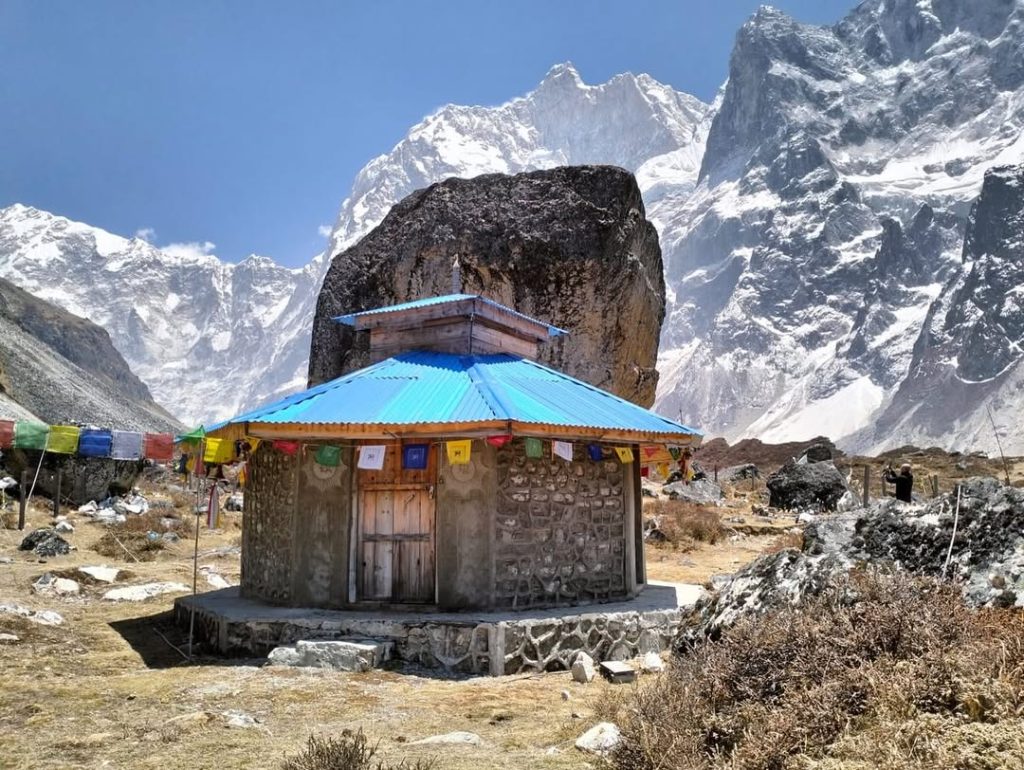
One of the underrated joys of the Kanchenjunga trek is the cultural immersion it offers. Villages on the south side are predominantly Limbu and Rai communities, with their own distinct languages, festivals, and traditions that predate trekking tourism by centuries. On the north side around Ghunsa, the culture shifts to Sherpa-Tibetan, with prayer flags strung between houses, mani stone walls lining the path, and small gompa (monasteries) tucked into the hillside.
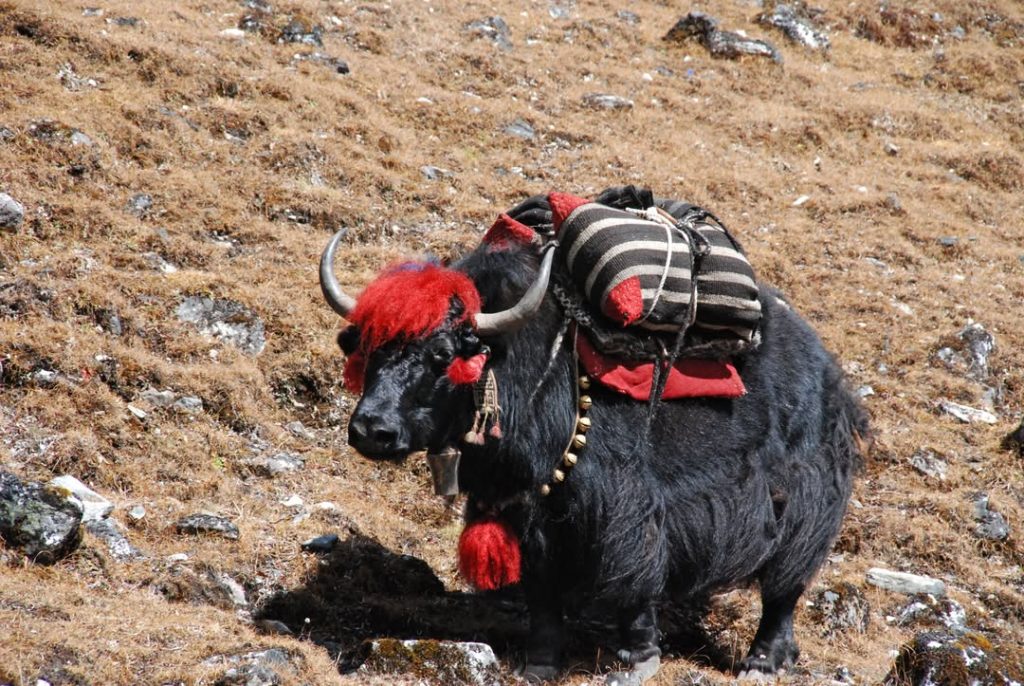
Ghunsa itself is worth spending an extra acclimatization day in just to explore. At around 3,595 meters, it’s the main settlement on the north route and a genuine Himalayan village rather than a trekker hub. Locals here practice yak herding, and the monastery at the edge of town has stood for generations. Sit quietly at the tea house in the afternoon and you’ll hear monks chanting before sunset.
Wildlife in the Kanchenjunga Conservation Area
The Kanchenjunga Conservation Area protects one of Nepal’s most biodiverse ecosystems. Snow leopards live in these mountains, though a sighting is rare and should be considered a genuine stroke of luck. Red pandas, Himalayan black bears, and blue sheep are more frequently spotted, particularly in the early morning hours. Over 250 bird species have been recorded in the region, making it a serious draw for birdwatchers.
Move quietly, stay on trail, and give wildlife plenty of space. This is their home far more than it is a trekking route.
Packing Essentials for Kanchenjunga
- A four-season sleeping bag (temperatures at high camps drop well below freezing)
- Waterproof trekking boots, broken in before you start
- A layering system including a down jacket and waterproof shell
- Trekking poles (highly recommended on rough terrain and steep descents)
- First aid kit including altitude sickness medication (acetazolamide, discuss with your doctor)
- Water purification tablets or a filter system
- Solar charger or power bank (electricity is unreliable in remote sections)
- Cash in Nepali rupees (no ATMs beyond Taplejung)
- Detailed topo map or downloaded offline maps for the region
For more guidance on what to pack for high-altitude trekking in Nepal, our trekking in Nepal for beginners guide covers the essential gear checklist in detail. For understanding the permits system across all treks in Nepal, check our Nepal trekking permits guide.
Hiring a Guide and Agency
Non-negotiable, and honestly, just smart. A good guide on the Kanchenjunga trek is worth every rupee. They know the trails, can navigate in poor weather, understand altitude sickness protocols, and serve as your translator in villages where no English is spoken. Hire through a licensed agency, check their reviews carefully, and ask specifically about their experience in the Kanchenjunga region.
For a comprehensive overview of trekking regulations and what licensed agencies in Nepal are required to provide, the Nepal Tourism Board website is the authoritative source. The Nepal Mountaineering Association also maintains useful resources on high-altitude trekking safety standards.
Frequently Asked Questions
How difficult is the Kanchenjunga trek?
It’s rated as strenuous and is considered one of the more challenging treks in Nepal. The remoteness, high altitude, long daily distances, and basic infrastructure make it demanding both physically and mentally. Prior trekking experience at altitude is strongly recommended before attempting this route.
Can I do the Kanchenjunga trek without a guide?
No. Kanchenjunga is a restricted area in Nepal, and solo trekking is prohibited by law. You must trek with at least one other person and be accompanied by a licensed guide hired through a registered agency. Permit checkpoints along the route enforce this rule strictly.
How much does the Kanchenjunga trek cost?
For a fully organized trek with an agency, costs typically range from USD 1,500 to USD 3,000 per person. Groups of two to four start at around USD 2,200 per person. This generally includes domestic flights, all permits, accommodation, meals during the trek, and the services of a guide and porter.
What is the best time of year for the Kanchenjunga trek?
Spring (March to May) and autumn (September to November) are the best windows. Spring offers blooming rhododendrons and warming temperatures. Autumn provides the clearest mountain views and most stable weather. Avoid the monsoon season (June to August) and winter months unless you’re an experienced cold-weather trekker.
What permits do I need for the Kanchenjunga trek?
Two permits are required: the Kanchenjunga Conservation Area Project (KCAP) Permit at NPR 2,000 per person, and the Restricted Area Permit (RAP) at USD 10 per person per week. Both must be obtained through a government-registered trekking agency before entering the region.
How do I get to the start of the Kanchenjunga trek?
Most trekkers fly from Kathmandu to Bhadrapur, a 40 to 45-minute flight, then take a jeep for 7 to 8 hours along 241 kilometers of mountain road to reach Taplejung, the main gateway town. Your trekking agency will arrange this transport as part of the package.
What is accommodation like on the Kanchenjunga trek?
Accommodation is in basic teahouses throughout the route. Quality decreases as you get higher and further from road access. In Ghunsa, rooms cost around NPR 200 per person per night. Near the base camps, expect to pay NPR 800 to 1,000 for a basic shared room. There are no luxury lodges anywhere on this route.
Is the Kanchenjunga trek worth it?
For the right person, absolutely. If you want a genuine Himalayan wilderness experience away from the crowds, with rich cultural encounters, extraordinary wildlife, and views of one of the world’s greatest mountains, Kanchenjunga delivers in a way few treks can match. It demands more than most trails in Nepal, but it gives back more too.