


Pokhara. At 8 A.M., the bus numbered Ga 1 Kha 7109 started moving with a loud honk from Kahunkhola Bus Park in Pokhara. I sat behind the driver’s seat, and my younger brother Dinesh sat beside me.
My wife Laxmi and my niece Ankita sat in the front seats, facing the driver. Bags and bundles filled every corner of the bus, carrying milk, salt, and sugar.
Inside the bus, sacks of rice outnumbered the passengers, gas cylinders lay scattered around, and the luggage compartment held sacks of cement. That day, the bus carried more people, food supplies, and construction materials than usual. Maybe this was its daily routine, but for us, it felt like a rare journey.
From Kahunkhola, we reached Khaseri and then Sajha, where the road splits, one way to Sikles/Kori, the other along our route. We took the right and crossed Vijaypur Khola. After about 30 minutes of uphill travel, we went downhill again and reached the bridge over the Madi River at Bhaise. The road split here too, one way to Yamjakot, the other along our route. This time, we took the left and joined the Mid-Hill Highway.
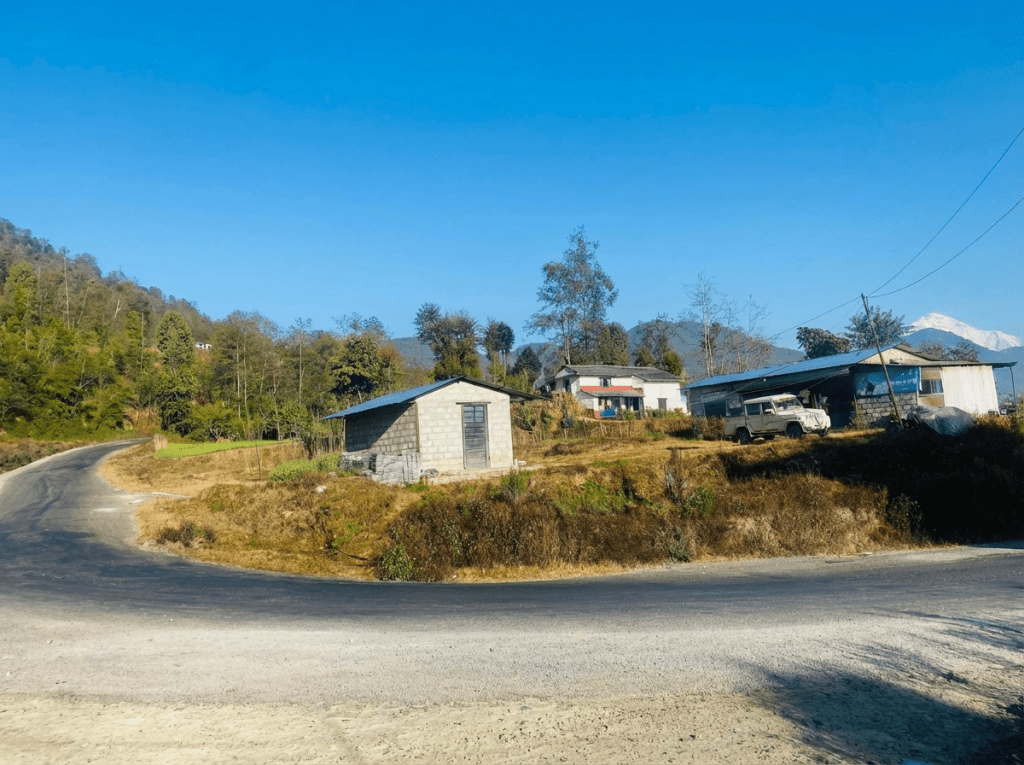
After another 30 minutes, we left the highway and continued along a rough road beside the Madi River. Along the way, we saw hydropower dams and powerhouses, making it feel like power cuts might soon be over in the country.
After nearly four hours of bumping along the road, we finally reached Tangting in Kaski Madi Ward No. 2 around noon.
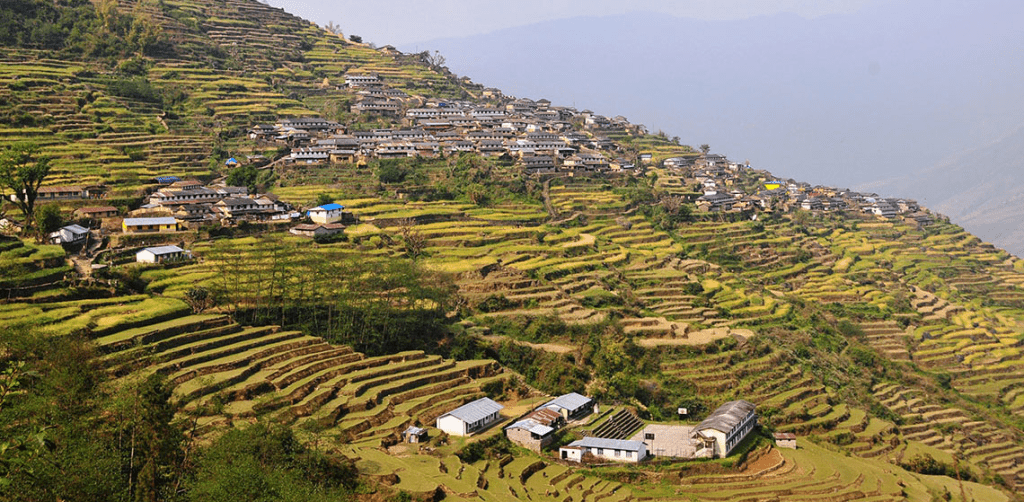
Tangting is an old Gurung settlement. These days, Tangting Homestay has become popular. A Gurung village should reflect its culture and traditional architecture, but homestays are slowly becoming more commercial.
Concrete buildings are replacing old houses, and culture seems limited to dressing up for photos and drinking local alcohol. To truly preserve it, both the government and local communities must come together with thoughtful, sustainable plans.
We had our breakfast at Tangting Ramailo Homestay. After carrying our bags and charging our phones, we walked for five minutes and reached a place with a monastery and a temple. There was a water tap in the courtyard. We filled our bottles, as water would be scarce ahead.
We climbed slippery stone steps uphill for an hour. The forest made the walk peaceful, far calmer than the city’s chaos.
On every journey, there’s always someone who brings up a topic, turning the silence into shared moments along the way. My niece, who usually never stops trekking, kept complaining that it was hard to walk. We kept teasing her, saying she shouldn’t come up the stairs or she might catch a fever, and these jokes kept the trek lively.
After some time, we reached Changu. There was an open ground. From here, Yamjakot and the road we came from were clearly visible. Up ahead, it looked a bit like a carnival ground. There was a water tap and a swing. There was also a pond in the middle, but the construction had stopped, leaving it without water. The place seemed perfect for picnics. Nearby stood a tall pillar marking the birthplace of Lama Gurungs, indicating it was once an old settlement.
Since we were walking on foot, we took the shorter forest path. After a while, we came across the road again. A new cottage had been built there. It was a nice resting spot for coffee and snacks. We had coffee and filled our bottles with water. After this point, water would only be available at the destination.
Many advised not to take the short route and to stick to the road. But the joy of a forest walk is something you can’t find on a road!
We again took the forest path. The trail was narrow and difficult. Tree roots had formed natural steps and the leaves felt slippery underfoot. We walked slowly, teasing my niece along the way. After about one and a half hours, we reached the road again.
Evening was setting in. Frost had settled on the path, making it look like snow. As the sun dipped low, its golden light brushed against the mountains, setting them aglow in a moment that felt quietly magical.
As dusk fell, we arrived at Krapu Danda around 6 PM. From afar, the hotel we had booked came into view. At Krapu Hill Point, we savored roasted corn and hot tea. Most places were fully booked since it was Friday, but our advance reservations kept us hassle-free. Although we had booked for three, the hotel kindly provided a tent spacious enough for four.
A couple from Pokhara Lakeside, a foreign traveler, and the rest of our group gathered around the campfire, sharing stories and laughter. After a hearty dinner, we retreated to our tents around 9 PM, while the distant rhythm of a Madal (a traditional Nepalese folk hand drum, considered the backbone of Nepali music and its national instrument) and lively dohori echoed through the night. I don’t even remember when I fell asleep.
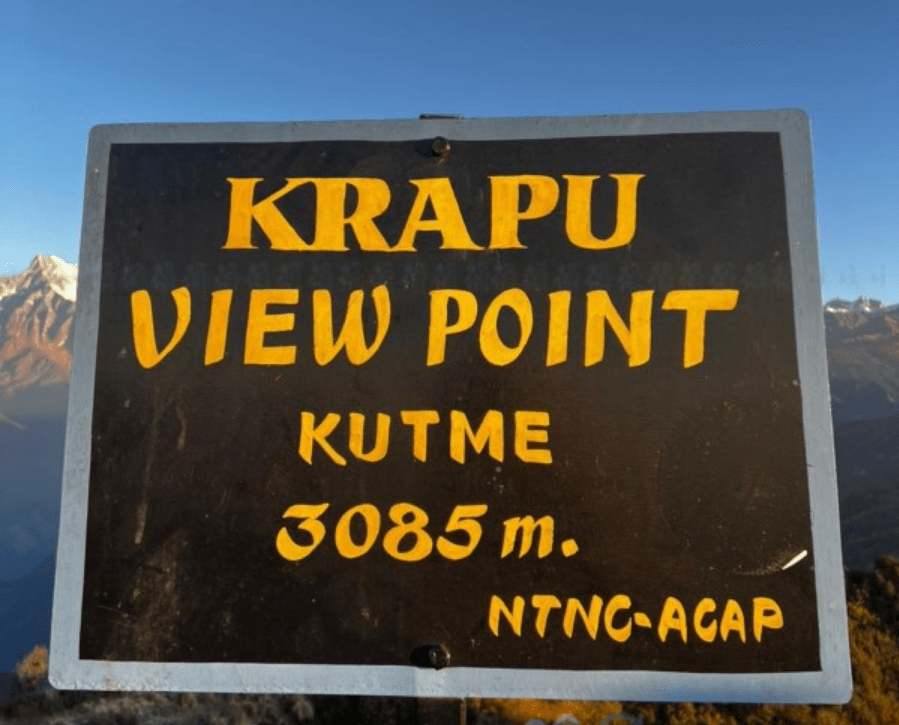
The commotion started at 4 in the morning. By 5:30, the hotel staff suggested we head to the viewpoint. After a 30-minute uphill climb, we reached Krapu Viewpoint, situated at 3,085 meters. Sunrise was at 6:45, and we quickly snapped photos and videos.
As the sun slowly rose, its rays began to glimmer on the mountain peaks. The view stretching from Annapurna I to Lamjung Himal was unforgettable. From here, you could see Kori, a trek that has made this area famous, as well as the village of Sikles across the valley.
The view was breathtaking—almost impossible to capture on camera. We lingered a while, soaking it all in, before beginning our descent.
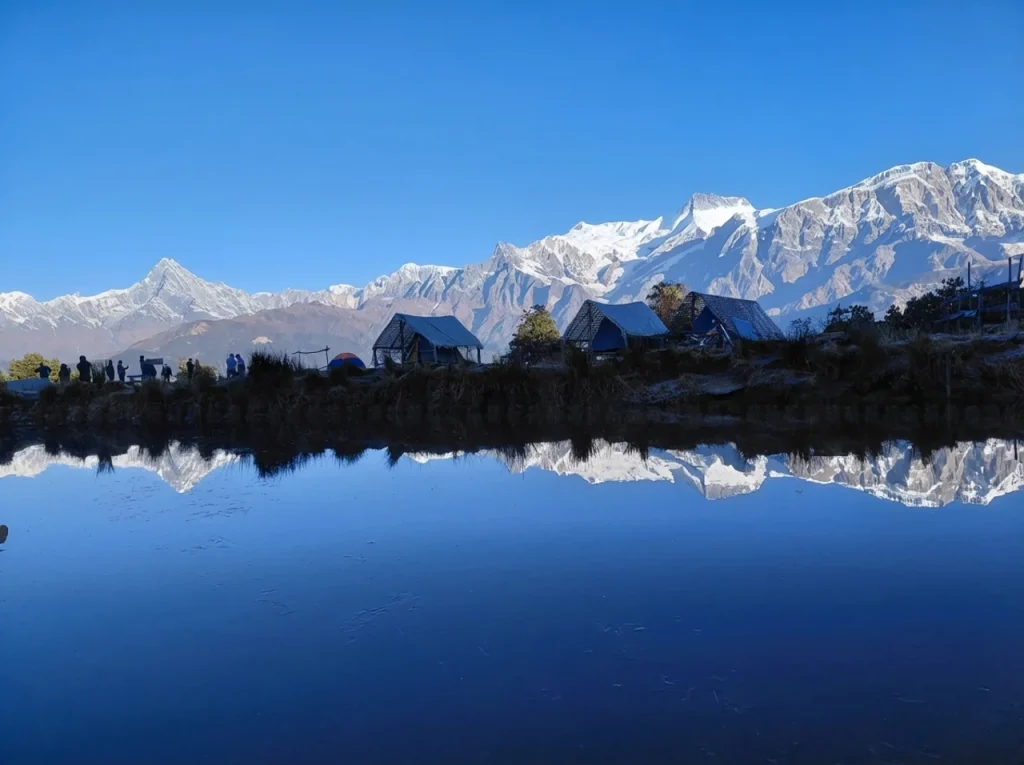
Along the way, there was a spot set up for paragliding, though I haven’t heard of anyone actually flying here yet. Even though it’s a rhododendron forest, all we could see now were the trees. The flowering season is in March–April. We continued our descent. The pond, which wasn’t clearly visible last night due to the darkness, was now seen clearly in the daylight.
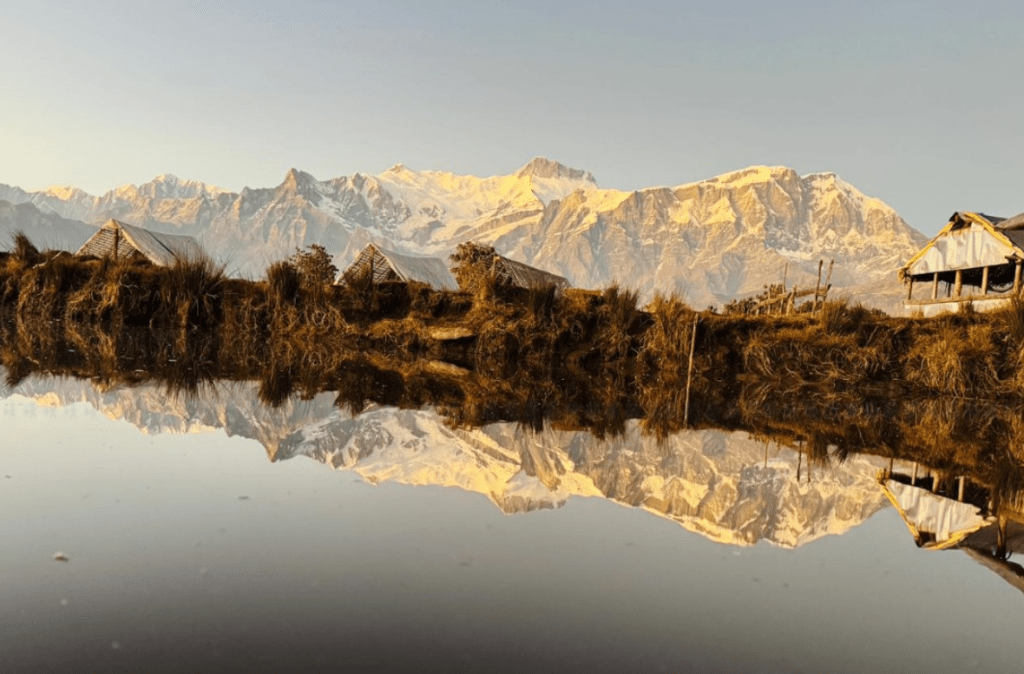
This pond is a favorite spot for photos, framed by mountains and mirrored reflections—a scene that often draws visitors after seeing it online. Yet, in reality, the pond can seem smaller than expected, and some travelers leave slightly disappointed.
My wife and niece felt the same at first; it didn’t match the glossy images from social media. But standing close, watching the shadows of Annapurna and Machapuchhre dance on the water, the scene transformed; it felt like a fleeting glimpse of heaven itself.
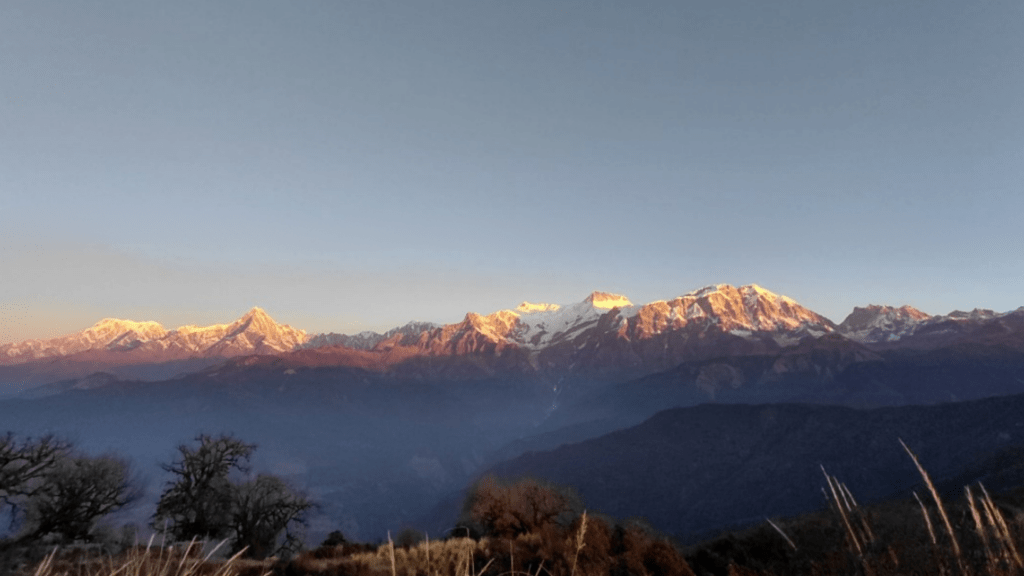
It was a place that made you feel close to the mountains, almost like they were embracing you. Being here, all stress seemed to melt away, and the mind felt light.
We took photos and videos with the mountains in the background and their reflections in the pond.
Without social media, places like Krapu might have remained destinations visited by only a few. It’s the photos and videos that have brought them into the spotlight today.
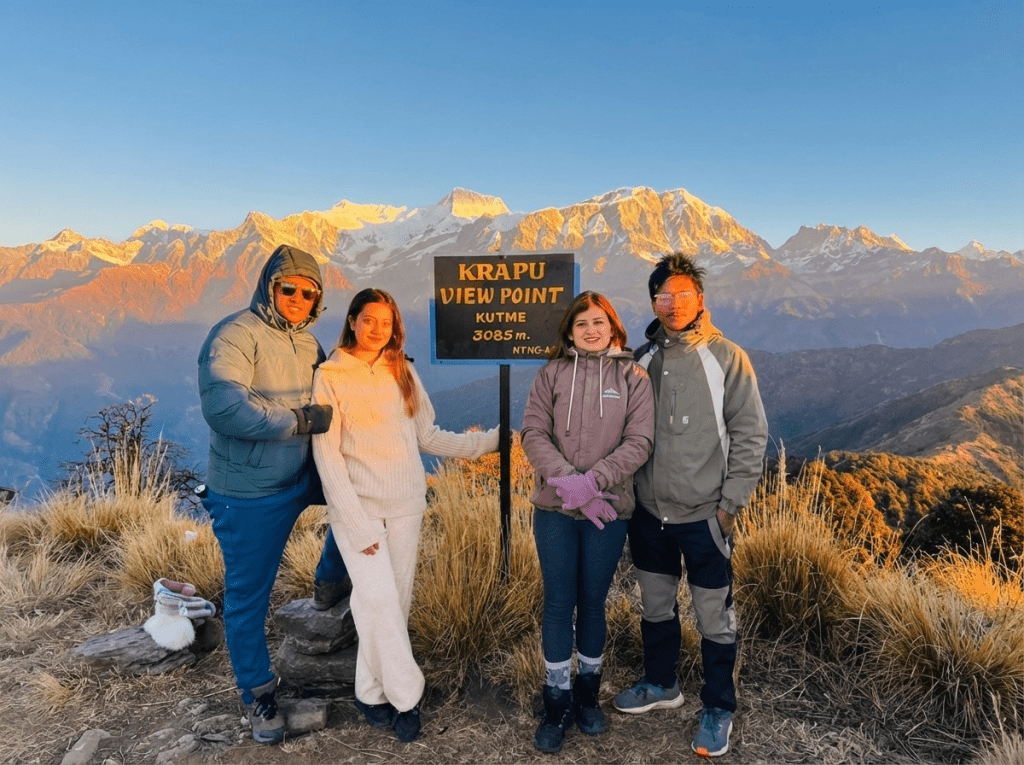
With views of the Pokhara Valley and so many mountain ranges visible from a single spot, this place could easily become your next destination too.
Our package included snacks and tea, which we enjoyed before setting off. By 9 AM, we packed our bags and began our descent toward Tangting, aiming to catch the vehicle back to Pokhara by 1 PM.
Traveler’s Quick Tips:
Buses to Tangting depart from Kahukhola in Pokhara at 8 AM and 12 PM, with a fare of NPR 250. For those wanting to go by jeep, reservations are needed, or jeeps are available once all seats are full. The jeep fare to Tangting is around NPR 6,000. From Tangting, it takes 5–6 hours on foot to reach Krapu. Those coming by bus can also reach Krapu the same day. Depending on the number of travelers, jeeps are available from Tangting as well. If you have your own off-road vehicle, you can use it too.
Just like yesterday, we shared a sense of closeness with the cliffs, ridges, forests and trails as we reached Tangting. We caught the 1 PM bus and arrived back in Pokhara by 4 in the evening.